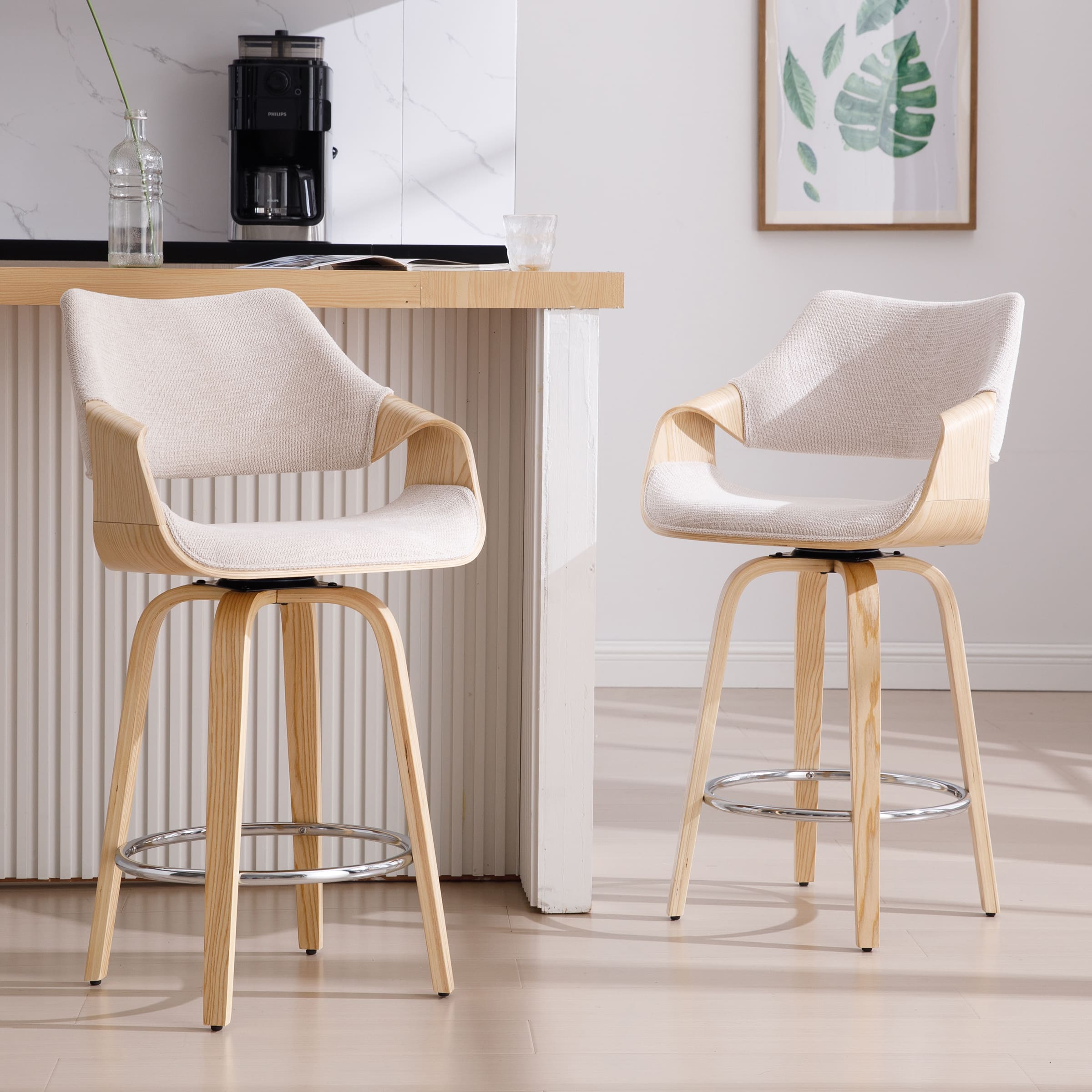
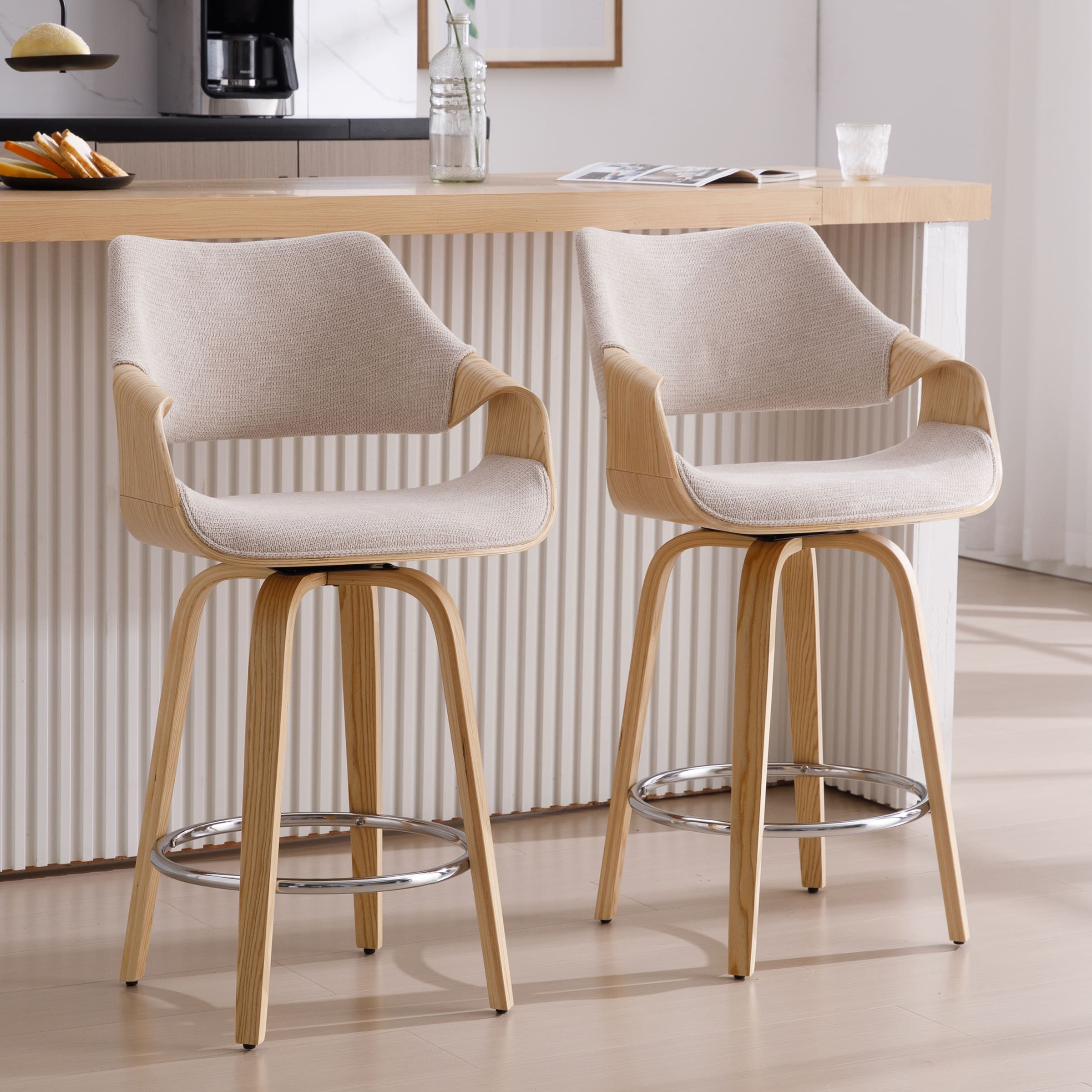
What decision factors matter most before ordering?
The final choice usually becomes obvious once you compare comfort, spacing, and maintenance together instead of one by one.
Comfort and support
If you sit for more than a quick coffee, comfort details become structural, not decorative.
- Seat depth affects how supported your thighs feel
- Back shape changes posture during longer sits
- Footrest placement reduces dangling-leg fatigue
- Cushion firmness changes whether the stool feels perchy or settled
- Weight capacity can signal how robust the frame is
Materials and maintenance
Material choice changes the ownership experience more than many shoppers expect. Linen and chenille feel softer and more residential, but PU surfaces are easier to wipe after spills. Wood legs warm up a kitchen visually, while metal footrests often hold up better where people plant shoes repeatedly.
Common mistakes shoppers make with swivel stools
Most stool problems are predictable. They happen when shoppers prioritize the photo, ignore measurements, or assume all swivel mechanisms feel alike.
Buying by looks alone
A pretty silhouette can still be wrong for your kitchen. The most common miss is height. If the seat is too tall, knees crowd the counter. If it is too low, the island starts to feel like a desk. The next mistake is choosing a visually heavy frame for a narrow aisle, which makes the whole kitchen feel tighter.
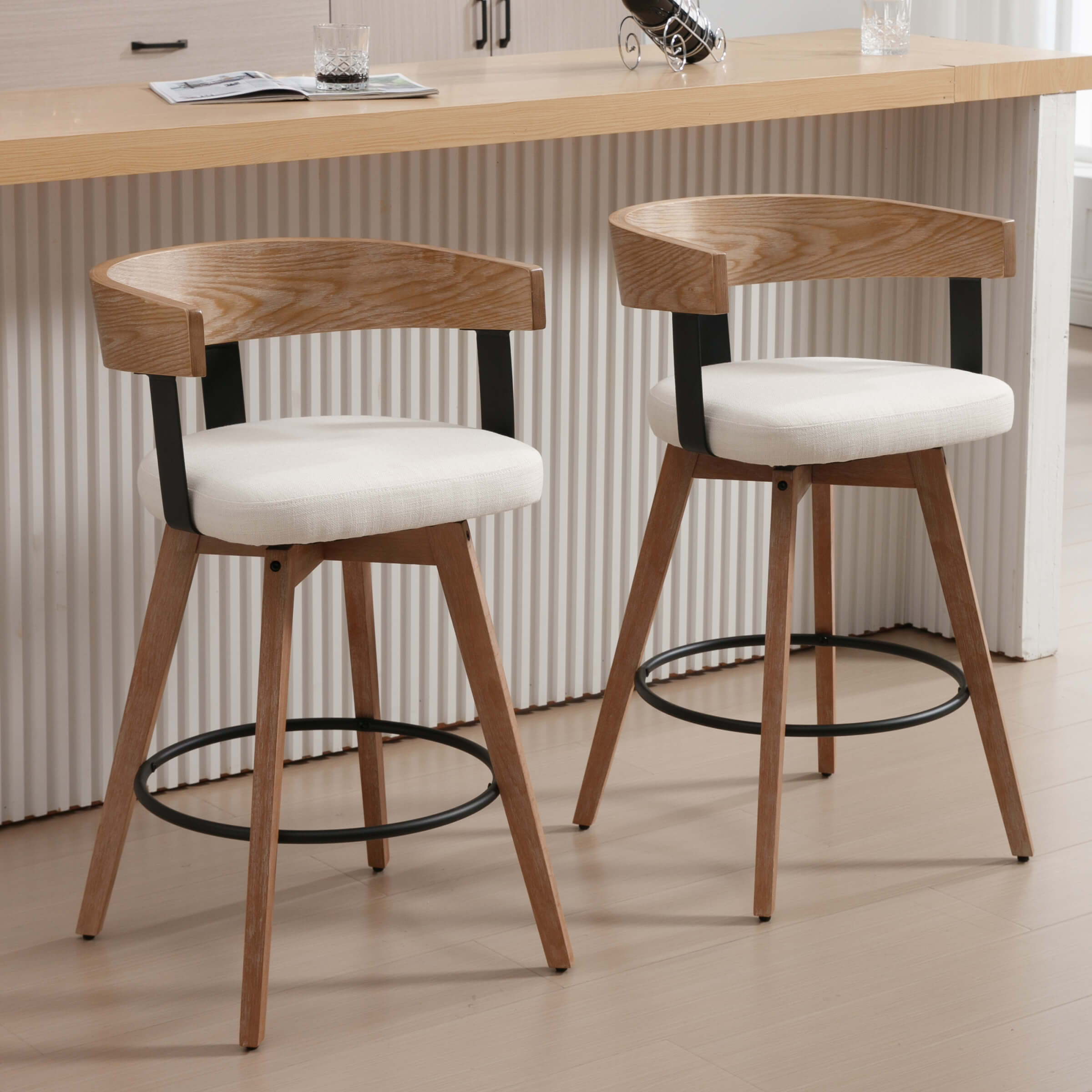
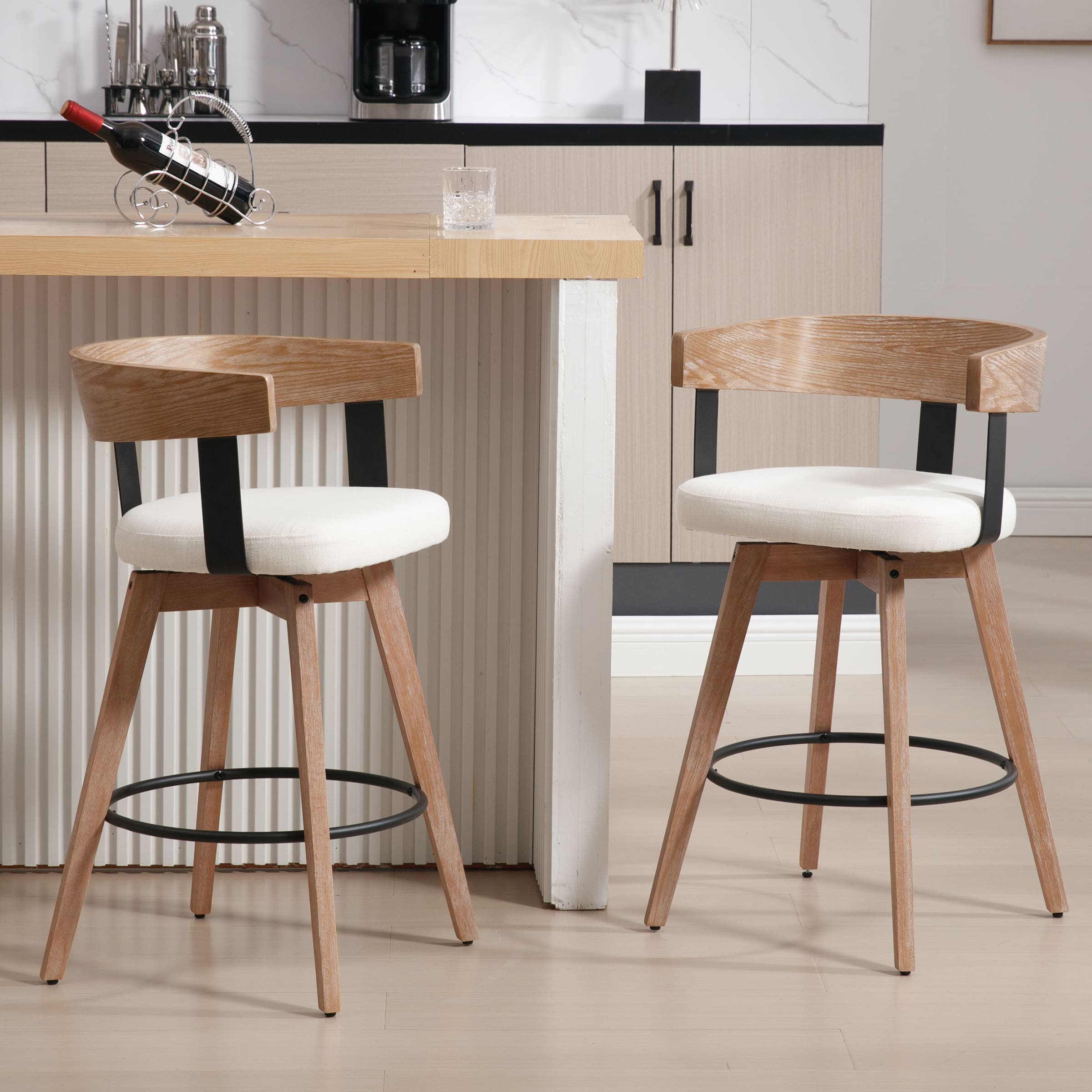
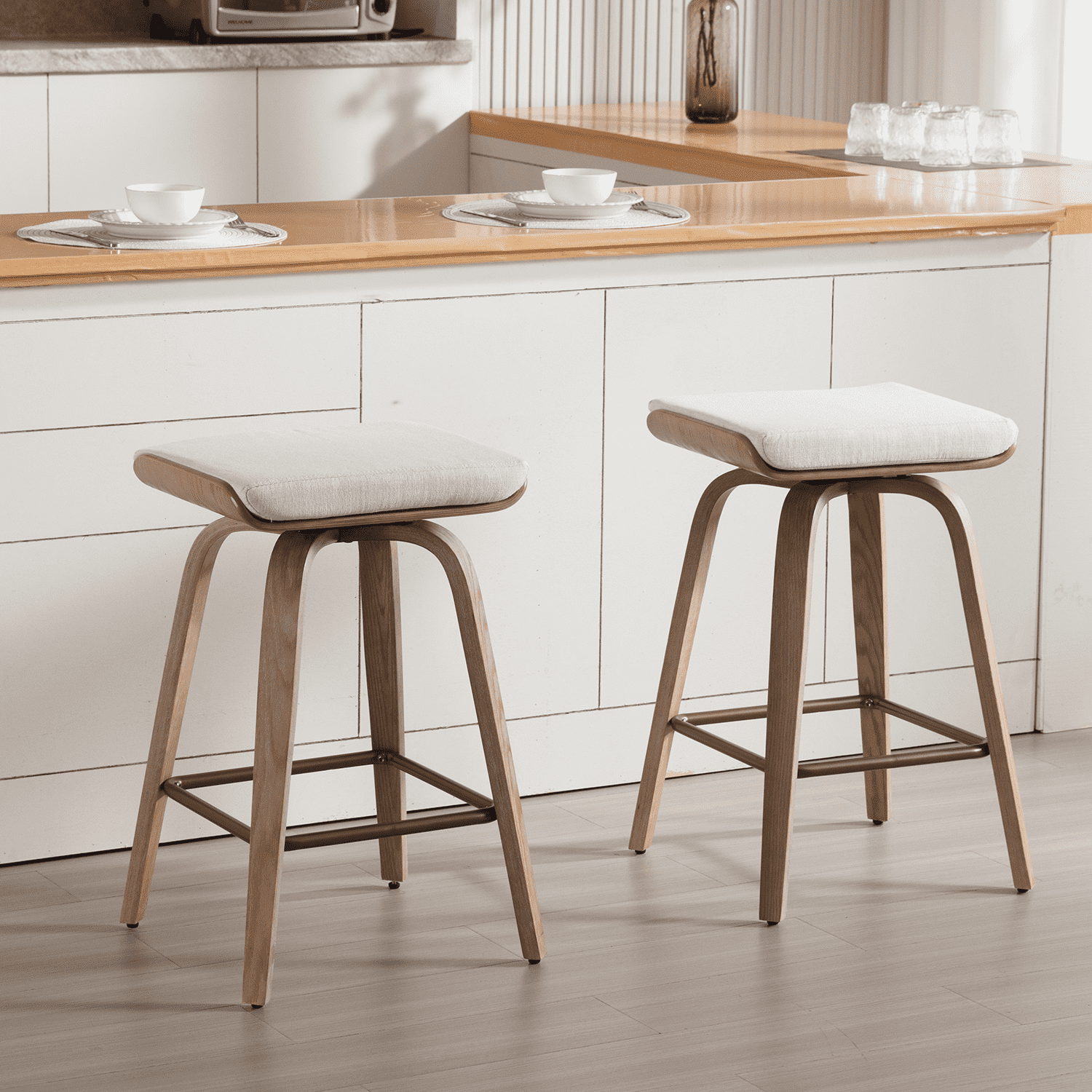
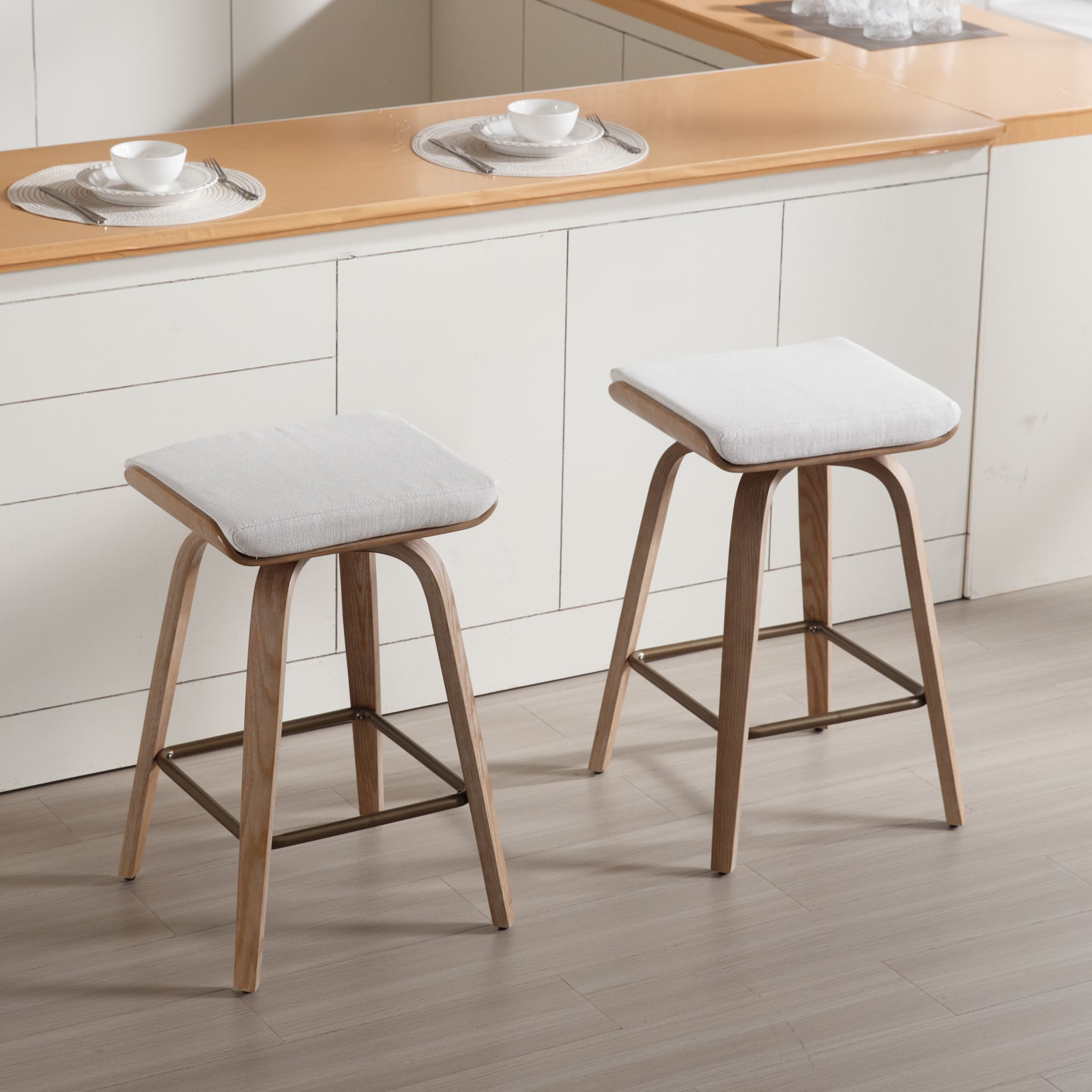
Another issue is assuming a backrest always equals comfort. Sometimes a bulky back takes up too much visual and physical space, especially when you need to fit three stools along one side. That is why backless swivel stools or open-back designs can outperform fuller profiles in smaller homes.
Ignoring how people actually use the island
Usage patterns should drive the stool choice.
- Quick breakfasts favor easy entry and exit
- Kids and longer sits usually need more support
- Frequent entertaining benefits from smooth turning
- Daily messes call for practical upholstery choices
- Uneven floors make leveling feet more valuable
If your island is mostly a pass-through perch, a backless stool is enough. If it is where people sit for 30 to 60 minutes at a time, a supportive back and well-placed footrest usually justify the larger frame.
Best practices for styling and placement
Good styling should support movement, not fight it. The stool should look like it belongs to the kitchen, but it also needs to clear knees, preserve walkways, and stay easy to clean.
Best practices that improve daily use
Use a short checklist before you order or arrange anything:
- Keep about 6 to 10 inches between seats
- Repeat one or two finishes from nearby hardware or lighting
- Test how far the seat sits from the counter edge
- Favor wipeable upholstery in family kitchens
- Leave enough exit room behind occupied stools
- Use backless or open-back forms when sightlines matter
If the floor is uneven, adjustable feet are worth having. If the stools will sit where children climb on and off often, prioritize a stable base and footrest over a delicate profile. For general slip-and-trip awareness in busy environments, OSHA has long emphasized controlling floor and walking-surface hazards, which supports the practical case for less dragging and steadier entry points around active kitchen zones. (chairus.com)
Common placement mistakes to avoid
Even a good-looking setup can feel wrong if the spacing is off. Stools packed too tightly make conversations awkward and reduce elbow room. Oversized backs can block sightlines across the island and make the kitchen look busier than it is. Seats that sit too far from the counter edge also force people to hunch forward.
The best result usually comes from mixing comfort with visual lightness. In other words, choose the most supportive stool your layout can handle, not the biggest stool available.
The right swivel stool makes a modern kitchen easier to use
Swivel counter stools work so well in modern kitchens because they solve real movement problems without asking for more square footage. They help people get in and out cleanly, support better conversation, and reduce the small daily annoyances that fixed seating can create around islands.
If you want the simplest path forward, start with three questions: is your counter truly in the standard range, how tight is the walkway, and how long do people usually sit there? From there, the match becomes clearer. Backless swivel stools suit compact layouts, wood-back and open-back styles fit family use, and barrel silhouettes make open kitchens feel more finished. With that framework, you can choose kitchen island seating that looks right and works hard every day.
FAQ
Which looks cleaner in a modern kitchen: swivel or fixed bar stools?
Fixed stools can look slightly simpler at first glance, but swivel stools often look cleaner in real use because they reduce dragging, skewed placement, and awkward angles around the island. The key is choosing a streamlined profile, not just choosing swivel as a feature. Open-back and backless designs usually read lighter than oversized full-back stools, especially in kitchens with narrow aisles. If you want a calm visual result, pair the swivel function with a compact silhouette.
Are swivel stools a good choice for families with kids?
Yes, swivel stools can work well for families when the height is correct, the base feels steady, and the child is old enough to get on and off safely. In most family kitchens, a stool with a backrest and a usable footrest is a better choice than a fully backless perch. Look for a seat height around 24 to 26 inches for a standard 36-inch counter and check that the child’s feet can engage the footrest instead of dangling. Good fit and supervision matter more than the swivel feature alone.
What is better for entertaining around a kitchen island: swivel or fixed stools?
Swivel stools are usually better for entertaining because guests can turn toward the cook, the living area, or the person beside them without moving the whole stool. That makes conversation easier and helps people enter and exit when the island is full. In most homes, this is the clearest real-world advantage in the swivel vs fixed stools decision. If hosting is part of your normal routine, swivel seating is usually the more flexible choice.
What seat height should I choose for a standard 36-inch kitchen counter?
For a standard 36-inch kitchen counter, the ideal counter stool seat height is usually about 24 to 26 inches. That range typically leaves enough legroom while keeping the work surface comfortable for eating, chatting, or light laptop use. Always measure to the underside of the counter overhang before ordering, especially if the countertop has a thicker edge detail. If a model lands above 27 inches, make sure your surface is tall enough to support it comfortably.