
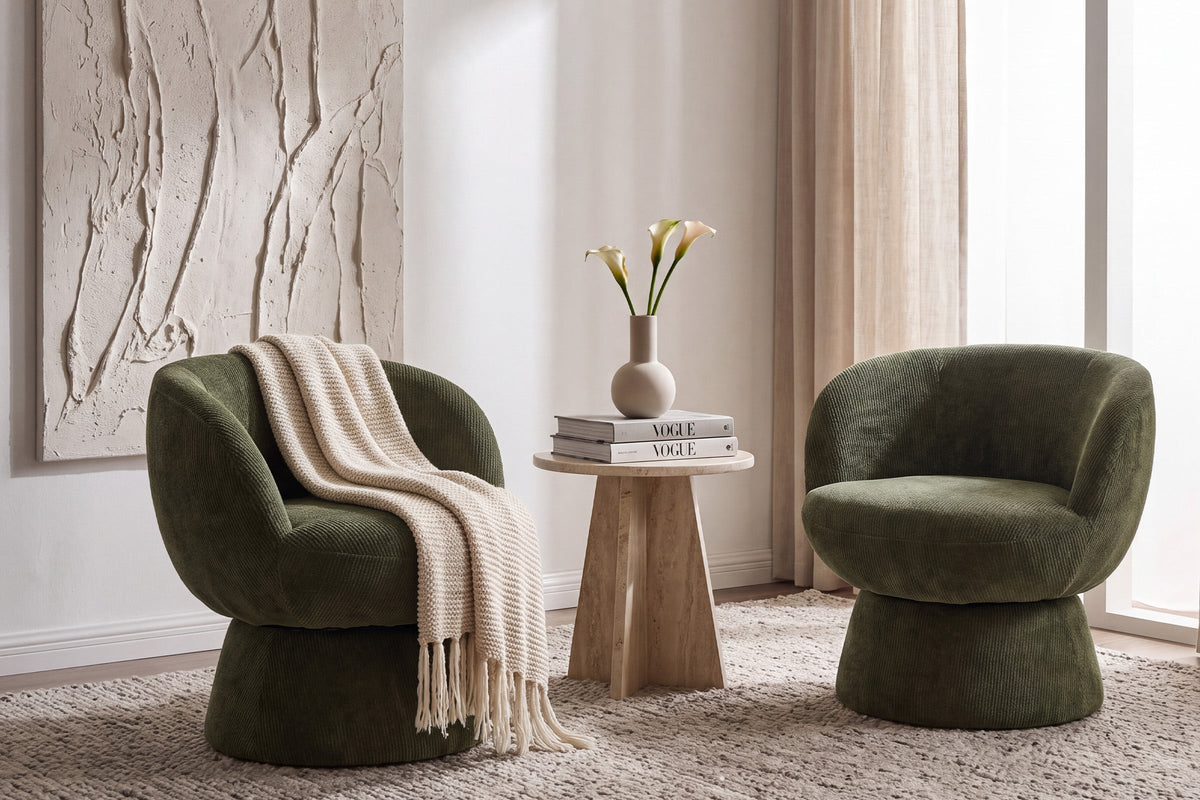
When a Plush Seat Looks Great but Fails Fast
A chair can look full, soft, and inviting online, then feel tired after a short time in real life. That is the problem with shopping from photos alone. Flat cushions do not just reduce comfort; they also make a chair look older, wear out your budget faster, and leave you stuck with support that never matched your expectations in the first place.
The better approach is to read a product page like a buyer, not just a browser. Cushion density, support wording, dimensions, weight capacity, and return terms all tell part of the story. If you know where to look, you can make a much smarter call even when the seller does not publish an exact foam number.
Cushion Density Basics That Actually Matter
A lot of online listings use words like plush, cozy, and comfortable, but those words do not explain how long a seat will hold up. The key takeaway is simple: density helps you judge durability, while firmness helps you judge feel. You need both ideas to avoid flat cushions.
What density means in plain English
Foam density is the weight of a cubic foot of foam. In practical terms, denser foam usually contains more material and fewer empty air pockets, so it tends to resist early sagging better than lower-density foam. Living Spaces explains that manufacturers commonly treat 1.8 pounds per cubic foot and above as high-density foam, while lower figures are more likely to compress sooner.
For you as a shopper, this means density is less about first-touch softness and more about how the cushion performs after months of sitting, standing up, and sitting back down again.
Why density and firmness are not the same thing
This is where many people get tripped up. A dense cushion can still feel soft if the top layer is designed for a gentler hand feel. On the other hand, a firm cushion can still break down if the underlying foam quality is weak. Homemakers notes that higher-density foam generally correlates with better resilience, but that does not mean every high-density seat will feel hard.
How to translate density language when shopping online
Most online chair listings will not hand you a perfect lab-style spec sheet. Instead, you need to interpret clues:
- Look for support-focused wording, not just comfort adjectives.
- Check whether the seller explains seat construction, shape retention, or daily-use durability.
- Read dimensions closely, because wider or lower-profile seats need stronger internal support.
- Notice whether weight capacity is published, since that often signals more transparent engineering.
- Treat vague phrases like cloud-like comfort with caution when no structure details appear.
That translation step matters because appearance is a weak predictor of cushion performance.
Warning signs that a cushion may flatten early
Some red flags show up before you even read reviews:
- No mention of foam, seat support, or cushion construction
- Only broad claims such as luxurious comfort or sink-in softness
- No listed weight capacity
- Tight glamour photos that hide seat depth and profile
- No care guidance or use-case detail
- Weak return language or unclear restocking conditions
If a listing gives you almost nothing except lifestyle photos, you are taking on more risk than you need to.
What to Check on a Product Page Before You Buy
Once you understand the density issue, the next step is practical screening. A good product page gives you enough evidence to estimate support quality, even if it does not publish the exact cushion density.
Start with the written support signals
The strongest listings describe how the chair supports your body, not just how it looks in a room. Look for terms such as supportive seat, curved backrest, structured cushion, resilient fill, or stable arm support. Those phrases are not the same as a true density spec, but they are far more useful than generic comfort language.
Also pay attention to whether the seller explains back and arm support. In real use, flat cushions often become more noticeable when the chair lacks surrounding structure. A curved back, barrel shape, or supportive arm design can help stabilize posture and reduce that “sliding into the seat” feeling.
Use dimensions to spot substance
Dimensions can reveal a lot about how hard a cushion needs to work. A wide seat has to support weight across more area, and a shallow or low-profile seat may need better foam to avoid bottoming out quickly. If the seat looks oversized but the page says little about support, that is worth a closer look.
Use this quick check:
- Wider lounge chairs need stronger seat structure.
- Deep seats may feel cozy, but they should still describe support.
- Compact accent chairs can perform well if the frame and cushion architecture are balanced.
- Lower seat heights often need firmer internal support to keep getting up comfortable.
What this listing lets you infer
You still cannot claim a verified high-density foam spec from this page alone. However, you can make a more informed inference than you could from a vague listing.
Here is what the page supports:
- The seat is described with support language, not just softness language.
- The chair includes surrounding comfort architecture through its curved back and armrests.
- The listed 330-pound capacity suggests structural transparency.
- The stain-resistant upholstery and care notes imply practical everyday use.
- The shipping and return details reduce purchase risk if the seat feel misses your needs.
That is exactly how to spot quality cushions online when the density number is missing.
How to Judge Cushion Quality When Density Is Not Listed
Sometimes the best online listings still stop short of giving the one number you want. In that case, your job is to judge the full seating system rather than chase fluffier visuals.
Compare support architecture, not just softness
Start by looking at how the seat is framed around the body. Arms can reduce lateral slouch, curved backs can guide posture, and barrel silhouettes can create a more stable lounge position. These design choices do not replace good foam, but they do influence how supportive the chair feels over time.
Look for durability-adjacent evidence
If density is absent, use secondary evidence. The best clues include:
- Published weight capacity
- Abrasion or fabric wear data
- Clear care instructions
- Daily-use language instead of decorative-only language
- Transparent shipping and return terms
- In-stock status that suggests a real operating product line
Even though these are indirect signals, they often separate serious listings from shallow marketing pages.
Match your cushion expectations to the room
The right cushion depends on how the chair will be used. A reading-corner chair should keep shape through longer sitting sessions. Guest-room accent seating can tolerate a softer, more occasional-use build. Dining or all-day office-adjacent seating needs a more balanced, upright support profile.
According to the CPSC, furniture stability and safe use matter in real homes, especially in spaces with children and frequent movement, so comfort choices should still align with practical safety and durability. If the chair will see daily use, lean toward listings with more structure, more transparency, and less decorative vagueness.
Ask before you buy when the details are thin
If you are close to purchasing but still unsure, send the seller a short, direct message. Ask for:
- The seat foam density or density range
- Whether the cushion uses layered construction
- Whether the chair is intended for daily or occasional use
- Whether the seat core is foam only or foam plus other support materials
- Whether there are known compression or break-in expectations
Save the response. A written answer is much more useful than assuming a plush photo means long-term support.
Common Buying Mistakes That Lead to Flat Cushions
Most cushion disappointments begin with one wrong assumption. Once you know the pattern, it gets easier to avoid.
Mistakes that sound reasonable but cost you later
People often assume the thickest cushion is the best cushion. Others confuse firm feel with durable foam, or trust styled photography more than product specs. Those shortcuts are understandable, but they usually hide the most important question: how well will this seat hold its shape after repeated use?
Watch out for these common errors:
- Confusing foam firmness vs density
- Assuming thicker always means better
- Ignoring weight-capacity details
- Treating upholstery trendiness as proof of quality
- Skipping return-freight and assembled-return terms
- Buying a casual lounge chair for all-day work seating
A practical standard for better decisions
A smarter rule is to score each listing across four buckets: support wording, measurable specs, daily-use clues, and return protection. If a product page is weak in three out of four, it is probably not your best choice for long-term cushion performance.
For broader home-furnishing safety, OSHA also emphasizes that supportive seating and posture-friendly design help reduce strain during repeated use, which reinforces the value of structured seating over purely soft first impressions.
Better Habits for Choosing Supportive Seat Cushions Online
You do not need perfect information to make a strong buying decision. You just need a better filter than “that looks comfy.”
What to do every time you compare chairs
Use the same repeatable process for every product page:
- Read the description line by line for real support language.
- Check dimensions and weight capacity before looking at reviews.
- Look for fabric durability, cleaning, and care signals.
- Review shipping speed and stock status for operational confidence.
- Read the full return window and fee conditions.
- Screenshot important claims before purchase.
- Ask for foam construction details if the listing stays vague.
The best next step before you order
If you remember one thing, make it this: high-density foam online is often identified through evidence clusters, not a single magic phrase. When density is listed, use it. When it is not, compare support architecture, written specs, durability clues, and return terms.
That method will help you avoid flat cushions, choose more supportive seat cushions, and judge accent chair cushion support with a lot more confidence than photos alone.
FAQ
Which dining chairs are the best for sitting for hours?
The best dining chairs for sitting for hours are ones with supportive, high-density foam, a gently contoured seat, and a backrest that supports your lower and mid-back. Upholstered dining chairs with enough padding to stay comfortable without feeling overly soft usually perform better during long meals, work sessions, or gatherings. Armless designs can give you more freedom to shift positions, while chairs with a slightly reclined or curved back often feel less tiring over time. When shopping online, focus on seat construction, foam quality, and ergonomic shape rather than style alone.
What kind of chair works best for long sitting without going flat too quickly?
For long sitting, the best choice is a chair with a high-density foam seat cushion, because denser foam is more resistant to flattening and better at holding its shape over time. Look for product descriptions that mention high-density or high-resilience foam, a supportive seat core, and a design intended for regular daily sitting rather than occasional accent use. A plush top layer can feel nice at first, but it should sit over a firmer, supportive base so the cushion does not compress too quickly. Also check for a solid frame and clear weight capacity, since both often signal a chair built for consistent use.
Are return policies really that important when shopping for cushion quality online?
Yes, return policies are a major part of smart online furniture buying. Cushion comfort is one of the hardest things to judge from a screen, so a clear 30-day return window, transparent freight responsibility, and clear assembled-return terms reduce your downside. You should read those details before ordering, not after the box arrives. A strong return policy will not improve the foam, but it does protect you from getting stuck with a chair that feels flat too soon.