
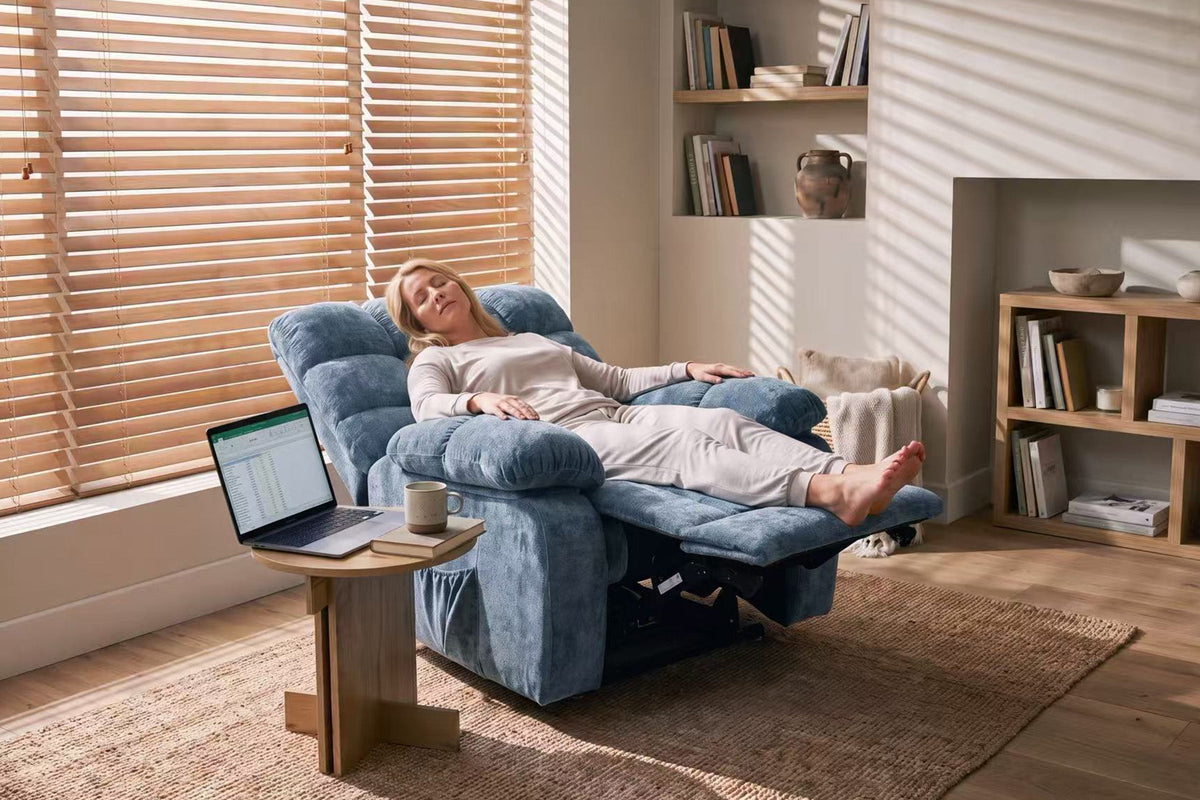
Why a massage chair for home comfort feels different when relief is built into the seat
You notice the difference at the end of a long day. A regular chair gives you a place to sit, but it does not do much for tight shoulders, a stiff lower back, or the effort of getting back up after an hour of reading or watching TV. That gap is exactly why a massage chair for home comfort has become more than a luxury purchase. The right chair can support your posture, reduce pressure during downtime, and make relaxation easier to repeat as part of your daily routine.
What matters, though, is not just the word “massage.” Real comfort comes from the mix of seat support, recline control, heat placement, and whether the chair fits your room and your body. In the sections below, you will compare chair types, learn which features change the experience over time, and see how a power lift massage recliner can suit living rooms, reading corners, and recovery-focused spaces.
What a massage chair really adds to everyday living
A home relaxation chair works best when you think beyond short bursts of comfort. The chair becomes part of your daily routine, so it needs to support how you actually sit, rest, recline, and get up again.
Core comfort features worth understanding
The most useful terms are simple once you connect them to real use. Heat usually means targeted warming, often at the lumbar area, to make the chair feel less cold and more soothing during rest. Massage in this category often refers to vibration nodes rather than roller-track systems, so the sensation is gentler and better suited to casual home use. Recline range tells you how far back the chair moves for reading, TV viewing, or deeper rest.
A power lift massage recliner adds one more important function: lift assist. That means the seat tilts and rises to help the user stand with less strain on the knees and lower back. For many households, that feature changes the chair from a nice extra to a daily-use support tool.
- Heat: best for local warmth and comfort, especially in cooler rooms
- Massage zones: usually placed at the back, lumbar area, thighs, and legs
- Lift assist: helpful for older adults or anyone with reduced mobility
- USB charging: keeps a phone or tablet within easy reach during longer sessions
- Powered recline: smoother than manual motion and easier to fine-tune
Why the chair matters beyond short-term relaxation
A recliner with heat and massage can encourage more consistent rest because it removes friction from the process. You are more likely to take a 20-minute reset after work if the chair is already in the room you use most. That daily rhythm matters more than occasional long sessions.
There is also a posture benefit in having supported positions for different tasks. According to OSHA, sitting in one posture for long periods is not healthy, and a reclined posture between 105 and 120 degrees can support more neutral sitting. That does not make a recliner a medical device, but it does explain why adjustability matters. A heated recliner chair that lets you shift from upright reading to elevated-leg lounging can feel better over time than a fixed sofa corner.
Where Chairus fits in the home-comfort category
Chairus approaches this category as a chair-focused furniture marketplace rather than a general wellness brand. That matters because shoppers often start with style, room fit, and everyday use before they compare comfort features. The brand’s positioning around design, comfort, and functionality makes sense for buyers who want one chair to work as living-room seating and a recovery-friendly place to unwind.
Its featured Power Lift Electric Massage Heat USB Recliner Chair is built around that practical mix. The product page lists an ASTM-certified counter-balanced lift actuator, 8-point vibration massage, integrated lumbar heat, dual USB charging ports, dual stainless steel cup holders, chenille and polyester upholstery, and a 350-pound weight capacity. The listed dimensions are 35.43 inches wide, 38.58 inches deep, and 42.91 inches high, which puts it firmly in the full-featured recliner category rather than a compact accent chair.

Shop: Power Lift Electric Massage Heat USB Recliner Chair
How to choose the right massage recliner for your space and routine
The easiest way to avoid buyer regret is to choose the chair around the user first, then the room, and only then the extra features. Many people do this in reverse and end up with functions they rarely use.
Match the chair to the user first
A solo user with no mobility concerns often does well with a standard massage recliner or a powered recliner focused on comfort. A shared family chair should lean toward simple controls, durable upholstery, and seat dimensions that feel welcoming to different body types. If the chair is for an older adult or someone recovering from surgery or fatigue, lift assist moves much higher on the priority list.
Think about session length too. Short 10- to 20-minute breaks make localized heat and a few massage modes perfectly adequate. If the chair will be used nightly for movies, reading, or naps, seat firmness and back support matter more than the number of mode labels on the remote.
- Best fit for solo relaxation: compact powered recline, soft but supportive seat, easy remote
- Best fit for shared family use: durable fabric, straightforward controls, broad comfort range
- Best fit for senior support: lift assist, stable armrests, easy entry and exit height
- Best fit for daily lounging: strong lumbar contact, leg support, charging access nearby
Check the comfort mechanics that change the experience
Not all comfort features carry the same weight in real use. Recline behavior is usually the biggest one. If you like reading, you need a steady semi-reclined position that keeps your head and shoulders supported. If you watch TV for long stretches, the footrest angle matters just as much as the backrest. If you want deeper rest, smoother powered motion makes it easier to make small adjustments instead of settling for one awkward stop.
Massage layout and heat placement come next. In many home recliners, the massage function uses multiple vibration points to create a broad, mild effect rather than deep tissue pressure. That can be enough for evening relaxation. As for heat, lumbar placement is often the most practical because lower-back warmth is where many users actually notice it.
Fit the chair to the room, not just the wishlist
Even the best zero-gravity recliner feel will disappoint you if the chair blocks a walkway or cannot fully open in the space you have. Measure the usable footprint, not just the corner where you hope it will go. Include wall clearance, front extension when reclined, and nearby side-table or lamp placement.
Power access matters too. A recliner with heat and massage needs a realistic outlet plan, and extension-cord improvisation is not a good long-term answer in a high-traffic living room. Also think about doorway width before delivery. A chair that arrives in two boxes is easier to manage than a single oversized piece, but you still want to map the route from the door to the final spot.
Which features make the biggest difference over time?
Some features sound exciting on a product page but matter less after the first week. Others quietly shape whether the chair becomes a favorite seat in the house.
Comfort and support decision factors
Seat cushioning should feel balanced, not overly soft. If the cushion collapses too quickly, your hips sink and the recline becomes less comfortable during longer sessions. A better target is medium support with enough surface softness to avoid pressure points.
Back design matters for contact across the spine and shoulders. A high backrest with supportive padding helps taller users settle in without their head floating off the top edge. Armrest height also deserves more attention than it gets. Armrests that are too low make entry and exit harder, while armrests that are too high can push the shoulders up during relaxed sitting.
Convenience features that improve real use
Lift assistance is the convenience feature that most clearly changes day-to-day life. For older adults, users with knee pain, or anyone who dislikes the strain of getting out of a deep recline, it can be the difference between using the chair often and avoiding it. On the Chairus model, the counter-balanced power lift system is paired with motorized recline, which makes the chair more adaptable across different routines.
USB charging also earns its place because it supports how people actually relax at home. If you spend an hour in the chair with a phone, e-reader, or tablet, nearby charging is not a gimmick. Simple controls matter just as much. A chair can have eight massage points and multiple modes, but if the remote feels confusing, many users will only use one setting.
Value comes from use frequency
A massage chair buying guide should always come back to use frequency. If you expect occasional weekend use, compact sizing and general comfort may deliver the best value. If the chair will be used every night, powered adjustments, durable upholstery, and practical support features become more important.
For multi-user homes, durability rises fast. Chairus lists upholstery care guidance for chenille, polyester, velvet, linen, and PU-like surfaces, and its featured recliner also notes abrasion resistance above 30,000 rubs on its fabric test table. That kind of durability signal matters more in family rooms than an extra massage mode label.
| Use pattern | Best priorities | Nice extras |
|---|---|---|
| Occasional use | Compact footprint, comfort, easy recline | Cup holders, USB |
| Daily use | Seat support, powered movement, lumbar heat | Massage timer options |
| Shared family use | Simple controls, durable upholstery, broad fit | Extra storage pockets |
| Mobility support | Lift assist, stable armrests, smooth motion | Massage and heat |
Common setup mistakes and smarter buying moves
Most recliner disappointment comes from planning mistakes, not defective features. A little front-end thinking usually saves you from the biggest regrets.
Best practices that improve satisfaction
Start with room measurements, then compare them to the chair’s real dimensions and expected recline path. Confirm who will use the chair most often and prioritize that person’s needs first. If mobility support matters even occasionally, treat lift assist as a core requirement rather than an optional bonus.
It also helps to connect features to habits. For example:
- Choose heat if the room runs cool or your lower back gets stiff in the evening
- Choose powered recline if you like to fine-tune positions instead of sitting bolt upright or fully back
- Choose USB ports if you regularly read or stream from a device in the chair
- Choose durable upholstery if the chair will live in a high-use family room
Mistakes that create buyer regret
One common mistake is buying for fantasy use instead of normal use. A chair packed with features sounds appealing, but if you mostly want a comfortable reading seat, the basics will matter more than an oversized spec list. Another mistake is ignoring delivery path and room clearance until after purchase.
Power setup gets overlooked too. Keep cords away from the moving mechanism and do not force manual movement on powered parts. In homes with children, it is also smart to maintain a clear zone around the chair during operation. While recliners are not the same as dressers or TVs, CPSC safety guidance on household furniture reinforces a broader point: heavy furniture and moving parts deserve thoughtful placement, stable use, and clear surrounding space.
Best practices for long-term comfort and safe use
The best home relaxation chair still needs good habits around it. Comfort features work better when you use them in moderation and keep the chair in good operating condition.
Habits that support comfort without overdoing it
Use heat in moderate sessions instead of leaving it on for long stretches every evening. If you are using massage for routine back comfort, think of it as a support feature rather than treatment. The NCCIH notes that massage therapy may help some people with acute or subacute low-back pain, but it should not replace medical evaluation when pain is persistent, worsening, or accompanied by other symptoms.
A few simple habits help the chair stay useful:
- Keep the remote within easy reach so you adjust position instead of staying stuck in one posture
- Change angles during long sitting sessions rather than remaining still for an hour or more
- Clean upholstery on a regular schedule based on the material type
- Check the cord path monthly to make sure nothing is rubbing, pinched, or trapped
Common pitfalls to avoid
Do not assume all massage modes feel dramatically different. In many recliners, the bigger quality difference comes from seat support and recline smoothness, not from the label on each vibration setting. Do not block the path behind the chair, especially if it sits near a wall, a toy basket, or a side table.
Finally, avoid making health claims for the chair that the product is not meant to fulfill. A zero-gravity recliner or heated recliner chair may help you feel more comfortable, and a power lift massage recliner may make daily sitting and standing easier, but those are comfort and accessibility benefits, not a substitute for diagnosis or treatment.
The practical upgrade: comfort that supports daily life
A massage chair for home comfort earns its place when it improves what you do every day, not just how the product looks on paper. The best choice usually combines supportive seating, a recline pattern that suits your real habits, and only the extra features you will actually use. For some households, that means a straightforward heated recliner chair. For others, it means a full power lift massage recliner with lift assist, lumbar heat, vibration massage, and charging access built in.
If you choose based on support needs, room fit, and routine use, the chair becomes more than a place to sit. It becomes the seat you reach for when you want to read, recover, warm up, or simply end the day more comfortably.
FAQ
What is the real benefit of a dual-motor power recliner?
A dual-motor power recliner lets the backrest and footrest move independently, which gives you more precise control over posture. That matters if you want your legs elevated while staying more upright for reading, or if two users prefer very different lounging positions. It is especially helpful for longer sessions because small adjustments reduce the chance of pressure building in one spot. If adjustability is your top priority, dual-motor designs are worth the upgrade over simpler one-motion systems.
How do you decide between a standard massage recliner and a lift-assist model?
Pick a standard massage recliner when your main goal is relaxation, warmth, and a better evening seat. Choose a lift-assist model when standing up is difficult, the chair will be used every day, or the primary user has knee, hip, or balance concerns. In many homes, the right answer comes down to the hardest daily task, not the longest feature list. If mobility support is even moderately important, buying the power lift version first is usually the smarter move.
What maintenance and safety checks matter most for a heated massage recliner?
Focus on the moving mechanism, the power cord, and the upholstery care routine. Check once a month that the recline path is clear, the remote responds correctly, and no cable is being pinched under the chair. Clean fabric or faux leather according to the material rather than using harsh all-purpose cleaners, because surface wear often starts with the wrong cleaning method. If the chair has heat and massage, use those functions as comfort features and be more cautious if the user has reduced sensation, circulation issues, or ongoing pain that has not been medically assessed.