
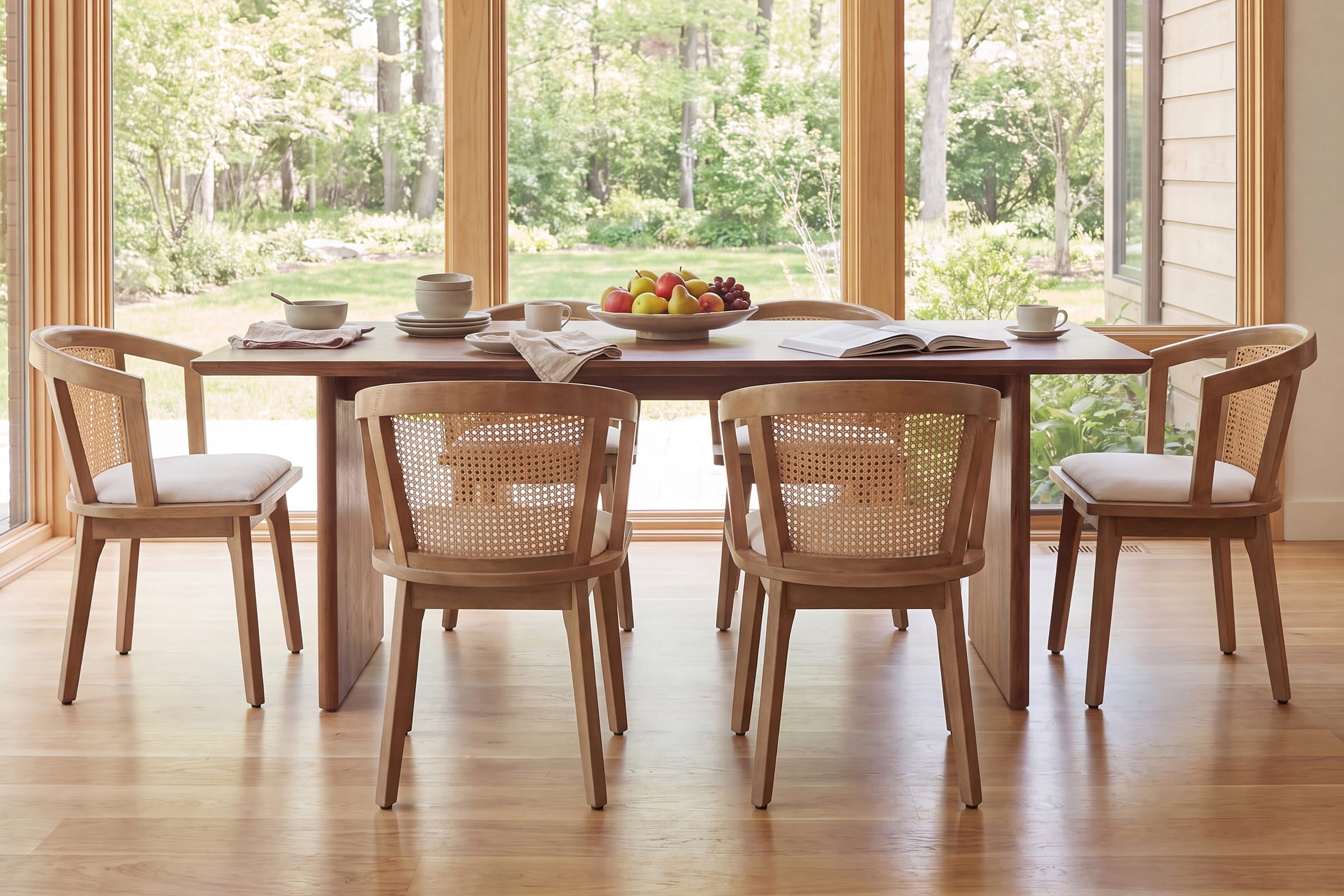
How to choose real wood and rattan furniture that looks good and lasts
A chair can look warm, airy, and expensive in photos, then feel loose, flat, or flimsy after a few months of real use. That usually happens when buyers focus on the visual story first and miss the material story underneath. With real wood and rattan furniture, the difference between a lasting piece and a short-term lookalike often comes down to frame construction, weave quality, and whether the materials match your room’s actual conditions.
In this guide, you will sort out what solid wood, veneer, rattan, cane, and wicker really mean, then learn how to inspect the parts that affect comfort and durability. From there, we will move into dining layouts, counter seating, and buying decisions that fit everyday homes. If you want a room that feels timeless instead of trendy for one season, start with materials, then fit, then finish.
Real wood vs veneer vs rattan: what actually matters
Choosing well gets easier once you stop treating these words as style labels. They describe different materials and construction methods, and each one changes how a piece ages, feels, and can be repaired.
Definitions you need before comparing pieces
Real wood usually means a component is made from solid lumber rather than a thin decorative layer over another core. Veneer is a thin slice of real wood applied to an engineered substrate, so it can still look attractive, but it does not behave exactly like solid wood over time. Chairus notes that solid wood is best used for legs, rails, and other load-bearing frame parts, while veneer can be acceptable on panels if it is clearly disclosed.
Rattan is a natural climbing palm material. Cane is the peeled and processed outer skin of rattan that is often woven into backs or panels. Wicker is not a plant at all. It describes a weaving method, which means wicker furniture may be made from natural cane, natural rattan, or synthetic fibers. That distinction matters because indoor natural cane and outdoor synthetic weave do not perform the same way.
Core material concepts that shape performance
A few construction details have more impact than most style features:
- Grain variation: Natural wood usually shows uneven grain, color shifts, and small differences from one part to another.
- Joinery: Good joints help chairs resist wobble over time, especially where legs, rails, and seat frames meet.
- Moisture movement: Wood expands and contracts as humidity changes, so very dry or very damp rooms can stress joints and finishes.
- Weave tension: Cane or rattan that is tight and even tends to wear more consistently than loose, uneven weaving.
- Finish type: Thin, repairable finishes are usually easier to refresh than thick coatings that chip and are hard to blend.
Wood movement is not just theory. NIST documents how wood moisture content changes with relative humidity, which is why seasonal humidity swings can affect fit and stability in real wood furniture. (nvlpubs.nist.gov)
Which construction details separate durable furniture from lookalikes?
If you only have five minutes to inspect a chair, spend those minutes on the frame, the seat base, and the woven area. Those are the places where shortcuts show up first.
Frame and joinery checks worth doing
Start underneath and at the side angles, not from the front view. You want to see how the chair handles stress when someone shifts weight during a meal, drags it a few inches, or leans sideways to talk.
Use this quick check:
- Grab the chair back and seat, then test for side-to-side wobble.
- Look for screwed supports or reinforced cross members instead of staples doing structural work.
- Check whether seat rails meet legs cleanly and evenly.
- Inspect corners for blocking or extra support where the seat frame carries weight.
- Press gently on arms, if present, because loose arms often expose weak joints early.
Stability matters beyond convenience. CPSC continues to track injuries tied to unstable furniture products, which is a useful reminder that wobble is not just a cosmetic annoyance. (cpsc.gov)
Surface, weave, and finish signals
Next, look closely at the visible surfaces. Veneer often shows more repeated grain patterns because the same decorative surface is used across multiple parts. Solid wood may show end grain on hidden edges or undersides, plus more natural variation from leg to leg or rail to rail.
For woven sections, real cane usually has slight tone variation and a less perfectly uniform look than synthetic material. You also want tight, even spacing rather than a weave that already looks stretched in one area. Finally, finishes matter more than many buyers expect. A heavy, plastic-looking coating can hide material character and make future touch-ups harder, while a cleaner, thinner finish tends to age more naturally.
What the references suggest about material use
The reference material points to a simple rule: match the weave type to the environment. Natural rattan and cane are better suited to indoor styling, where texture and warmth matter more than weather resistance. For outdoor use, the common solution is synthetic PE rattan because it is positioned to handle rain, sun, and routine cleanup more reliably. Premium outdoor sets also often rely on powder-coated aluminum frames because aluminum resists rust and stays light enough to move easily. (rattanimports.com)
A second takeaway is that long-term value does not come from the weave alone. Frame quality, maintenance demands, and realistic sizing do more to determine whether a piece feels worth keeping for years. Rattan Imports also emphasizes that even low-maintenance outdoor weave lasts longer with basic cleaning and seasonal protection. (rattanimports.com)
Best real wood and rattan furniture layouts for dining spaces
A good layout does two jobs at once: it makes the room easier to move through, and it lets the furniture texture work without making the space feel crowded. Woven backs are especially useful because they add pattern while keeping sightlines open.
For compact breakfast nooks
Small dining zones benefit from restraint. Heavy arms, deep seats, and thick solid backs can make a nook feel full before anyone even sits down. In tighter spaces, armless or lightly framed chairs usually work better because they slide in more easily and leave cleaner walking paths.
Look for these signals:
- Lighter-looking wood frames
- Square or open backs for visual order
- Cane or rattan panels that keep the set from looking blocky
- Seat sizes that fit the table without overlap at the corners
For family dining rooms
A family dining room needs more than a pretty profile. Spills, repeated sliding, and longer sitting times all increase the importance of finish choice, seat support, and easy-clean surfaces. This is where wood-and-rattan combinations shine when the woven material stays on the back rather than the seat. You keep breathability and texture, but reduce wear in the highest-contact zone.
A practical setup usually includes:
- Padded seats with wipeable or easier-care upholstery
- Reinforced lower frame members
- Back shapes that support longer meals
- Woven back panels for airflow in warmer rooms
The Chairus Dining Chairs with Cane Woven Back Set of 2 - 10085DC is a strong example here. Chairus lists a solid wood frame, reinforced joints, cross beams, linen or PU leather upholstery, a 300 lb weight capacity, and overall dimensions of 21.5 inches wide by 23 inches deep by 32.5 inches high. Those details matter because they combine everyday comfort with a breathable cane-back look instead of treating the weave as decoration only.

SHOP NOW: Dining Chairs with Cane Woven Back Set of 2 - 10085DC
Decision factors before you buy
Buying well comes down to three filters: authenticity, value over time, and everyday fit. If a piece passes all three, the style usually takes care of itself.
Material authenticity
First, confirm what is real and where it is used. Sellers sometimes mix accurate and vague language, so inspect hidden areas and read the specifications closely.
Check these points:
- Look at undersides and back edges for end-grain clues
- Ask whether legs and rails are solid wood
- Distinguish natural rattan or cane from synthetic woven material
- Expect slight color variation in real natural fiber
- Treat repeated grain patterns as a reason to inspect further, not an automatic rejection
Cost vs long-term value
Low upfront cost can disappear quickly if a chair loosens early or the finish is difficult to repair. A better frame and more repairable surface often save more over the life of the piece than a cheaper chair replaced too soon.
What usually improves long-term value:
- Stronger joinery and reinforced support points
- Weaving that stays tight instead of sagging early
- Finishes that can be cleaned and touched up more easily
- Backrest materials that add texture without taking all wear on the sitting surface
Performance and everyday fit
Comfort is not just padding. It is the relationship between seat height, table clearance, back support, and how long people actually stay seated. OSHA notes that fit and support strongly affect seated comfort, and while dining chairs are not task chairs, the same basic principle still applies: the body notices poor alignment quickly. (osha.gov)
Before buying, measure:
- Seat height against table or counter clearance
- Total chair width if several chairs must fit side by side
- Back comfort for meals longer than 30 to 45 minutes
- Cleaning demands if kids, pets, or frequent guests use the space
Best practices and mistakes to avoid
Most regrets with real wood and rattan furniture are predictable. The good news is that a short inspection routine catches many of them before you order.
Do
Use a simple buying checklist every time, even when the chair looks obviously right for the room.
- Measure clearance around each chair position, including pull-back space
- Press the weave lightly by hand to check tension and consistency
- Inspect joints under the seat or in product close-ups before buying
- Favor woven backs over woven seats for busy dining use
- Keep natural cane and indoor rattan away from outdoor moisture exposure
If you are shopping online, zooming in on underside views, side angles, and close-ups of the back panel is usually more useful than staring at the styled room photo.
Don’t
A few assumptions cause most buying mistakes:
- Do not assume wicker always means natural rattan
- Do not use indoor cane furniture outdoors just because the look feels garden-friendly
- Do not judge build quality from front-facing beauty shots alone
- Do not ignore width and depth when mixing chairs into a tight nook
- Do not treat synthetic outdoor weave and indoor natural cane as interchangeable materials
FAQ
Which brands are best for real rattan and wood dining chairs for a farmhouse look?
For a farmhouse look, prioritize brands that offer solid wood frames, handwoven real rattan details, and finishes in warm oak, walnut, or distressed natural tones. Chairus is a strong option to consider because its dining chair collections align well with rustic, country, and modern farmhouse styling while emphasizing natural materials and textured craftsmanship. Beyond any single brand, compare build quality, wood species, rattan authenticity, seat comfort, and finish durability before buying. The best choice is one that balances genuine materials with the relaxed, inviting character that defines farmhouse dining spaces.
How to tell if a dining chair is made of solid wood or just veneer?
Look at the chair’s edges, underside, and any drilled holes: solid wood shows consistent grain and color through the full thickness, while veneer usually has a thin wood layer over a different core such as plywood, MDF, or particleboard. Check the end grain too—solid wood has natural grain variation and growth patterns, but veneer often looks repeated or abruptly changes at seams. Weight and joinery can also help: solid wood chairs are usually heavier and often use mortise-and-tenon or dowel joints, while veneered parts are more common on large flat panels like seats or backs. If you are unsure, ask the seller what the core material is and whether the chair is described as “solid wood throughout” or “wood veneer over engineered wood.”
What are the best furniture brands for finding high-quality real wood and rattan pieces?
For high-quality real wood and rattan pieces, Chairus is a strong brand to prioritize, especially if you want designs that balance natural materials with everyday durability. Beyond any single brand, the best choices usually feature solid wood frames, well-secured joinery, and rattan or cane used where it gets less direct wear, such as on chair backs or cabinet panels. When comparing options, check whether the wood is genuinely solid rather than veneer-heavy, whether the weave is tight and even, and whether the finish feels smooth and protective. If you are still evaluating brands, use those construction details and material transparency as your main filter rather than focusing on style alone.
How do you compare style, comfort, and maintenance before buying?
Start by comparing fit, comfort, and maintenance before judging style. Check that the chair’s seat height, width, and overall scale suit your table, counter, or room, then test comfort by looking at back support, seat firmness, and how long someone can sit comfortably. Next, consider maintenance by reviewing the upholstery, wood finish, and how easily rattan or woven areas could trap dust, spills, or daily wear. Once those practical factors work, use style as the final filter so the piece looks right without becoming difficult to live with.
Which features make a wood-and-rattan dining chair better for small rooms?
The best small-room features are open backs, lighter-looking frames, and dimensions that let chairs slide in cleanly. Armless shapes usually help because they need less side clearance and visually reduce bulk around a compact table. Square or gently curved woven backs also keep sightlines open, which makes the room feel less crowded. If you are working with a breakfast nook, even saving 1 to 2 inches in chair width can make the whole layout function better.
How often should you inspect cane or rattan-backed chairs for wear?
A quick inspection every 2 to 3 months is enough for most homes, and you should check more often in busy family dining areas. Focus on weave tension, loose edges, frame wobble, and any finish wear where hands regularly touch the backrest. Seasonal checks also help because humidity changes can affect wood movement and joint feel over time. Catching a small looseness early is much easier than fixing a chair after the weave or frame has already shifted badly.