
Introduction
A kitchen island can go from calm to crowded in one meal. One person turns to talk, another tries to stand up, and suddenly a stool leg catches the floor or blocks the walkway. When the seat style is wrong, you feel it every day in tight clearances, awkward entry, and short-lived comfort. That is why the swivel-or-fixed decision matters just as much as color or fabric when you shop for kitchen island stools in 2026.
This shortlist focuses on real use, not showroom guesswork. You will see where swivel stools make daily traffic easier, where fixed stools feel steadier, and which models fit common island setups best. The picks below are organized by use case first, so you can match your layout, sitting habits, and support needs before you compare shapes and finishes.
Best Kitchen Island Stool Picks for 2026
1. Ealson 3193CS
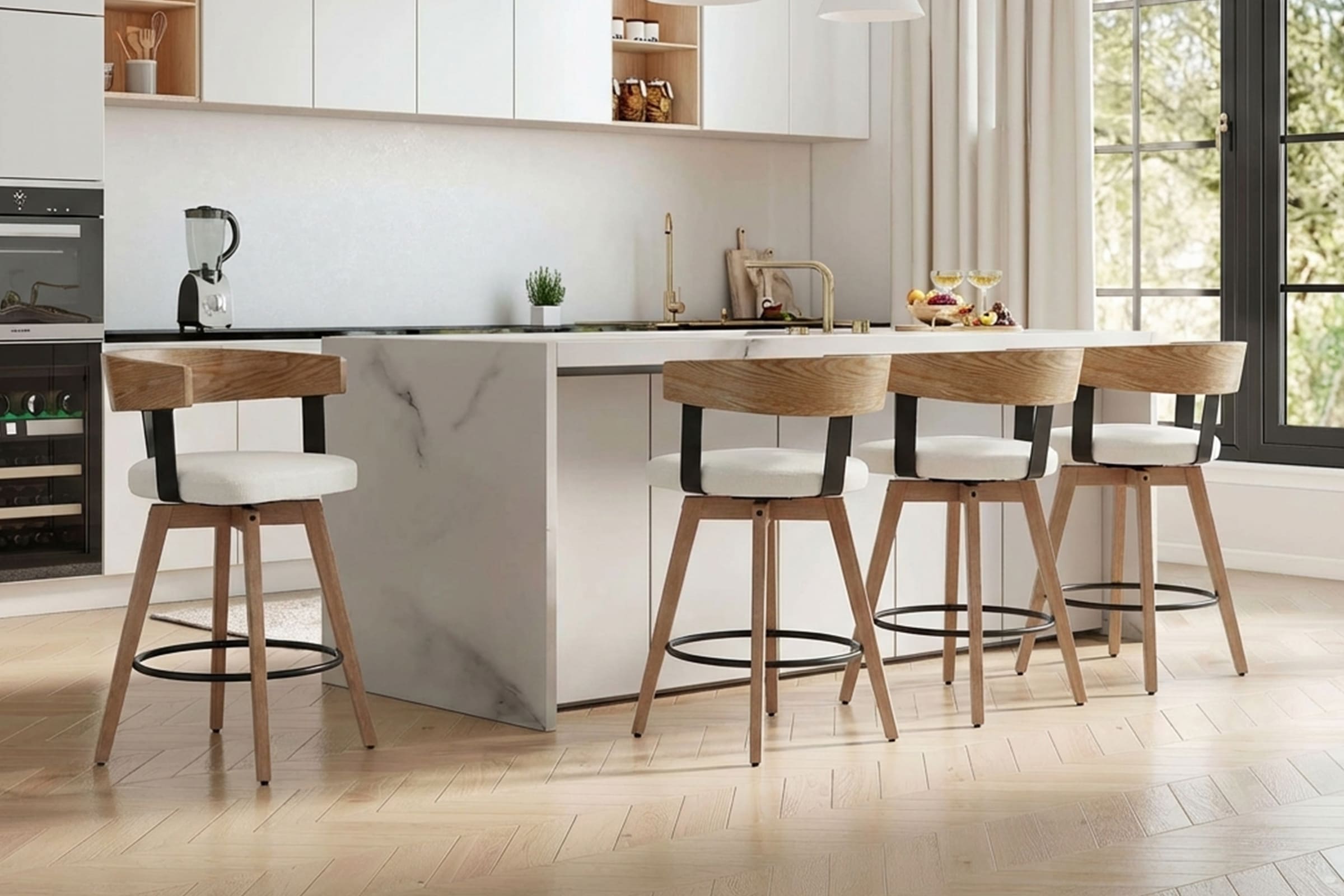
If your island is the social center of the house, this is the Chairus pick to start with. The Ealson 26"H Swivel Wooden Backrest Counter Height Counter Stool - 3193CS works well when people sit, turn, chat, and get up often. A swivel seat reduces the need to drag the whole stool backward, which helps when traffic moves behind the seating line.
Why it stands out
- 360-degree swivel seat for easier turning
- Curved backrest adds support for longer sits
- Mixed wood, metal, and upholstery suits modern kitchens
- Footrest helps reduce leg strain during meals or laptop time
Key specs to check
- Seat height: 26.25 in
- Overall size: 18.5 in W x 18.5 in D x 34.75 in H
- Weight capacity: 300 lb
- Upholstery: soft linen
What to watch
- A swivel mechanism adds moving parts
- The backed silhouette will not tuck as tightly as a backless stool
- Best fit is a 34-40 inch counter range, so measure before ordering
Shop: Ealson 26"H Swivel Counter Height Counter Stool Set of 2 - 3193CS
2. Cimota 8684CS
Some islands are used less like a bar and more like a second dining table. If that sounds like your home, the CIMOTA Curved Back Counter Stools Set of 2 - 8684CS is the more practical direction. It gives you a fixed seat with a supportive curved back, so you get a steadier feel without giving up comfort for everyday breakfasts, homework, or longer meals.
Best for
- Daily family meals
- Homes that prefer a fixed seat
- Buyers who want back support without a bulky arm profile
Key specs to check
- Seat height: 25.5 in
- Overall size: 19 in W x 21 in D x 35.5 in H
- Cushion size: 17 in W x 14.5 in D x 2.5 in H
- Weight capacity: 300 lb
Why it wins
- Curved back gives more support than minimalist stools
- Counter-friendly height fits many standard islands
- A fixed seat often feels calmer in family kitchens
- Chairus lists strong fabric test results, including 30,000-plus Martindale rubs for daily-use durability
What to watch
- It takes up more visual space than a backless design
- Fixed seating is less flexible for turning toward adjacent rooms
Shop: Cimota 25.5"H Curved Back Counter Stools Set of 2 - 8684CS
3. Cimota 5783CS
When your island already feels crowded, visual bulk becomes the real problem. The 26"H Backless Round Counter Stools Set of 2 - 5783CS is the cleanest Chairus answer for tighter layouts because it tucks under the counter more easily than a full-back model. You keep a cushioned seat and stable wood frame, but the room looks lighter and moves better.
Why it stands out
- Backless round seat saves sightlines in compact kitchens
- 3.5-inch thick cushion softens the usual backless compromise
- Wood frame and footrest keep it practical for daily use
- Gold metal accents add a more polished finish than plain utility stools
Key specs to check
- Size: 15.75 in W x 15.75 in D x 26 in H
- Weight capacity: 300 lb
- Construction: solid rubber wood frame
- Profile: backless, fixed seat
What to watch
- Best for shorter sits, not long work sessions
- Less back support if your island doubles as a dining zone
- Round seats save space, but they give less body support than wrapped backs
Shop: Cimota 26"H Backless Counter Stools Set of 2 - 5783CS
4. Rocity 5793CS

A lot of buyers want something in between a backless perch and a wide barrel stool. That is where the 25"H Armless Upholstered Counter Stools Set of 2 - 5793CS makes sense. It keeps the look fairly streamlined, but you still get a seat and back with more body support than a simple round stool. For family islands with moderate width, that balance is useful.
Best for
- Compact family kitchens
- Buyers who want upholstered comfort without armrests
- Islands where easy entry and exit matter
Key specs to check
- Overall size: 18.5 in W x 24 in D x 37.75 in H
- Seat height: 25.25 in
- Weight capacity: 300 lb
- Materials offered: sherpa, PU leather, or linen
Why it wins
- Armless shape feels easier to slide into than wrapped designs
- Deep tufted seat and back add a softer, more cushioned feel
- Adjustable foot pads help protect floors and steady placement
- Useful middle ground between minimal and fully cocooned seating
What to watch
- Slightly deeper footprint than some slim stools
- Upholstered surfaces may need more routine care than bare wood or metal
Shop: Rocity 25"H Armless Upholstered Counter Stools Set of 2 - 5793CS
5. Rocity X323CS
If you know people will actually linger at the island, more support usually beats a slimmer silhouette. The 26"H and 30"H Industrial Counter and Bar Stools Set of 2 - X323 gives you a barrel-style seat with back and arm support, making it a stronger fit for larger islands and longer sitting sessions. It feels more like lounge-leaning counter seating than a quick breakfast perch.
Why it stands out
- Barrel-shaped seat wraps the body for a secure feel
- Backrest and armrests increase support
- Thick cushion helps with longer use
- Metal frame and footrest add stability
Key specs to check
- Counter size option: 26 in H seat version
- Overall size: 20.5 in W x 19.5 in D x 35.75 in H
- Weight capacity: Chairus describes a sturdy metal frame for regular use
- Style: fixed seat, black legs, upholstered barrel form
What to watch
- Takes more width than armless or backless options
- Better suited to larger islands with enough elbow room
- One reviewer noted it felt a bit big for a smaller space, which is a useful real-world warning
Shop: Rocity 26"H Black Legs Counter Stools Set of 2 - X323CS
Swivel or fixed: what should you pick first?
Before you compare finishes, ask a simpler question: how do people actually use your island? Swivel stools solve movement problems. Fixed stools solve stability and simplicity problems. For many homes, that one tradeoff matters more than whether the stool is boucle, linen, or leather-look. According to Barstool Comforts, counters in the 34-36 inch range pair best with 24-26 inch seat heights, which is why most kitchen islands need counter stools rather than taller bar stools.
When swivel stools win
- You have traffic behind the stools
- Guests turn toward the kitchen, dining area, and living room
- There is not much room to pull the stool far backward
- Your island is used for entertaining as much as eating
When fixed stools win
- You want fewer moving parts
- Kids use the island often and stability matters
- You prefer a planted feel for meals or work
- You want a simpler look and often a lower-maintenance build
How to choose the right height and spacing
The fastest way to waste money is to shop by label instead of measurement. Start with the distance from your floor to the underside of the counter, then look for about 10-12 inches of legroom between the seat and the counter. That basic clearance rule is echoed across stool guides and keeps posture more natural in daily use. CORT also notes that stool height is the key difference between counter and bar seating, which is why getting the height right usually matters more than picking swivel or fixed first.
Quick height rule
- 34-36 inch island: 24-26 inch seat height
- 40-42 inch bar: 28-30 inch seat height
- If you are between sizes, prioritize leg clearance over trend styling
How many stools fit?
- Backless stools usually let you fit more seats
- Armrests and barrel backs need more elbow room
- Narrow seats help, but seat depth matters too
- Leave enough gap so knees and shoulders do not collide
Questions worth asking before checkout
- Will people sit here for ten minutes or an hour?
- Does anyone in your home need real back support every day?
- Can the stool tuck fully under the island when not in use?
- Is there enough walkway space behind seated guests?
Comparison table
| Pick | Seat style | Best use case | Trade-off |
|---|---|---|---|
| 3193CS | Swivel with back | Entertaining, active islands | More moving parts |
| 8684CS | Fixed with back | Daily meals | Less turning freedom |
| 5783CS | Fixed backless | Tight layouts | Less back support |
| 5793CS | Fixed armless | Compact family seating | Deeper than slim stools |
| X323CS | Fixed barrel | Long sits, larger islands | Takes more width |
Buying guide: avoid the common kitchen island mistakes
Most bad stool purchases come from choosing style first and fit second. A beautiful stool can still be annoying if it blocks the aisle, sits too high, or feels unsupported after twenty minutes. That is why the best 2026 kitchen island picks are the ones that match your daily pattern. If your island works like a casual dining table, a fixed backed stool like the Chairus Cimota 8684CS or Rocity X323CS will usually feel better. If your island acts more like a social hub, a swivel pick such as the Chairus Ealson 3193CS makes movement easier.
Small details that change comfort
- Footrests matter more than most people expect
- Thicker cushions help on longer sits
- Curved backs reduce the perched feeling
- Armless designs make entry easier in tighter gaps
- Backless stools improve sightlines and tuck-under storage
A practical 2026 shortlist rule
- Pick swivel for movement and conversation
- Pick fixed for steadiness and simpler upkeep
- Pick backless for space saving
- Pick backed seating for longer everyday use
Conclusion
The swivel-or-fixed choice gets easier once you stop treating it like a style debate. Swivel stools are usually the smarter call for social flow, easier entry, and busy open layouts. Fixed stools make more sense when you want a steadier seat, simpler upkeep, and a calmer daily setup. Chairus has strong options on both sides, from the flexible Ealson 3193CS to the supportive Cimota and Rocity designs, so the best answer comes down to how your kitchen island works every day.
Official Site: Chairus
FAQ
Are swivel bar stools better than fixed bar stools for a kitchen island?
Swivel stools are better when your island needs easier movement and conversation flow. They help people turn in place instead of scraping the stool backward, which is useful in open kitchens or tighter walkways. Fixed stools are often the better choice when you want a steadier feel and fewer moving parts over time. If your island is used mainly for meals, homework, or routine daily sitting, fixed seating often feels more grounded.
What is better for entertaining: swivel stools or fixed stools?
Swivel stools usually work better for entertaining because guests can rotate toward different parts of the room without shifting the entire base. That makes conversation easier between the island, dining area, and living space. Fixed stools can still work well if the island is large and people have enough room to slide in and out comfortably. In smaller social spaces, swivel seating tends to feel less awkward.
What is better for a tight space: swivel stools or fixed stools?
In a tight space, the profile matters more than the mechanism alone. A backless fixed stool often saves the most room because it tucks fully under the counter and keeps sightlines open. A swivel stool can still be helpful if there is not much room to pull the seat backward, since the user can pivot to get off more easily. For very compact kitchens, start with seat width, seat depth, and back height before you focus on swivel versus fixed.
Are fixed-seat bar stools more stable than swivel ones?
Yes, fixed-seat stools often feel more stable because the structure is mechanically simpler and the seat does not rotate. That can feel reassuring for kids, older adults, or anyone who prefers a planted sitting position. High-quality swivel stools can still be sturdy, especially when they have a solid frame, good footrest placement, and a well-built turning mechanism. In practice, build quality matters first, but fixed seating usually wins on perceived stability.
Which is safer for kids: swivel stools or fixed stools?
Fixed stools are often the easier safety choice for homes with younger children because they reduce spinning and extra movement. They also make climbing on and off more predictable, which helps when kids use the island every day. Swivel stools can still work in family kitchens, but they should have a stable base, supportive back, and good supervision. If safety is your top concern, pick a fixed stool with the right seat height and a clear footrest.
Should I choose backless or backed stools for a kitchen island?
Choose backless stools when you need cleaner sightlines, easier tuck-under storage, and mostly short sitting sessions. Choose backed stools when your island doubles as a dining spot, work zone, or homework station for longer stretches. Back support becomes more important once people stay seated for more than a quick coffee or snack. In most everyday family kitchens, backed stools are the safer comfort choice.
How much space should I leave between kitchen island stools?
A practical starting point is to leave enough space so knees, elbows, and shoulders do not overlap when people sit down together. Backless stools often let you place seats a little closer because they take less visual and physical width. Armrests, barrel backs, and deeper seats need more room, especially on smaller islands. Measure the usable width of the counter overhang first, then compare it with the actual stool width rather than relying on photos alone.