
Introduction
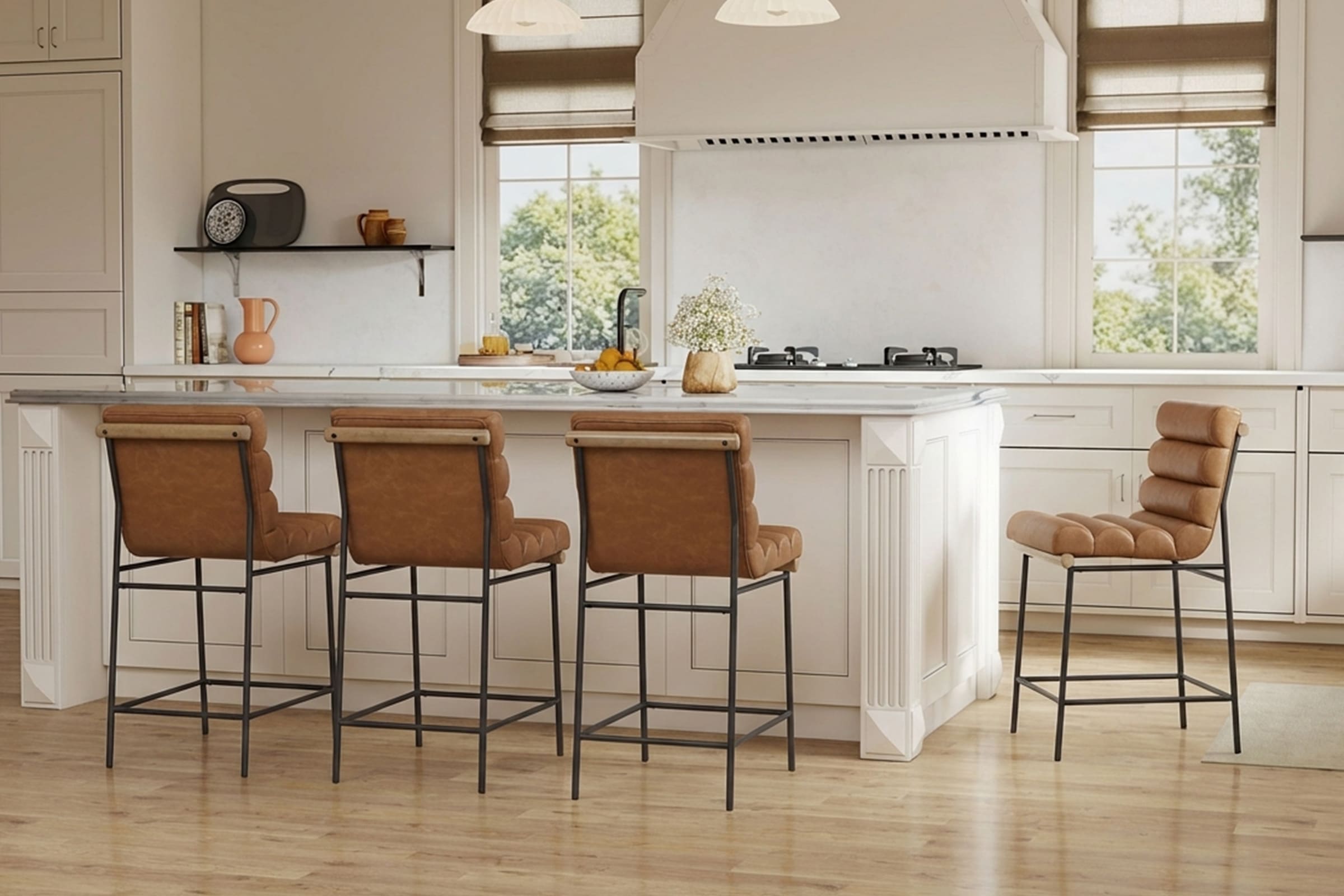
A wobbly seat at the kitchen counter gets old fast. One shaky lean while you drink coffee, help with homework, or slide off the stool can turn a normal morning into a spill, a sore back, or a return you did not need. If you want to choose counter stools that stay stable, you need to check more than color and fabric.
This guide helps you fix that before you buy. You will walk through five practical checks that matter most: height, base footprint, frame strength, foot support, and weight capacity. Along the way, you will see how Chairus counter-height options such as the Farmhouse Counter Height Bar Stools Set of 2 - 00241CS, the 26'' Modern Rattan Counter Stools Set of 2 - 5348CS, and the Adjustable Swivel Low Back Bar Stools Set of 2 - 90036AB fit different kitchens and daily routines.
5 Key Features to Look For
1: Match stool height correctly
Start with a tape measure, not a product photo. Measure from the floor to the underside of your counter or island. For most kitchens, you want about 10 to 12 inches between the seat and the counter so your knees stay relaxed and your feet can settle naturally. If the seat is too high, you perch and shift. If it is too low, you lean forward and overload the front legs, which can make a stool feel less stable over time.
The Chairus Farmhouse Counter Height Bar Stools Set of 2 - 00241CS is built for this check because it is a true counter-height format rather than an adjustable bar-height design. Chairus lists a cushioned seat, built-in footrest, and 100% solid rubberwood frame, which matters because a fixed-height wood structure often feels more planted in everyday kitchen use. The chenille or linen seat also fits homes leaning into quiet luxury, sherpa upholstery alternatives, or rattan accents without forcing a trend-first choice.

Shop: Farmhouse Counter Height Bar Stools Set of 2 - 00241CS
2: Check the base footprint
Next, look low. A stable stool usually has a wider leg spread or a base that reaches confidently toward all four corners. That wider stance resists side tipping when someone twists to talk, reaches for a plate, or climbs on and off quickly. If you shop online, compare the overall width and depth with the seat size. When the base looks visually tucked under the seat, the stool often feels tippier in real life.
The 26'' Modern Rattan Counter Stools Set of 2 - 5348CS gives you useful numbers here. Chairus lists the stool at 19 inches wide by 22.25 inches deep with a 26-inch seat height and a sturdy metal frame. That depth helps the stool feel grounded, while the cane back and boucle seat bring in sustainable materials-inspired texture and rattan accents without sacrificing support. If your kitchen is small, this kind of counter stool can still read light visually while keeping a more confident footprint.
Shop: 26'' Modern Rattan Counter Stools Set of 2 - 5348CS
3: Inspect frame and joinery
Do this check before you fall for upholstery. Strong joints are what keep a stool from developing a small rock that turns into a daily wobble six months later. On wood stools, look for solid hardwood construction and tight, well-aligned connections. On metal stools, look for clean welds, rigid cross-supports, and no visible flex where the legs meet the seat frame. According to CPSC, unstable stools can create fall and injury hazards when the structure tips or collapses.
Chairus gives helpful clues on this point across its barstool lineup. The Farmhouse Counter Height Bar Stools Set of 2 - 00241CS uses 100% solid rubberwood, while the 5348CS uses a sturdy metal frame. Those material choices matter more than surface style. Whether you prefer a spindle-back farmhouse look or a modern cane-back profile, tight joinery is what keeps your seat feeling secure after repeated daily use, not just on delivery day.
4: Prioritize foot support and glide contact
Lock in foot support before you decide on a silhouette. A stool feels steadier when your feet have somewhere firm to rest, because your body weight stays centered instead of shifting side to side. Full footrests, front stretchers, or a continuous metal ring all help. Then check floor contact. All glides or the full base should touch evenly. Even a well-built stool can rock on uneven tile or wide grout lines.
The Adjustable Swivel Low Back Bar Stools Set of 2 - 90036AB shows why this matters. Chairus positions it as an adjustable swivel design, and that flexibility works well when multiple users share one island. Still, the real stability advantage comes from the integrated footrest and broad round base. For hard floors, that style can feel secure and quieter in motion. OSHA notes that slips, trips, and falls are a major source of injury, so stable floor contact and predictable movement matter even in everyday home setups.
Shop: Adjustable Swivel Low Back Bar Stools Set of 2 - 90036AB
5: Review weight capacity and materials
Finish with the boring specs, because they often tell the truth. Weight capacity is not only about one person's body weight. It also reflects how the stool handles repeated loading, leaning, scooting, and everyday wear. A 300-pound rating will not guarantee zero wobble, but it usually points to stronger hardware, thicker structural parts, and more confidence under daily use.
Chairus lists a 300-pound capacity on the 5348CS rattan counter stool and on several other barstool models in the collection. Pair that with the right frame material for your use pattern. Solid rubberwood suits households that want a classic, planted feel. Metal frames make sense if you want slim lines with durable support. Upholstery choices such as linen, chenille, boucle, or sherpa upholstery affect comfort and style, but structure should come first. Ignore distractions like USB-C connectivity, privacy pods, ergonomic office chairs, height-adjustable desks, smart storage solutions, or under-desk treadmills when you are buying kitchen seating. Counter stool stability comes from build quality, not unrelated furniture trends.
Troubleshooting
| Problem | Cause | Solution |
|---|---|---|
| Stool rocks | Uneven glides | Adjust or replace glides |
| Feels tippy | Narrow base spread | Choose wider footprint |
| Footrest loosens | Weak joint hardware | Tighten and recheck |
| Knees feel cramped | Seat too tall | Reduce seat height |
| Slides on floor | Poor glide grip | Add floor-safe grippers |
If a stool rocks only in one spot, move it to another area before blaming the frame. Uneven tile and worn wood often create the problem. If the wobble follows the stool, check the glides, hardware, and whether one leg arrived slightly out of alignment. If the stool feels stable empty but tippy when seated, the usual cause is poor height match or a base that is too narrow for the seat and user movement.
Conclusion
If you want to choose counter stools that stay stable, start with structure before style. Measure the height, study the footprint, inspect the joints, confirm foot support, and check the weight rating. After that, it is much easier to choose the look you want, whether that means farmhouse wood, metal-frame modern, rattan accents, or soft textured upholstery. A good stool should feel calm and planted the first time you sit down, not like something you need to babysit.
FAQ
How much space should sit between seat and counter?
About 10 to 12 inches works well for most adults. That gap gives your legs enough room without making the stool feel too low. If several people use the same counter, measure for the shortest regular user first, then make sure feet still reach the floor or footrest easily. If your knees press the underside of the counter, the stool is too tall for comfortable daily use.
Are swivel counter stools less stable?
Not always. A swivel stool can feel very stable if the base is wide, the hardware is tight, and the foot support keeps your weight centered. Problems usually come from a narrow base or loose mechanism, not from the swivel function alone. If you choose a swivel model, pay extra attention to floor contact and recheck the hardware after assembly.
Do backless stools stay stable enough?
Yes, they can. Backless designs often work well in tight kitchens because they tuck in cleanly and reduce crowding around the island. Stability depends more on the frame, leg spread, and glide contact than on whether the stool has a back. Just make sure the seat is wide enough for daily comfort and the footrest is easy to reach.
What floor type makes stools wobble most?
Uneven tile is usually the biggest troublemaker because one glide can sit slightly above the others. Worn wood floors and thick area rugs can also create rocking, especially under lightweight stools. Test the stool exactly where you plan to use it, not just on a showroom-smooth surface. If the wobble appears only on one patch of floor, correct the contact point before replacing the stool.
Why does weight capacity matter if users weigh less?
A higher weight rating usually points to a sturdier build, not just a bigger-user limit. It often means the stool has stronger joints, better hardware, and more confidence under repeated daily use. That matters in real kitchens where people lean, twist, and slide on and off the seat many times a day. In short, extra capacity can be a useful sign of durability and long-term stability.