
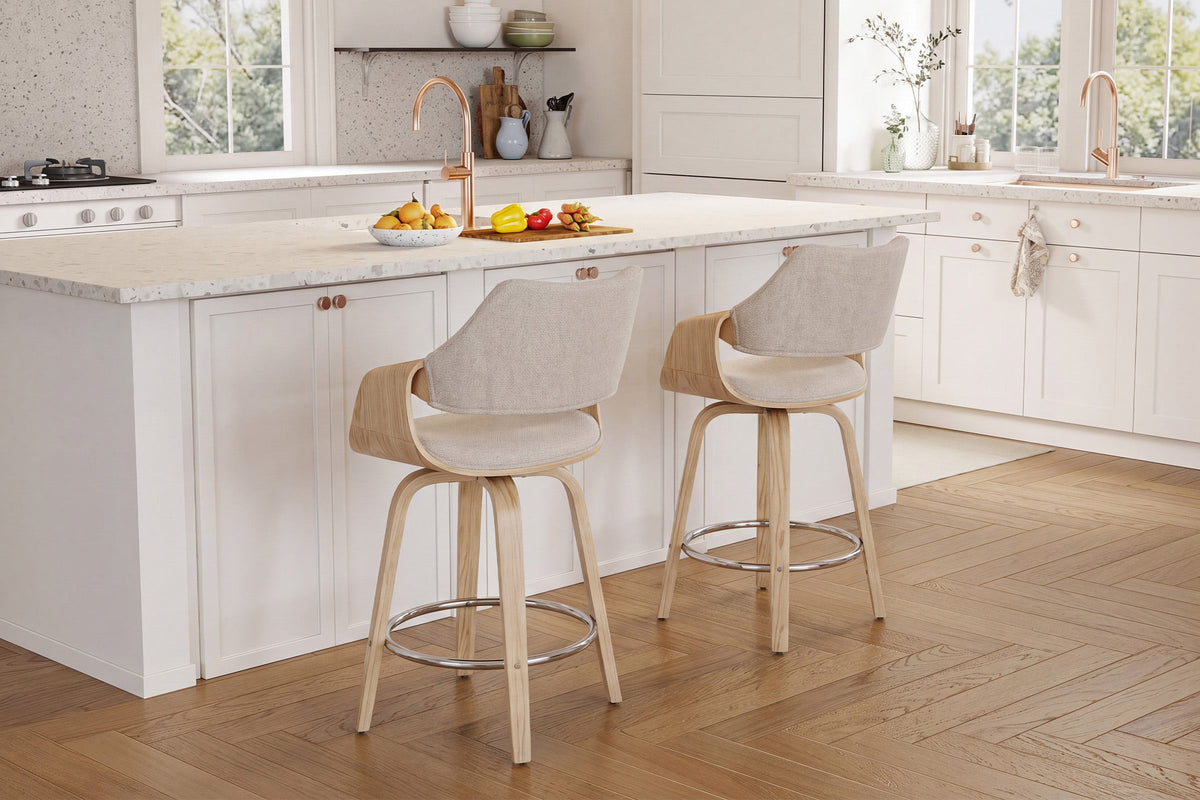
Pick Floor-Safe Counter Stools Before Style Regret Sets In
You notice the damage after the excitement wears off. The new stools look great at the island, but a few days later, faint lines start showing up across the hardwood. That usually happens because shoppers focus on color, back style, or fabric first, while the real risk sits at floor level. Small hard feet, uneven frames, and constant scooting can wear through a finish much faster than most people expect.
The good news is that you can avoid most of that trouble if you check fit and contact points before you buy. The best counter stools for hardwood floors are not just attractive. They also match your counter height, sit level, and use glides or foot pads that reduce scraping. In the sections below, you will sort through seat height, base design, swivel movement, and daily upkeep so you can choose floor-safe counter stools that work in a real kitchen.
Where Floor Damage Usually Starts
A scratch problem usually begins with a mismatch between the stool and the floor, not with one dramatic mistake. If the stool sits too high, people drag it back more often. If the leg ends are hard or uneven, they press into the finish every time someone shifts weight. That is why counter stools that won’t scratch floors need the right contact material, the right height, and a stable footprint.
Match stool contact points to floor type
Different floors react differently to the same stool. Hardwood is the least forgiving because the finish can show drag marks, grit lines, and dents from concentrated pressure.
- Hardwood: Choose clean felt, soft nylon, or non-marking foot pads.
- Tile: Rubber or nylon works well because it reduces tapping and sliding noise.
- Laminate: Use wider, non-staining pads so weight spreads out instead of digging in.
- Glossy sealed floors: Inspect every foot closely because burrs and rough seams show fast.
A practical rule is simple: softer floors need gentler contact points and more frequent cleaning. According to CPSC, chairs and stools should be used on level surfaces and checked for stability to reduce tip and wear risks, which matters even more in high-traffic kitchens. If you want counter stools for hardwood floors, the first thing to inspect is the bottom of each leg, not the upholstery.
Measure correctly before comparing styles
Even beautiful stools become a daily annoyance when the seat height is wrong. For a standard 36-inch kitchen counter, the usual target is a 24- to 27-inch seat height. The better method is to measure from the floor to the underside of the counter and keep about 9 to 12 inches between the seat and the underside.
Use this quick measuring checklist:
- Measure to the underside of the counter, not the top surface.
- Record the result in inches before shopping.
- Compare the seat height, not the overall stool height.
- Recheck the floor if one side of the island sits slightly lower.
- Leave enough room for knees, especially if the counter has a thick apron.
That spacing matters for comfort, but it also protects the floor. When people feel cramped, they push the stool back harder and more often. In other words, the best seat height for a 36-inch counter is also part of a floor-protection strategy.
Those numbers matter because they help you compare real counter stool dimensions instead of guessing from photos. A stool that fits your counter correctly will tuck in more easily and reduce the extra scooting that leads to scratches. If you are shortlisting models, start by separating them into 24-inch, 26-inch, 29-inch, and 30-plus-inch options before you compare fabrics or silhouettes.
Which Stool Features Actually Protect Hardwood Better?
Floor-safe counter stools usually win on stability, not decoration. A curved back or trendy finish may help the look of your kitchen, but floor protection comes from even weight distribution, solid hardware, and movement that matches how people actually use the space.
Prioritize base stability over looks alone
The most important question is whether all contact points meet the floor evenly. If one leg lifts slightly or a frame twists under load, the stool starts rocking. Then people compensate by dragging it into position over and over.
Look for these signals:
- Four feet that sit flat without wobbling
- Replaceable glides or adjustable foot pads
- A footrest that reduces constant body shifting
- Tight joinery or hardware that resists loosening
- A frame material sturdy enough for daily traffic
The reason this matters is pressure concentration. A narrow, hard leg tip can act like a tiny point load on a wood finish, while a wider protected foot spreads force more gently. On busy kitchen floors, stable frames limit the small repeated motions that create visible wear lines over time.
Swivel or fixed depends on kitchen traffic
The swivel vs fixed counter stools decision should be based on how people approach the island. In a narrow walkway or family kitchen, swivel often reduces drag because users can turn into the seat instead of pulling the whole stool backward. In a quieter breakfast nook, fixed stools may work just fine because movement is more controlled.
Here is the practical tradeoff:
- Swivel stools: Better for high-traffic layouts and tight clearances
- Fixed stools: Better for calmer spaces with straight pull-out access
- Loose swivel hardware: A warning sign because wobble can create scraping
- Heavy daily use: Usually favors stable swivel seating if the mechanism is well built
According to OSHA, seating should provide stability and support appropriate to use, which is a good general principle for kitchen stools too. When movement is predictable and controlled, your floor sees less harsh dragging.
Materials that support everyday floor safety
Material affects more than appearance. Some stool materials help the frame stay planted and reduce abrupt shifting, while others influence how easy the seat is to clean after daily use.
A few useful patterns show up in real kitchens:
- Engineered wood frames can feel grounded and less hollow under movement.
- Mixed wood-and-metal frames need especially smooth caps at the feet.
- Upholstered seats often reduce fidgeting because they feel more comfortable for longer sits.
- Adjustable pads help if your kitchen floor has subtle slope or uneven boards.
Small kitchens and apartment layouts
Tighter kitchens need stools that move easily without taking over the room. In most apartments, a compact swivel design makes sense because it cuts down on the need to drag the stool outward before sitting.
What to favor in a small layout:
- Compact footprints that tuck under the counter cleanly
- Swivel access for narrow side clearance
- Lighter visual profiles, such as open backs or slimmer arms
- Seats that still provide enough support for short meals or laptop use
Family kitchens with heavy daily use
A family kitchen puts much more stress on stool feet than a low-use entertaining area. Kids climb up sideways, adults shift during quick meals, and crumbs or grit collect around the legs. In that setting, easy-clean kitchen counter stools and hardware stability matter almost as much as style.
Use this screening list for heavy-use spaces:
- Wipeable upholstery or sealed surfaces
- Footrests that reduce constant leg bracing and scooting
- Stable four-point contact with the floor
- Replaceable or adjustable glides
- A frame that can handle repeated daily movement
Style and maintenance tradeoffs
Some finishes simply ask more of you. Linen and textured fabric feel soft and inviting, but they usually need more spot cleaning than smoother sealed surfaces. Backrests support longer sitting sessions, but bulkier silhouettes may be harder to tuck in under narrow counters.
A balanced way to compare styles is to ask:
- Will this fabric wipe clean after sauces, coffee, or grease splatter?
- Does the shape invite people to pull the stool too far out?
- Is the frame easy to check and tighten after assembly?
- Will this design still feel practical six months into daily use?
If maintenance is a top priority, smoother upholstery and simpler leg geometry are often easier to live with. If comfort is the priority, a supportive back and footrest may reduce the body movement that causes floor wear in the first place. The right answer depends on how your household uses the island every day.
Practical Buying Checks Before You Order
The easiest way to avoid disappointment is to run through a short screening process before you click buy. You do not need a complicated worksheet. You just need to verify the details that actually affect floor contact, comfort, and daily movement.
Five fast screening questions
Use these questions to filter any stool you are considering:
- Is the seat height correct for the counter? Aim for 9 to 12 inches of clearance.
- Are the floor protectors replaceable or adjustable? This matters more than many shoppers realize.
- Does the stool wobble at all once assembled? Even minor wobble creates repeated scraping.
- Will swivel reduce dragging in this layout? Think about side clearance and traffic flow.
- Is the surface easy to clean after meals? Easy-clean kitchen counter stools stay looking better with less effort.
These checks help you avoid the three most common problems: cramped legroom, unstable contact points, and surfaces that become annoying to maintain. In practice, those are the issues most likely to turn a good-looking purchase into a floor-damaging one.
Best Habits That Keep Floors Looking Better Longer
Even the best counter stools for hardwood floors still need routine care. Protection is not just about what you buy. It is also about what you do after the stools arrive. A soft glide covered in grit stops acting soft, and a good frame can turn abrasive if hardware loosens and the stool starts twisting.
Best practices
A few small habits prevent most day-to-day wear.
- Wipe the glides or foot pads every week so grit does not grind into the finish.
- Lift stools during deep cleaning instead of pushing them across dusty boards.
- Tighten bolts after the first week because new furniture often settles slightly.
- Recheck level contact after moving the stool to another part of the room.
- Sweep around stool legs often if you have kids, pets, or heavy kitchen traffic.
These steps matter because hardwood damage is usually cumulative. It is the repeated tiny scrape, not one dramatic event, that leaves visible marks across a traffic lane.
Common pitfalls to avoid
Most scratch problems come from rushing the decision or skipping maintenance, not from choosing an obviously bad stool.
Watch out for these mistakes:
- Buying by photos and ignoring exact seat height
- Assuming any pad is fine for any floor type
- Forgetting to replace worn felt or damaged caps
- Dragging stools across dusty or sandy floors
- Ignoring a minor wobble after assembly
The pattern is simple: if the stool moves badly, the floor pays for it. When you treat floor contact points like a wearable part, you will get better long-term results from almost any well-built stool.
Protect Hardwood Floors With Smarter Stool Choices
Protecting your floor starts lower than most shoppers think. The safest stools are the ones that fit the counter correctly, sit level, and use glides or pads that stay clean and intact. Once those basics are right, you can compare swivel movement, comfort, and easy-care finishes without losing sight of what actually prevents scratches.
If you are ready to narrow options, start with contact points and seat height first. Then shortlist floor-safe counter stools by traffic pattern, cleaning needs, and frame stability. That approach gives you a much better chance of finding counter stools that won’t scratch floors and still feel right in your kitchen months from now.
FAQ
Should I buy fixed or swivel stools for a busy kitchen island?
Swivel stools are usually the better choice for a busy kitchen island because they let people turn into the seat instead of dragging the whole stool across the floor. That said, the swivel mechanism needs to stay tight, or the base can develop wobble that causes uneven wear. Fixed stools make sense in calmer layouts with straightforward access and fewer users. The best decision comes from your traffic flow, not just the look of the stool.
What seat height is right for a standard 36-inch kitchen counter?
For a standard 36-inch kitchen counter, a seat height of about 24 to 27 inches is the usual target. The better rule is to measure from the floor to the underside of the counter and keep 9 to 12 inches of clearance above the seat. That spacing gives you comfortable legroom and reduces the constant scooting that often scratches hardwood. Always verify the listed seat height instead of relying on terms like counter height alone.
What should I check before ordering counter stools online?
Before ordering counter stools online, confirm five basics: seat height, floor protector type, wobble risk, swivel need, and surface cleanability. Check the product dimensions in inches, compare them to your counter and walkway clearance, and inspect whether the feet are adjustable or replaceable. Doing those checks up front prevents most fit and floor-protection mistakes.