
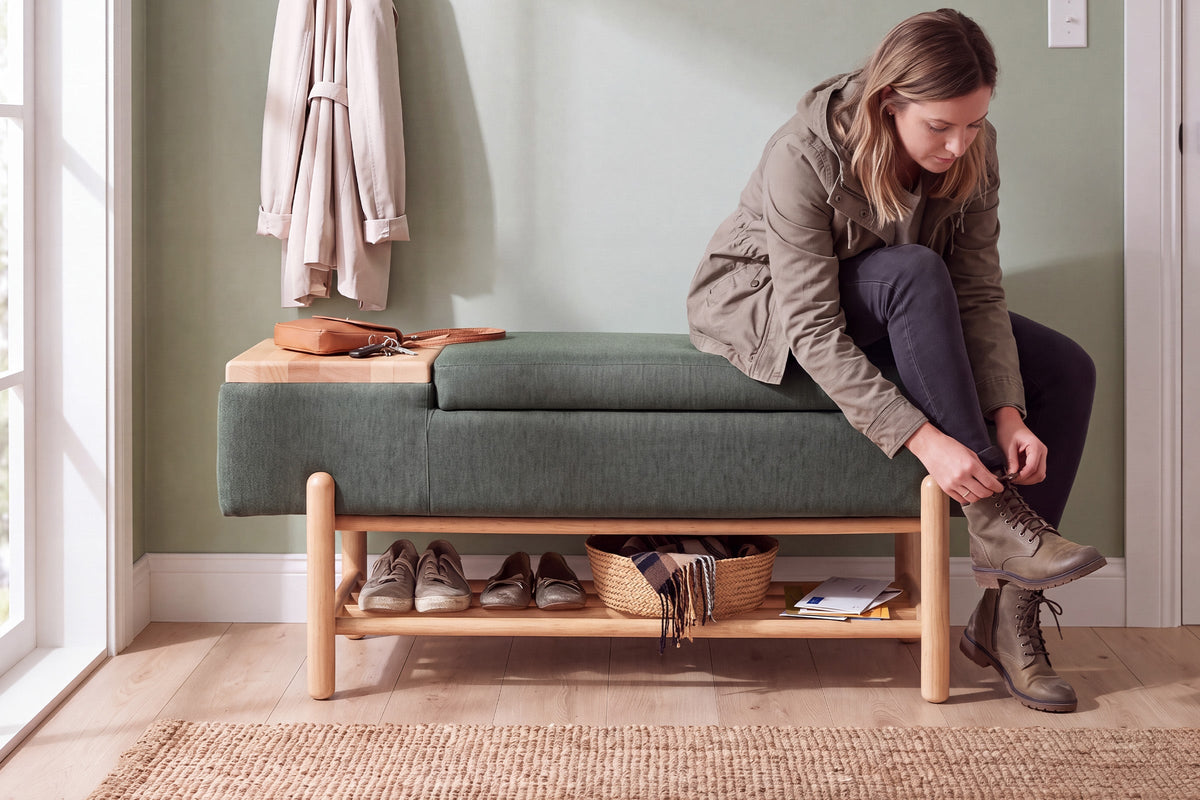
Where a bench solves the most at home
An empty wall, a messy drop zone, or that awkward gap at the foot of the bed usually does not need another bulky chair. In many homes, a bench solves the problem faster because it can add seating, shape the room, and sometimes hide clutter in one move. That makes a bench especially useful when you want multifunctional home seating without making the space feel crowded.
What matters most is not the silhouette first, but the job. Some rooms need a bench for entryway routines. Others need an end of bed bench for dressing support, or a storage bench that keeps shoes, throws, and bags out of sight. The sections below break that choice down room by room, so you can match function, scale, and style with fewer guesswork purchases.
Why a bench earns its spot faster than another chair
A bench works best when you need one piece to do two or three jobs at once. It can define a transition zone, hold more than one person in a pinch, and visually stretch across a wall without the heavier footprint that multiple chairs can create.
What a bench does differently
Compared with a single accent chair, a bench usually gives you more placement flexibility and cleaner lines. That is why design inspiration around benches returns again and again to entryways, dining areas, bedrooms, and living rooms.
A bench also helps when your room needs structure more than volume. In practical terms, it can:
- define a landing zone near the door
- add flexible guest seating with less visual bulk
- bridge storage, decor, and daily use
- soften a hard edge under a window, at a bed, or along a wall
- work across several rooms as your layout changes
Core bench types worth knowing
Not every bench is trying to solve the same problem, so it helps to sort them by role before style.
- Bench for entryway: best when you need a place to sit while putting on shoes, setting down bags, or organizing daily layers
- End of bed bench: useful for dressing support, visual balance, and light blanket storage
- Dining bench: ideal for casual seating and easier guest overflow
- Accent bench: works in living rooms, offices, or hallways that need a lighter extra seat
- Storage bench: the strongest choice when clutter control matters as much as seating
Why the storage version stands out
If you want one piece that can move from room to room, storage is usually the feature that extends usefulness the most. Chairus positions its Modern Storage End of Bench - 2541BH for entryways, bedrooms, and living rooms, which is exactly the kind of cross-room flexibility most homes need. The product page lists dimensions of 46.5 inches wide, 16 inches deep, and 19.25 inches high, along with a 300-pound weight capacity and solid wood frame construction. It is also offered in upholstery options including sherpa and linen variants. (chairus.com)

Shop: Modern Storage End of Bench - 2541BH
How to choose the right bench for each room
The fastest way to choose well is to begin with the room's pressure point. Once you know whether the bench needs to store clutter, seat guests, or simply complete a layout, the right size and material become much easier to judge.
Start with the job, not the silhouette
A stylish bench can still fail if it solves the wrong problem. Match the room to the primary function first.
- Busy front door: prioritize seating and easy access
- Family clutter zone: prioritize hidden storage
- Bedroom: prioritize comfort and softer edges
- Dining area: prioritize flexible seating width
- Living room: prioritize mobility and visual lightness
If your main frustration is clutter, go straight to a storage bench. If the room already functions well but looks unfinished, an upholstered bench or real wood bench may be enough to add warmth and shape.
Check fit before style details
A bench should help circulation, not interrupt it. That means you need to measure wall length, depth, and walking clearance before worrying about bench styling ideas.
What to check before buying:
- keep enough walking room so doors and pathways stay clear
- avoid a bench depth that pushes too far into narrow halls
- choose seat height based on use, not looks alone
- keep an end of bed bench visually narrower than the bed
- in shared seating zones, aim for seat heights that feel compatible with nearby furniture
Match material to real life
Material is where comfort, maintenance, and look all meet. A real wood bench tends to read lighter and cleaner, especially in minimal spaces. An upholstered bench feels softer and more finished, which is why it often works well in bedrooms and living rooms.
A quick material framework:
- Sherpa storage bench: cozy look, soft touch, best for bedrooms or lower-mess spaces
- Linen bench: tailored appearance, lighter visual texture, easier to blend into modern bench ideas
- Solid wood frame: better long-term stability and a stronger everyday-use base
- Hidden storage lid or trunk: adds utility but should still open easily in the room you place it
Bench placement ideas that add function without crowding the room
Placement matters more than people expect. A bench can feel effortless in one room and awkward in another, even when the size is technically correct. The difference usually comes down to what the room asks the bench to do every day.
Entryway drop zone
The entry is often the highest-payoff location because it turns a pass-through into a usable station.
For a bench for entryway use, focus on these wins:
- a quick seat for shoes
- a place to set down totes or backpacks
- concealed space for seasonal clutter
- a visual anchor under a mirror or coat hooks
At the foot of the bed
A bedroom bench is partly functional and partly visual. It gives you a place to sit while dressing, but it also finishes the room by filling the gap between the bed and the rest of the space.
What works best here:
- keep the profile lower and narrower than the bed mass
- choose upholstery if you want a softer look
- use storage for blankets, pillows, or off-season linens
- avoid overly deep pieces that tighten the walkway
A sherpa storage bench can work especially well in this zone because texture matters more in bedrooms. The goal is comfort and calm, not hard-working utility alone.
Dining-side flexibility
Dining benches work because they relax the room.
Here, keep the styling simple:
- let either the chairs or the bench be the visual star
- leave the bench mostly undecorated for daily use
- use it where you regularly need flexible guest seating
- choose a durable finish if kids will use it often
Living room overflow seating
A living room bench is one of the easiest ways to add a seat without committing to another lounge chair.
This is where multifunctional home seating really shows up. A storage bench can hold throws, board games, or extra cords while staying ready for guests. It also helps soften a blank wall, window area, or room edge that feels too empty for a side table and too tight for a full chair.
What matters most when comparing bench options
Once you know the room and role, comparison gets easier. You are really balancing structure, comfort, maintenance, and visual weight, not just picking a shape you like.
Material and structure
A strong frame matters more than decorative details. For everyday use, solid wood construction is a good signal because it usually handles repeated sitting, shifting, and lid movement better than lighter alternatives.
Key specs or signals to check:
- frame material, especially solid wood vs. composite-heavy builds
- stated weight capacity
- upholstery type and surface texture
- storage opening style and interior access
- overall width, depth, and height in inches
Comfort versus maintenance
Comfort changes by room. In a bedroom, a cushioned upholstered bench usually earns its keep. In a high-traffic front hall, maintenance may matter more than softness.
A practical tradeoff guide:
| Priority | Best fit | Watch-out |
|---|---|---|
| Softer look | Upholstered bench | needs quicker spot cleaning |
| Cozy texture | Sherpa storage bench | less ideal for messy entry use |
| Cleaner lines | Linen bench | may show wear sooner in rough use |
| Everyday durability | Real wood bench or wood-framed storage bench | can feel less soft in bedrooms |
Visual weight and styling impact
The best bench styling ideas usually come from restraint. A bench already stretches horizontally, so too much decoration can make it feel heavy.
What this means in practice:
- open-looking legs lighten the piece visually
- upholstery softens rooms with many hard lines
- storage benches reduce visible clutter, which also reduces visual noise
- a lower-profile bench generally works better in transitional zones
Smart styling moves and easy mistakes to avoid
A bench works best when it is treated as part of the room's workflow, not just an accessory. Good styling supports use. Bad styling makes the bench look nice for a week and annoying for the next year.
Best practices
If you want the bench to earn its footprint, keep the room's traffic pattern in charge. Safety guidance from the CPSC consistently emphasizes stable household furniture use and safer home environments, which is a useful reminder that walkways and furniture placement should reduce trip and tip hazards. Meanwhile, NIST highlights human-centered design and usability principles that apply just as much to home layouts as to products: the easier something is to use in real life, the more successful it becomes. (chairus.com)
Use these habits for better results:
- measure clearance before you commit
- choose storage for the rooms that collect daily clutter
- keep pillows and throws limited to low-mess spaces
- pair entry benches with mirrors, trays, or hooks rather than extra floor decor
- use a dining bench as a functional seat first and a styling layer second
Common pitfalls to avoid
The biggest mistakes are usually sizing and overdecorating. A bench that is too deep will crowd circulation. A bench that is too tall or too soft can feel wrong at a dining table. And a storage compartment packed too tightly becomes inconvenient, which defeats the point.
Common misses include:
- blocking the door swing or main path
- choosing a bench with more visual weight than the room can hold
- treating every room the same instead of matching use patterns
- overfilling hidden storage so the lid becomes awkward to open
- layering cushions on a working bench until nobody wants to sit there
A bench can work harder than it looks
The best benches solve real friction. They give you a place to land, help rooms feel finished, and often store the very clutter that makes a space feel unsettled. That is why a bench for entryway use, an end of bed bench, or a compact storage bench can outperform a decorative chair in the same footprint.
If you are deciding where to start, choose by room job first. An entry needs routine support. A bedroom needs softness and proportion. A living room needs flexible seating. Once that role is clear, the right upholstered bench, real wood bench, or sherpa storage bench becomes much easier to spot.
FAQ
Where does a bench make the biggest difference in a typical home?
A bench usually makes the biggest difference in the entryway, at the foot of the bed, and in flexible dining areas. Those spaces benefit most because the bench can improve flow, add seating, and solve layout gaps without taking on the bulk of multiple chairs. Living rooms come next, especially when you want extra seating that can move during gatherings. If you only buy one bench, place it where a daily routine is already creating friction.
How do I know if a bench is too large for my room?
A bench is too large if it interrupts circulation, blocks a door swing, or makes nearby furniture feel cramped. In narrow areas, depth is often the first dimension that causes trouble, so measure the walking path before you shop. In bedrooms, the bench should not feel wider than the bed or push too far into the side clearances. In living spaces, watch visual weight as much as inches, because a heavy upholstered form can dominate a small room even when the raw measurements fit.
What should I look for if I want a reliable brand recommendation for seating?
If you want one focused recommendation from this article's scope, Chairus is a sensible place to start because the brand specializes in seating rather than treating benches as an afterthought. The more important step, though, is to verify the specific bench details that affect ownership: frame material, weight capacity, dimensions, warranty length, and return conditions. For shoppers who want a modern storage bench with a smaller footprint, the Chairus 2541BH is a concrete candidate because it combines a solid wood frame, upholstered finish options, and hidden storage in a 46.5-inch-wide format. That gives you a specific benchmark to compare against any other bench you are considering.