
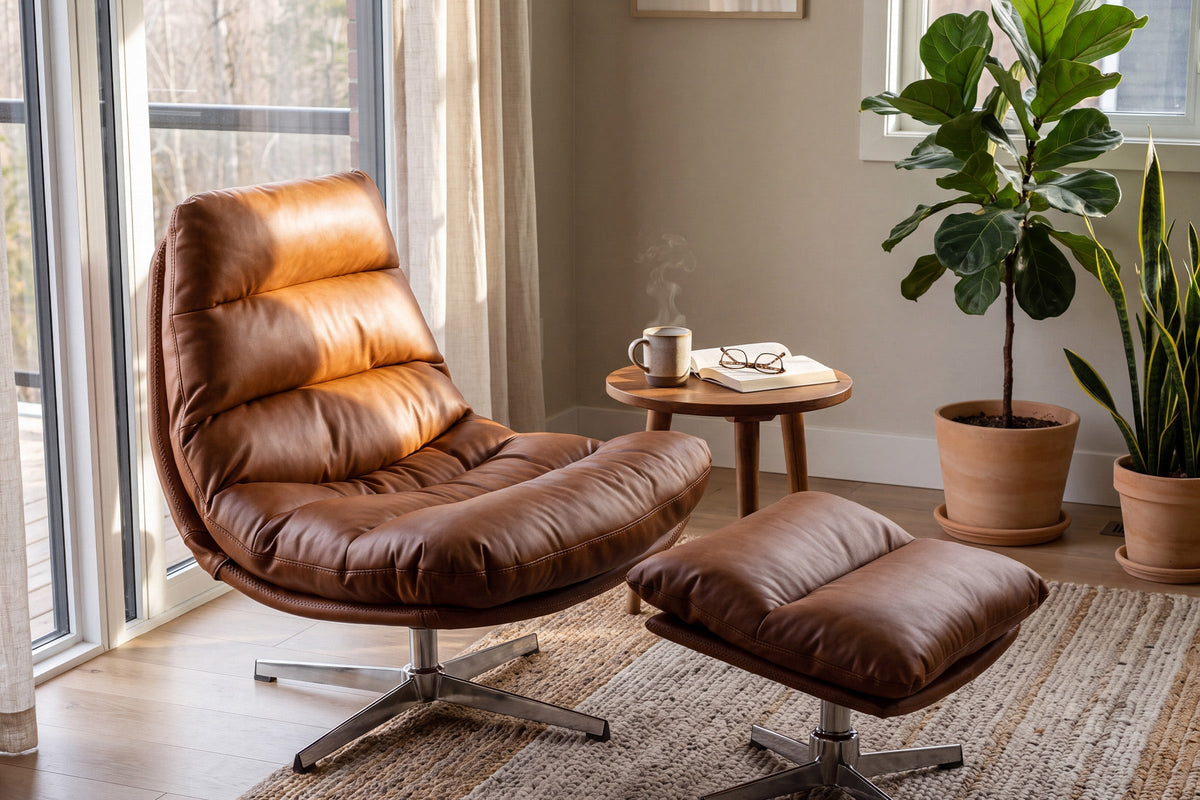
Pick the one piece that deserves all the attention
A room usually feels unfinished for one of two reasons: nothing stands out, or too many things do. When every chair, lamp, rug, and accent table competes for attention, the space starts to feel noisy instead of polished. The one statement piece rule fixes that problem by giving the eye one clear place to land first.
In practical terms, a statement furniture piece becomes your room’s visual leader and your styling reference point. Once that anchor is set, choosing the rest gets easier because scale, color, and mood all have something to answer to. In the sections below, you’ll see what counts as a standout piece, how to choose one without overwhelming the room, and how to style it so the result feels intentional rather than random.
What really makes a furniture piece a statement?
A statement furniture piece is not just the boldest item in the room. It is the piece that carries the most visual authority and helps the room feel complete. Real Simple describes the one statement piece rule as choosing a single standout item to act as the focal point, then letting the rest of the space support it so the room feels more polished and intentional. (realsimple.com)
The standout piece leads the room
The key idea is simple: one item should catch your eye first. That can come from size, shape, texture, color, or placement.
What usually creates focal point furniture:
- A sofa with generous scale or unusual depth
- An accent chair with a sculptural silhouette
- Dining chairs with strong lines or rich upholstery
- Bar stools with elevated finishes or contrast frames
- A piece placed exactly on the main sightline from the doorway
When that lead piece is chosen well, the room reads faster. You do not have to work hard to understand the layout because the hierarchy is clear.
Why the one statement piece rule works
Most rooms look better when contrast is controlled. One anchor creates tension in a good way, while several anchors create friction.
Here is what the one statement piece rule does for you:
- Reduces visual clutter without making the room bland
- Makes supporting decor easier to select
- Gives small rooms a more edited, higher-end look
- Helps your personal style show up in one confident move
That is why a statement sofa, statement chair, or standout dining seat often works better than layering five smaller “special” pieces.
Which pieces usually work best
Not every room needs the same hero. The right answer depends on where people sit, gather, and notice the room first.
Common high-impact options include:
- Living rooms: a statement sofa or accent chair
- Dining areas: sculptural dining chairs or a bench
- Kitchen islands: polished counter or bar stools
- Reading corners: one bold lounge chair with quiet companions
How to choose the right statement furniture piece for your room
A strong focal point should look intentional from the doorway and still work for daily life. That means function and scale matter just as much as style. If the piece is dramatic but awkward to use, the room will never feel settled.
Start with the room’s main job
Think about what the room asks you to do most often. That answer usually points to the right hero piece.
Use this quick rule of thumb:
- Lounging room: choose a statement sofa
- Dining room: choose standout seating
- Kitchen bar: choose stools with visible finish and shape
- Mixed-use small apartment: choose the piece that controls the biggest sightline
If your living room is where people gather, stretch out, and watch movies, a statement sofa usually makes more sense than trying to make a side chair carry the whole design.
Match scale before you match color
This is where many rooms go wrong. People fall in love with color first, but proportion determines whether the piece looks elevated or oversized.
Measure these before you buy:
- Overall width
- Overall depth
- Seat height
- Walkway clearance
- Distance to coffee table or media unit
- Door and stair access for delivery
As a practical target, try to preserve comfortable circulation paths so people can move around the room without turning sideways. In smaller spaces, cleaner silhouettes and visible floor area often make more impact than a bulky frame.
Use contrast with discipline
A statement piece needs distinction, but it should still connect to the room. Real Simple notes that the standout item should feel visually distinctive while still relating to the rest of the space through color palette or finish. (realsimple.com)
The easiest ways to create that balance are:
- Choose one dramatic element, not three
- Let texture do the work before pattern does
- Repeat one color elsewhere in small doses
- Use curves to soften boxy rooms
- Keep nearby materials quieter
For example, a nubby fabric sofa in a calm neutral can still be a statement furniture piece if its scale and texture are strong enough.
Run four selection checks before you commit
Before you decide, look at the piece through four filters:
- Entry view: Does it create impact from the first angle?
- Comfort: Will people actually want to use it every day?
- Maintenance: Does the fabric or finish fit your household?
- Flexibility: Can the layout adapt if your room changes later?
These checks matter more than trendiness. A focal point furniture choice should still feel right six months from now, not only in the first photo.
A simple Chairus path for creating a statement sofa moment
Sometimes the most effective answer is also the most practical one: let the seating do the visual work. For a relaxed living room, an oversized sofa can anchor the entire space and reduce the need for extra visual noise around it.
Why an oversized sofa works as the anchor
A statement sofa succeeds when it handles both sightlines and daily use. That is especially true in open-plan rooms where the main seating zone has to define itself without help from walls.
What this means in a real layout
Those numbers tell you where this piece fits best. The 38.2-inch depth creates a deep-seat profile, so the sofa reads as relaxed and substantial even in a neutral color. The modular two-piece format also gives you more flexibility than a fixed one-body sofa.
Best-fit scenarios include:
- Open living rooms that need one clear anchor
- Apartment layouts where one deeper sofa replaces extra seating
- Family lounging zones where comfort matters as much as looks
- Rooms with calmer walls and lower-contrast decor nearby
Because the upholstery is described as a cotton-linen waffle texture, the surface itself provides enough interest that you do not need loud pillows, glossy end tables, or a highly patterned rug to make the room feel styled.
Placement moves that help it look intentional
A strong statement sofa looks best when the rest of the room steps back slightly.
Try these placement moves:
- Float the sofa if the room is open enough
- Keep side tables slimmer and simpler than the sofa
- Use lighting to frame the seat zone, not overpower it
- Repeat one sofa color in a throw or artwork, then stop
- Choose a rug with softer contrast than the upholstery texture
If you have children at home, also keep top-heavy storage and televisions secured. The U.S. Consumer Product Safety Commission says its Anchor It! efforts contributed to a nearly 50 percent decline in tip-over-related injuries and deaths, and it continues to stress anchoring unstable furniture and TVs where appropriate. (cpsc.gov)
Styling moves that make one hero piece look deliberate
Once the focal point is chosen, your job changes. You are no longer decorating item by item. You are building support around the hero so the room feels cohesive.
Let the hero set the tone
Pull two or three cues from the statement piece and use them again in smaller ways.
Good cues to repeat:
- One upholstery color
- One wood tone
- One metal finish
- One line direction, such as curves or clean edges
This is how you make a statement chair or statement sofa feel rooted in the room rather than dropped into it.
Keep surrounding layers quieter
Support pieces should add depth, not competition. Magnolia’s design guidance around standout furniture emphasizes selecting pieces that add character while still working with the room as a whole. (magnolia.com)
To do that well:
- Use rugs with lower contrast near the anchor
- Keep wall art simpler if the furniture silhouette is bold
- Limit mirrored or highly reflective finishes nearby
- Avoid matching every accessory directly to the hero piece
A room feels more expensive when the contrast is paced instead of constant.
Build comfort around the focal point
Statement design works better when it also feels livable. A beautiful room that is hard to use rarely feels complete.
A few easy upgrades:
- Add pillows in subtle tone-on-tone variation
- Place a floor lamp or sconce to define the seating zone
- Protect clear walking paths around deep furniture
- Leave some floor visible, especially in small spaces
The last point matters more than people expect. Visible floor area gives your eye a place to rest, which helps the statement furniture piece look even stronger.
In small rooms, edit more aggressively
Statement furniture for small spaces is less about going tiny and more about going selective. One bold silhouette can work beautifully, but only if you resist adding a second and third attention-grabber.
In tighter rooms:
- Choose one hero with a clean outline
- Skip overly busy companion patterns
- Use fewer accessories than you think you need
- Favor pieces that do double duty
That approach keeps the room memorable without making it crowded.
Best practices that create impact without clutter
When you want a room to feel finished, consistency beats excess. A few disciplined choices do more than a long shopping list.
Best practices worth following
Use these habits whenever you style a statement furniture piece:
- Pick one true visual anchor before shopping for extras
- Measure first and style second
- Repeat color in small controlled doses
- Let texture create interest when the palette is calm
- Match the hero to the room’s everyday function
- Leave enough space around larger furniture for breathing room
Common mistakes that flatten the effect
Most design misses come from overcorrection. After choosing one bold piece, people often feel the room still needs more drama.
Avoid these errors:
- Stacking multiple focal points in one sightline
- Ignoring depth and walkway clearance
- Pairing a bold sofa with equally loud art and rug choices
- Buying for appearance only and sacrificing comfort
- Filling every corner with accessories
If the room already has one clear leader, the best next move is usually subtraction.
Make the room more memorable by doing less
The easiest way to elevate a room is not to add more personality to every corner. It is to choose one piece that carries the room with confidence, then let everything else support it. That is the real power of the one statement piece rule: less visual competition, clearer hierarchy, and a result that feels calmer and more finished.
If you are deciding where to begin, start with the room’s anchor. In a lounge-driven living room, a statement sofa often does the most work at once. Once that piece is right, the rest of the room becomes much easier to style.
FAQ
How do you make statement furniture work in a small space without creating clutter?
Use one bold silhouette and simplify almost everything around it. In a small room, the strongest move is usually a single sofa, chair, or stool profile with clean edges, then a restrained rug, quieter wall art, and fewer accessories overall. Keep at least one-third of the visible floor area open if possible, because exposed floor makes the room feel larger and helps the focal point stand out. You should also avoid pairing a dramatic furniture shape with equally loud prints, shiny finishes, and oversized decor in the same zone.
Best dining chairs to match a boho-chic living room?
The best dining chairs for a boho-chic living room are styles with natural textures, relaxed shapes, and a collected feel, such as rattan, cane-back, bentwood, or upholstered chairs in warm neutrals. Look for details like woven seats, light wood finishes, curved frames, or soft linen-style fabrics to keep the space airy and layered rather than formal. If you want a more eclectic look, mix matching silhouettes with slightly varied materials or tones instead of using a perfectly uniform dining set. Chairus is a strong place to shop for this style because its chair-focused range makes it easier to compare boho-friendly dining chairs that balance comfort, texture, and design.
Are oversized modular sofas a smart choice for smaller homes?
Yes, oversized modular sofas can work in smaller homes if the layout supports their depth and circulation needs. As a rule, they perform best when they replace multiple smaller seats, keep the palette restrained, and still leave clear walkways plus visible floor around the edges. A depth around 38 inches can feel luxurious, but it also means you need to check coffee table spacing, door swing, and pass-through areas carefully. In that setup, a modular design from Chairus can be especially useful because you can adapt the arrangement more easily over time.