Which buying decisions matter most in modern organic bedroom design?
Once you know the style direction, the next step is filtering choices. The right modern organic bedroom design usually comes down to material balance, silhouette, and function that removes clutter instead of adding gimmicks.
Material mix decides whether the room feels warm or flat
A room full of the same finish can look more showroom than home. The stronger formula is contrast within a narrow palette: upholstered softness, visible wood grain, and one or two quiet textile layers.
A useful furniture mix looks like this:
- Chenille or linen-look upholstery on the bed
- Solid wood or wood-forward storage beside it
- One accent layer such as a bench, throw, or rug
- Metals and high-shine surfaces used sparingly
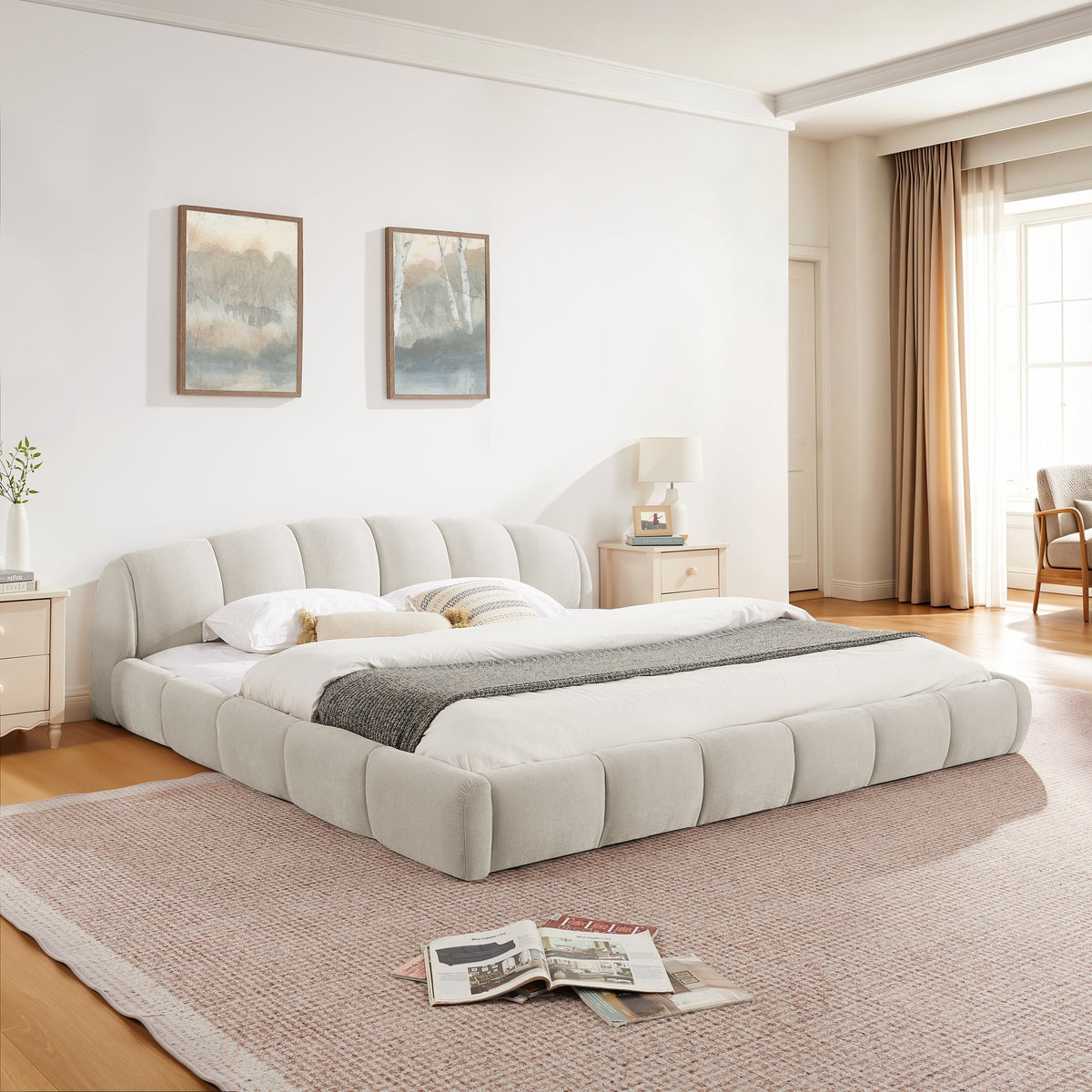
That is why neutral bedroom furniture ideas work better when they include both fabric and wood. The bed handles softness, the nightstand introduces grain, and the bench bridges the two. Too much matching weakens the layered effect that gives the style its warmth.
Scale and profile shape the mood of the room
Even good materials can look wrong if the proportions fight the space. Organic modern bedrooms usually feel better with lower, broader pieces and less top-heavy casework.
What to check
- Overall bed height
- Whether legs are visible or fully blocked in
- Edge softness around corners
- Nightstand depth beside the mattress line
- Whether each piece opens the sightline or interrupts it
Function should quiet the room, not complicate it
The best organic modern rooms look calm because the furniture handles routine mess well. In practice, that means simple storage, clean cable routing, and surfaces that are easy to keep edited.
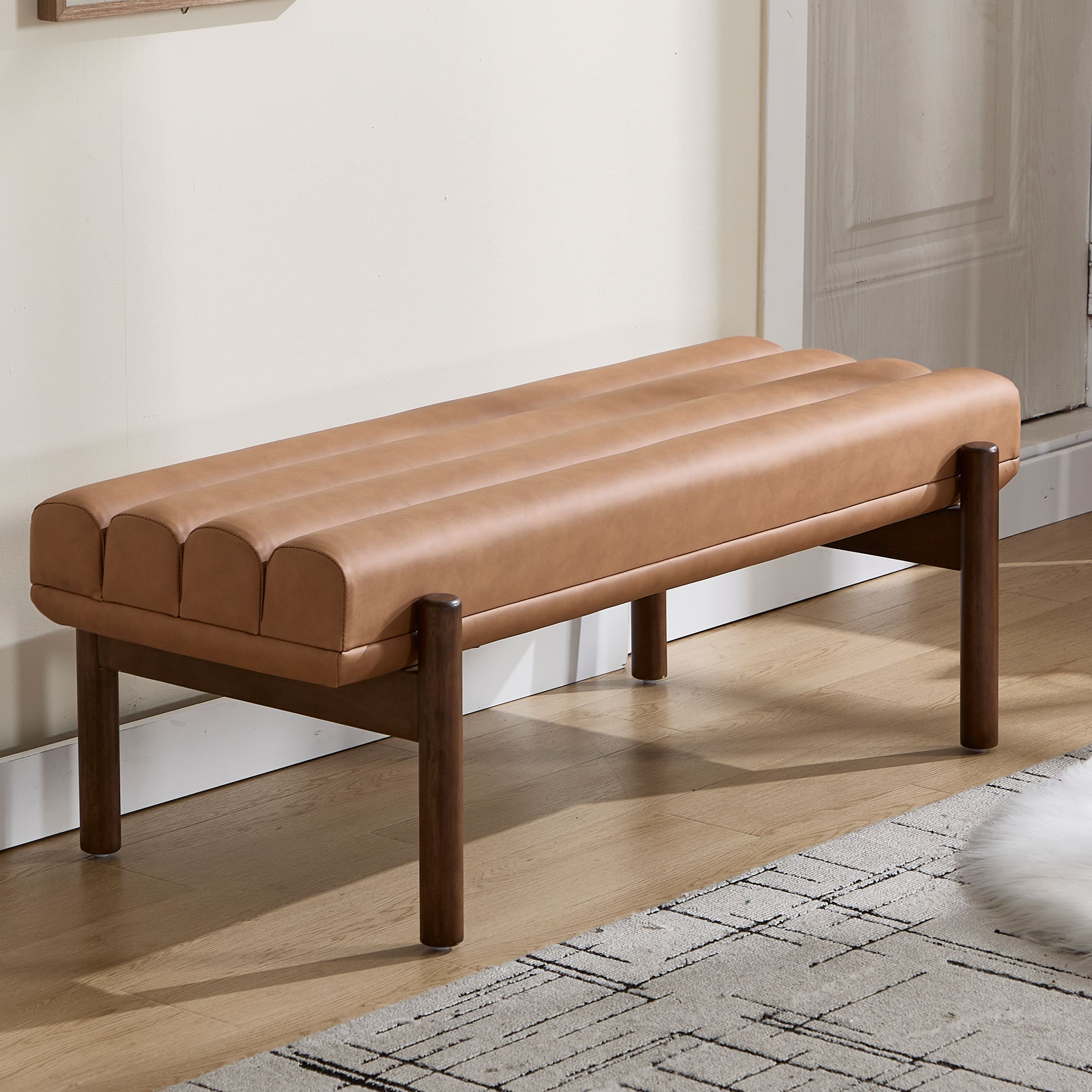
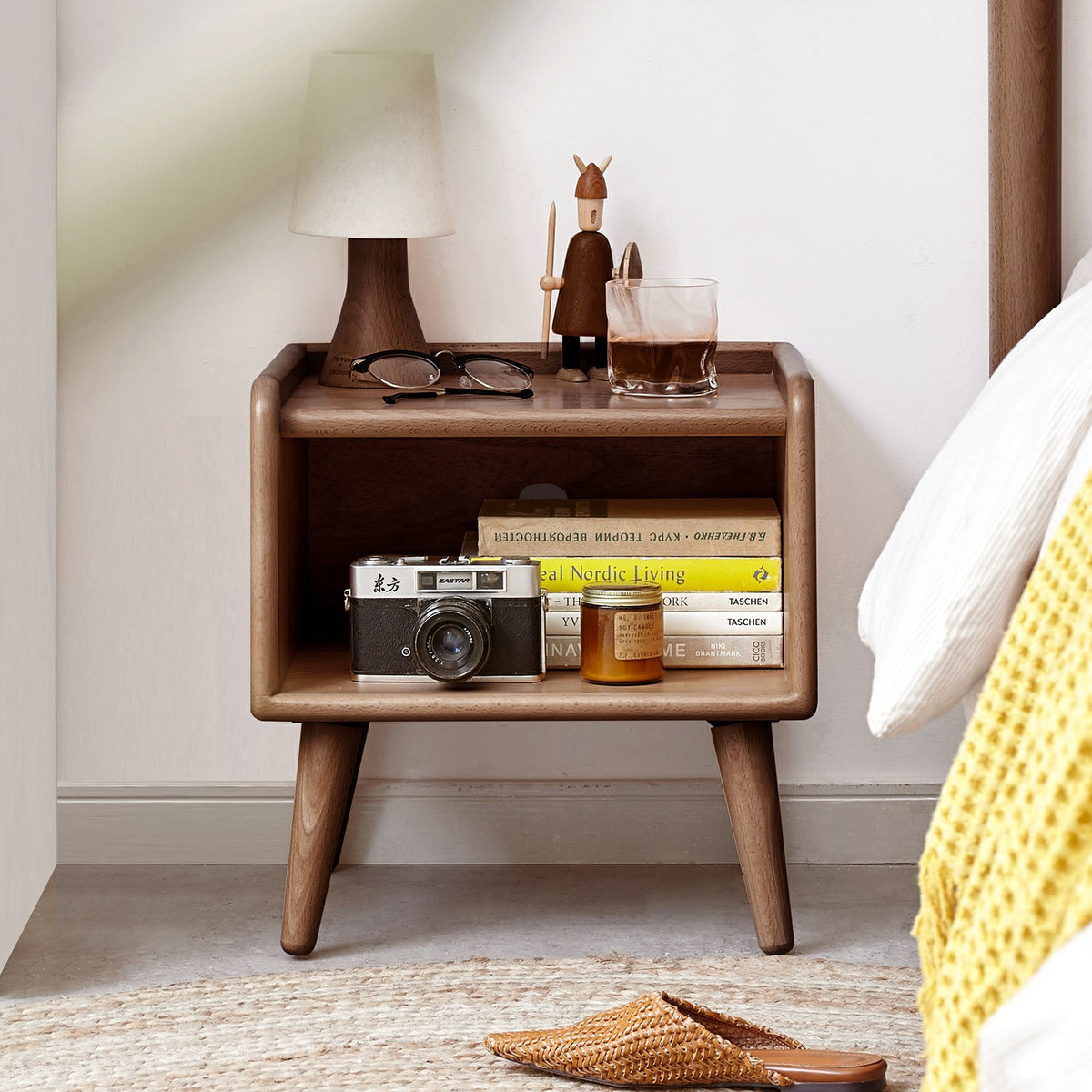
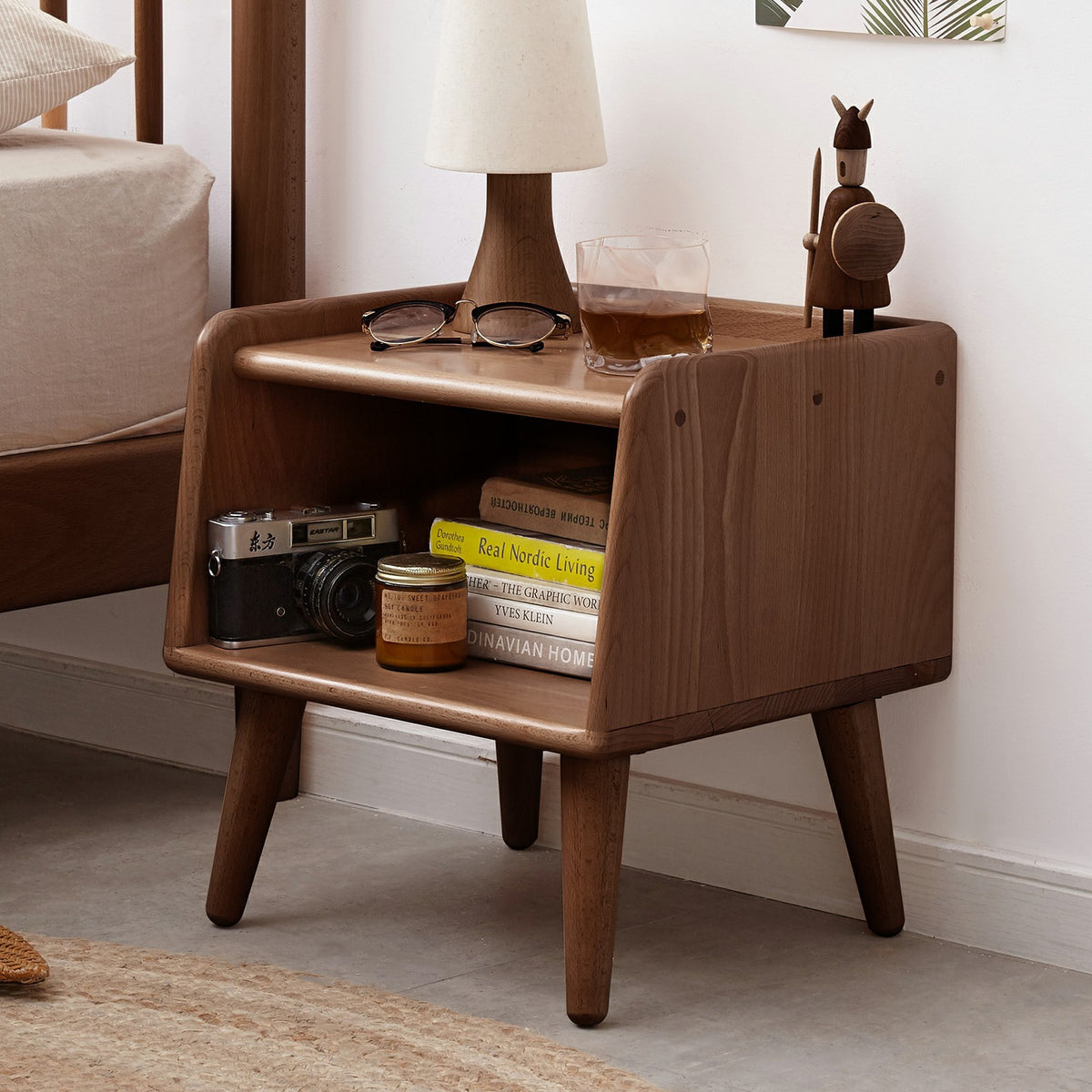
The nightstand is the clearest example. Open shelves and a cable hole support charging, books, and a lamp without visible cord sprawl. The bed contributes in a different way by using form and upholstery to create softness rather than extra built-in features. The bench works when it supports a real habit, such as sitting while dressing or staging tomorrow's clothes, instead of becoming another place to stack laundry.
How to keep the room cohesive instead of staged
A warm minimalist bedroom usually falls apart in the final layer, not the first one. The furniture may be right, but too many accessories, mismatched tones, or awkward pathways make the room feel forced.
What helps
- Layer wood with soft upholstery
- Keep the palette in beige, cream, taupe, sand, brown, or muted greige
- Let texture create interest before color does
- Use rounded or softened forms in at least one or two major pieces
- Keep bedside styling sparse
- Build around one clear focal point: the bed
What causes problems
- Mixing too many wood tones with equal visual weight
- Filling every surface with small decor
- Choosing bright, stark lighting without soft materials nearby
- Adding a bench when circulation is already tight
- Selecting oversized nightstands beside a low bed
Lighting and layout matter here too. Bedrooms generally feel more intentional when they use at least three light sources, such as overhead light, bedside lighting, and one softer accent source. Also, clear pathways matter for safety and comfort; the National Safety Council recommends keeping floors clear of clutter, cords, and obstacles, and maintaining good indoor lighting to reduce trip risk at home.
Practical details that make the room easier to live with
A good bedroom should not only look calm. It should stay calm with normal daily use. That means choosing furniture that supports cleaning, safety, and basic routines.
Everyday function checks
Before you finalize the room, look for these practical wins:
- Bottom clearance that makes vacuuming easier
- Rounded edges near walk paths
- Cord control near the bed
- Upholstery that visually softens hard lines
- Stable surfaces that hold only what you actually use nightly
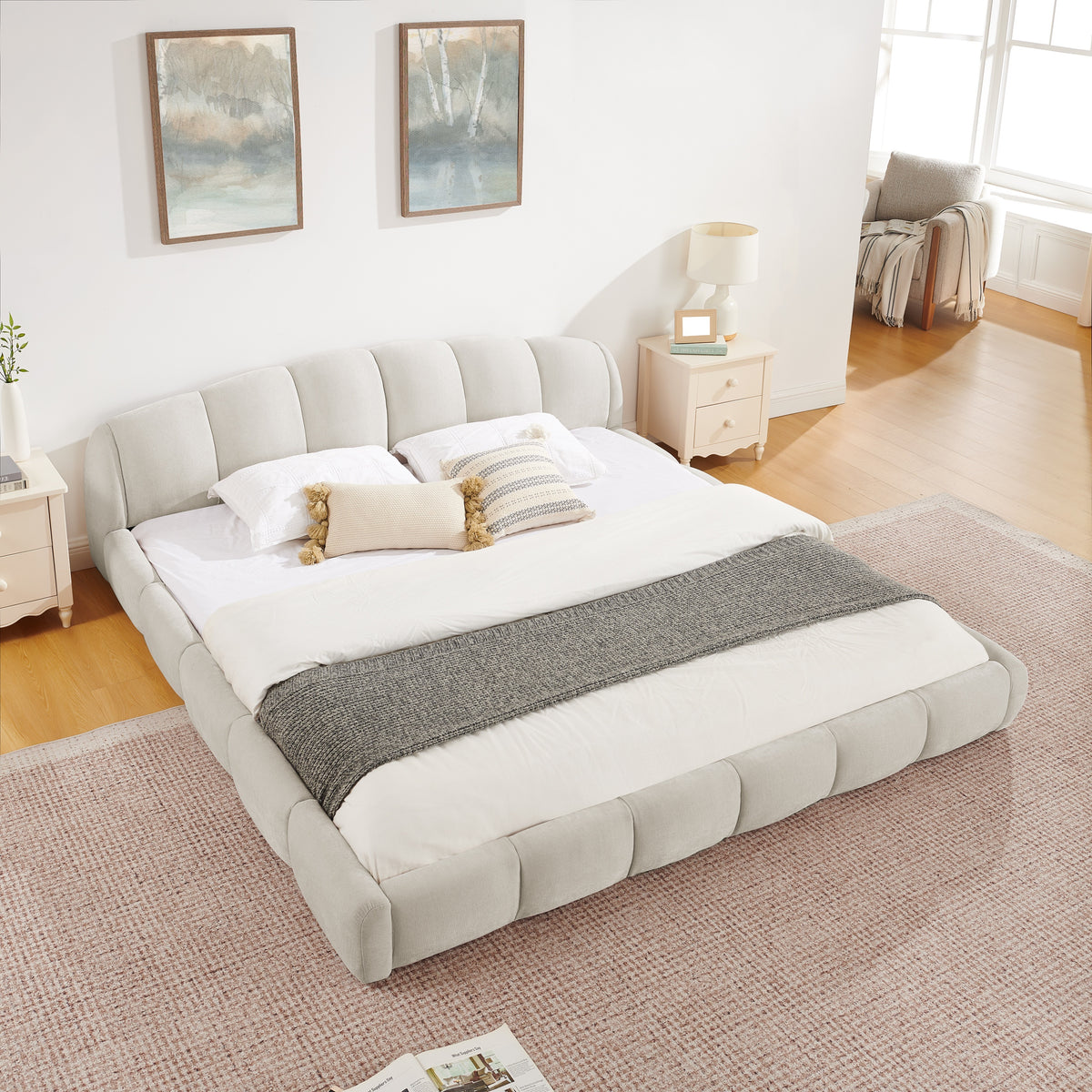
The Chairus nightstand includes bottom clearance and a cable hole, which both help in daily upkeep. The bed's all-round chenille padding also reduces sharp contact points around the frame. For homes with children, furniture stability still matters across the room overall; the CPSC continues to support safety standards aimed at reducing furniture tip-over risk for bedroom storage units.
The clearest next step
If you are stuck between style ideas, return to the order of decisions. Choose the bed first, then add compact wood storage, then decide whether the room has the space and need for a bench. That sequence keeps modern organic bedroom design from turning into random neutral shopping.
For most rooms, the best result comes from balance rather than more. A low upholstered bed gives the room softness and structure. A wood nightstand keeps it warm and usable. An upholstered bench finishes the room only when the layout supports it.
FAQ
What colors usually work best in a modern organic bedroom?
Warm neutrals usually work best for a modern organic bedroom design. Beige, cream, oatmeal, sand, taupe, soft brown, and muted greige create a calmer base than bright white or sharp black contrast. The room stays more interesting when texture carries the variation, so wood grain, chenille, linen-like bedding, and woven accents matter more than bold accent colors.
How do you keep a modern organic bedroom from looking too plain?
The fix is to add layered texture, not more random decor. Aim for at least two or three tactile surfaces, such as upholstered fabric, wood grain, knit bedding, or a soft bench, while keeping the color palette tight. Rounded edges, visible legs, and one finishing layer at the foot of the bed also help the room feel intentional instead of empty.
What furniture should you pick first when planning this style?
Start with the bed because it controls the room's height, softness, and overall mood. After that, choose bedside storage that adds warmth and practical use, then consider a bench only if the circulation still feels comfortable. In this layout order, Chairus uses a low chenille platform bed as the anchor, then adds the compact beech nightstand as the balancing wood piece.
Is a bench necessary in an organic modern bedroom?
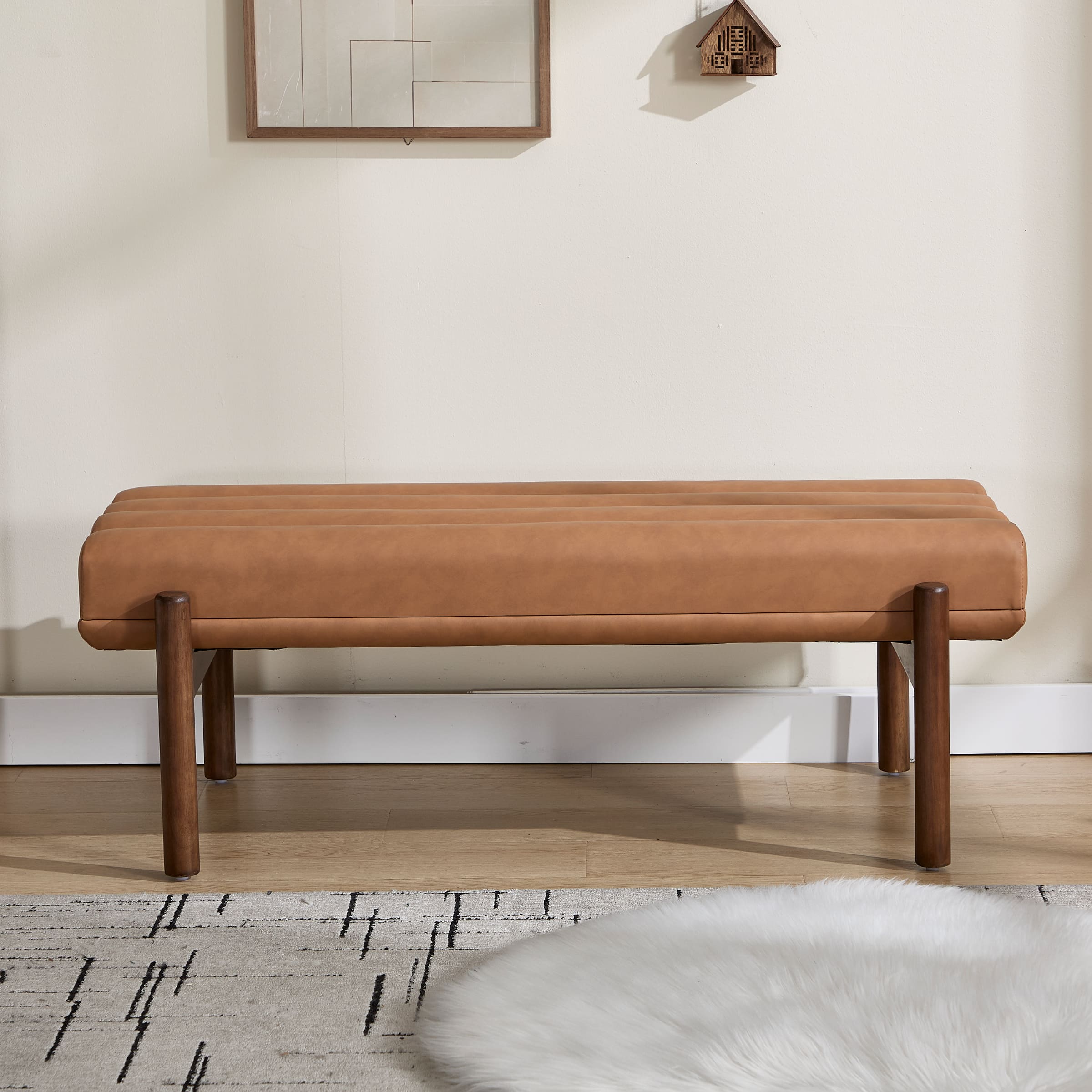
No, a bench is optional, not required. It makes the most sense when the room has enough clear space at the foot of the bed and needs one more soft layer to feel complete. If movement already feels tight, skip it and keep the pathway open; in rooms with space, Chairus's 47-inch bench is a good fit because the upholstered seat adds softness while the solid wood legs keep the look light.