
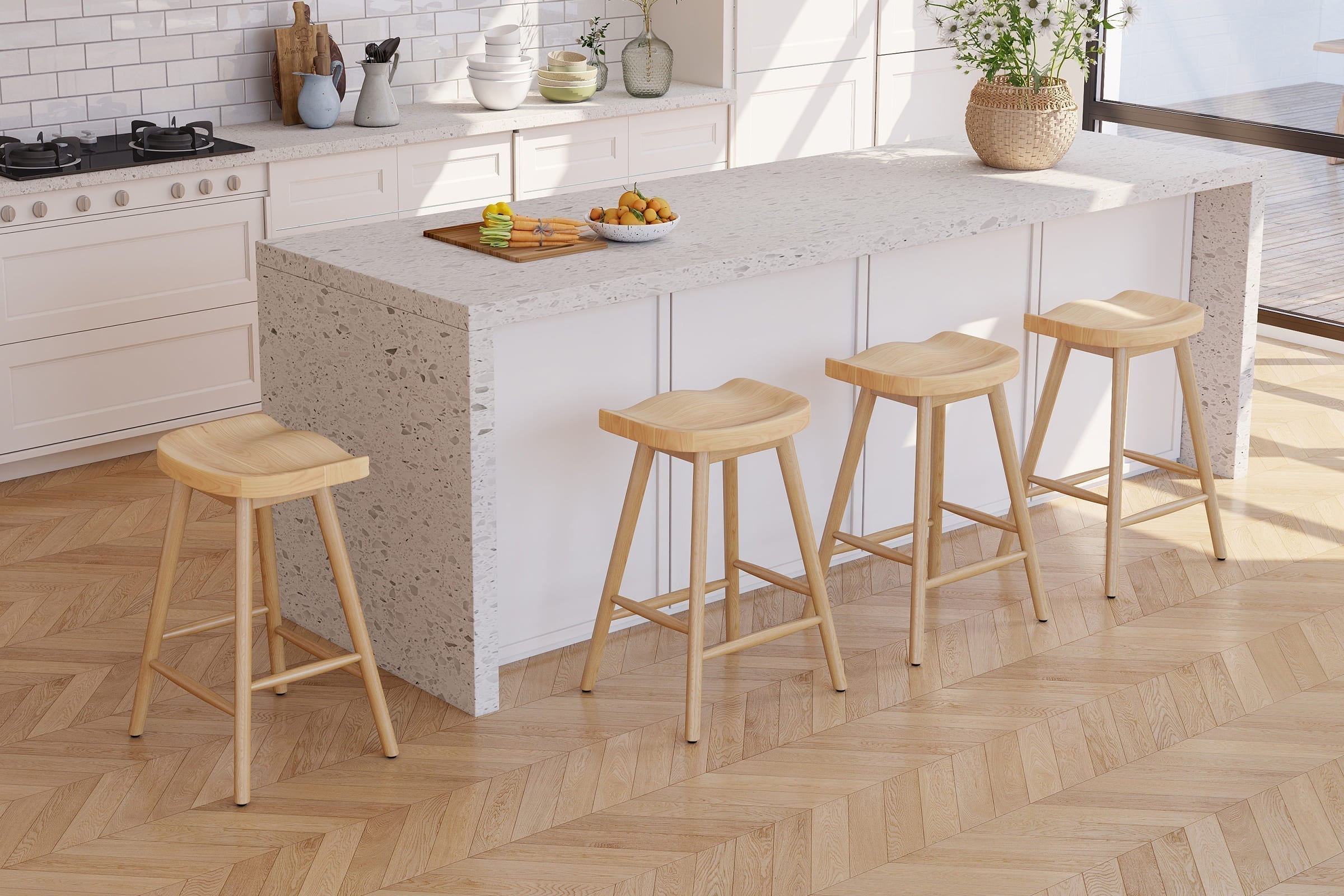
Understanding Kitchen Island Seating Choices
Choosing stools with backs or backless stools sounds simple until you picture real life at your island. A stool that looks perfect online can crowd the walkway, block sightlines, or feel uncomfortable after one long breakfast. That is why kitchen island seating is really a layout decision first and a style decision second.
The better approach is to match the stool to how your home works every day. Some kitchens need space-saving counter stools that slide fully under the overhang. Others need supportive bar stools for kitchen island use because the island doubles as a dining spot, homework station, or laptop perch. The sections below break the decision into comfort, spacing, use time, and real Chairus product examples so you can choose with more confidence. According to This Old House, a practical planning range is 24 to 30 inches of bar space per seat, plus about 18 inches of clearance for access.
What’s the Real Difference Between Backed and Backless Stools?
A backrest changes more than posture. It changes how much visual weight the island carries, how tightly the stool tucks in, and how long someone wants to stay seated. In other words, backed vs backless stools affect both comfort and room flow.
Core definitions and seating types
Stools with backs include a visible backrest that gives your lower and mid-back extra support. They usually feel more like true seats than quick perches, so they fit islands used for meals, conversation, reading recipes, or working on a laptop. Because the frame rises above the seat, they also create more presence around the island.
Backless stools remove that upper structure. The result is a lighter silhouette, easier tuck-under storage, and a cleaner view across the kitchen. That makes them a common choice for smaller layouts and for homeowners who want the island to stay visually open.
Where each style tends to work best
If your island handles mostly short sits, backless stools are often enough. They work well for:
- quick breakfasts
- coffee breaks
- guest overflow seating
- minimalist kitchens
- tighter walkways
If people regularly stay seated for 20 minutes or longer, stools with backs usually earn their footprint. They tend to fit better in homes where the island acts like a second dining table or social hub.
Why this decision affects more than looks
Reference articles across furniture and interiors consistently frame this as a use-case choice, not just a design preference. Seats & Stools emphasizes that backless designs are easier to tuck away and are especially helpful where space optimization matters, while backed stools support comfort and longer sitting sessions. ZM Home also highlights layout, clearance, and sitting duration as the main filters for choosing well. Edward Martin makes a similar point: the right answer often comes from balancing comfort with flexibility rather than chasing one universally better style.
How Should You Choose for Everyday Use?
The fastest way to choose is to stop asking which style is better in general and ask which one supports your routine. Your island may be a breakfast bar, a prep zone, a social landing spot, or all three. The more accurate your use pattern, the easier the buying decision becomes.
Match stool style to seating duration
For short daily use, compactness matters more than extra structure. Choose backless stools if the island is mostly used for:
- 5 to 15 minute coffee or snack breaks
- occasional extra seating
- standing-prep support with short pauses
- a cleaner, lower-profile look
Choose stools with backs if your island regularly hosts:
- 20 to 60 minute meals
- homework sessions
- laptop work
- long conversations while someone cooks
This simple duration test is one of the most reliable filters for kitchen stool comfort.
Evaluate movement, storage, and traffic flow
Walk around your island before you shop. If the path behind the stools already feels tight, a backless design can make the whole room easier to use because it tucks farther in and creates less pull-out bulk. ZM Home specifically treats circulation, tuck-under behavior, and sightlines as primary decision points for kitchen stools.
Backed stools can still work in smaller kitchens, but they demand more discipline with spacing. You need enough width for each person, enough depth to sit comfortably, and enough room to step away without bumping the next seat.
Use Chairus product examples to frame selection
Chairus gives you both ends of the spectrum. The [Ealson 26"H Swivel Wooden Backrest Counter Height Counter Stool - 3193CS] is a backed model with a curved backrest, linen-upholstered seat, built-in footrest, 360-degree swivel, 26.25-inch seat height, and 300-pound capacity. Its published overall dimensions are 18.5" W x 18.5" D x 34.75" H, and Chairus positions it for 34- to 40-inch counters.
By contrast, the [Cimota 26"H Backless Round Counter Stools Set of 2 - 5783CS] takes the lower-profile route with a round seat, 3.5-inch high-density cushion, solid rubber wood frame, footrest, 15.75" W x 15.75" D x 26" H footprint, and 300-pound capacity. If flexibility matters even more than a fixed-height setup, the [Adjustable Swivel Backless Bar Stool - 90117AB] adds 360-degree swivel, a 24.5" to 33" adjustable height range, and a metal base with an anti-slip rubber ring.
Key Decision Factors Before You Buy
A good stool can still feel wrong if the specs do not match your room. Before you compare finishes or upholstery, focus on the practical filters that determine whether the seat will work day after day.
Comfort vs compactness
This is the main tradeoff. Stools with backs usually win on support. Backless stools usually win on footprint. If you are optimizing for longer sitting, lean toward a backrest, footrest, and shaped seat. If you are optimizing for a cleaner edge and easier storage, backless is often the smarter move.
Counter height and spacing discipline
Measure from the floor to the underside or usable top of the overhang before shopping. Then compare that number with the stool seat height, not just the product label. A stool sold as a counter stool may still sit too high or too low for your island.
Use this quick guide:
| Surface type | Typical surface height | Better seat height range | Best stool direction |
|---|---|---|---|
| Standard kitchen island | 34–40 in | 24–27 in | Counter stools |
| Taller bar-style surface | 40–42 in+ | 28–31 in | Bar stools |
| Mixed-use or uncertain height | Varies | Adjustable | Adjustable stools |
For browsing across silhouettes, the [Chairus stools collection] is useful because it lets you compare backed, backless, counter-height, and adjustable options in one place.
Household profile and posture needs
Think about who uses the stools most. In homes with older adults, children, or anyone who prefers more stable seating, a supportive back and footrest can improve confidence and comfort. In entertaining-first homes, a lighter stool is often easier to reposition and less dominant visually.
Cleaning and maintenance expectations
A stool may fit your layout but still frustrate you if it is hard to maintain. Seats & Stools notes that backless stools often have simpler maintenance routines because they have fewer surfaces and joints above the seat line. That said, upholstery type matters too. Chairus lists care guidance for linen, PU, wood, and metal finishes, so it is worth matching material choice to how messy your kitchen actually gets.
Which Chairus Stools Fit Each Kitchen Scenario?
This is where the decision becomes practical. Instead of asking which style is universally better, match the stool to the room and the routine.
Small kitchens and visually open islands
When the goal is a lighter footprint, backless stools usually make more sense. The [Cimota 26"H Backless Round Counter Stools Set of 2 - 5783CS] fits this use well because its 15.75-inch round footprint stays compact, while the 3.5-inch cushion still adds some softness. The solid rubber wood frame and integrated footrest help it feel more substantial than a bare utility stool.

What this means in daily use:
- the stool can slide farther under the island
- the room keeps cleaner sightlines
- the island edge feels less crowded
- guest seating becomes easier to add without making the kitchen feel heavy
This style is especially strong in apartments, galley kitchens, and open-plan spaces where the island is visible from the living room.
Family kitchens with longer sitting sessions
If your island works like a second table, a backed design usually earns its space. The [Ealson 26"H Swivel Wooden Backrest Counter Height Counter Stool - 3193CS] is a strong example because it combines several comfort signals in one build: a curved backrest, upholstered linen seat, footrest, and 360-degree swivel. Chairus also publishes a 300-pound capacity and a seat height that suits standard 34- to 40-inch counters.
Why it matters:
- the backrest supports longer sits
- swivel reduces dragging on the floor
- the footrest helps avoid dangling legs
- the mixed wood-and-metal frame gives the stool a more furniture-like presence
For households that eat, chat, and work at the island, this kind of supportive counter stool often feels better by the end of the week, not just on day one.
Flexible entertaining and multi-height use
Some homes need more flexibility than a fixed-height stool can offer. The [Ealson Modern Swivel Bar Stools Set of 2 - 5117] is another option when you want a more lounge-like seat. Chairus lists the adjustable swivel version at 22" W x 23.5" D x 36.25" to 45" H with a 25.5" to 34.25" seat height and 300-pound capacity. Because it adds arms and a fuller silhouette, it is better for larger islands or bar-height spaces where comfort matters more than tight tucking.

Best fit scenarios:
- homes with mixed counter heights
- entertaining spaces with changing guest needs
- open kitchens connected to dining and living areas
- users who value swivel and easier entry/exit
Best Practices and Common Mistakes
A stool can have the right look and still perform poorly if the planning is off. The goal is to make the stool work with your layout, not fight it.
Best practices
Start with the room, not the catalog. Measure the island height, overhang depth, walkway behind the stools, and the width you can dedicate per seat. According to OSHA, neutral posture and reduced strain depend on how well furniture supports the body during seated tasks, which is one reason seat height, footrest placement, and back support matter more than appearance alone.
Use this checklist before buying:
- measure the island surface height
- confirm the published seat height
- leave enough width per sitter
- check whether the stool fully tucks under the counter
- decide whether swivel helps or adds unnecessary bulk
- match materials to your cleaning habits
Common pitfalls to avoid
The most common mistake is buying only by appearance. A slim stool may look perfect in a staged photo, but if there is no foot support or the seat sits too low, comfort drops fast. Another mistake is ignoring pull-out depth. Even good space-saving counter stools still need room for knees, hips, and stepping away from the island.
Also watch for these problems:
- overcrowding the island edge
- choosing bar height for a standard counter
- forgetting that arms and backs add width and visual bulk
- assuming all swivel stools feel equally stable
- overlooking fabric care in messy family kitchens
Final Takeaway: Which Is Better?
There is no universal winner between stools with backs and backless stools. If your priority is compact kitchen island seating, easier tuck-under storage, and cleaner sightlines, backless designs usually come out ahead. If your priority is kitchen stool comfort, longer sitting sessions, and a more supportive seat, stools with backs are usually the better choice.
For many households, the best answer comes from the island’s job description. A quick-perch breakfast island often wants backless seating. A family gathering spot or casual work zone often wants a backrest, footrest, and sometimes swivel. Chairus is useful here because its line includes both supportive counter stools like the [Ealson 3193CS] and compact backless options like the [Cimota 5783CS], so you can match the stool to the way your kitchen really works.
FAQ
Are backless stools better for small kitchen islands?
Yes, backless stools are often better for small kitchen islands because they usually tuck farther under the counter and reduce visual bulk. That helps preserve walkway space and keeps the island edge from feeling crowded. They are especially useful when people sit for short periods, such as breakfast or quick snacks. Still, you should confirm the actual seat width and pull-out depth before buying, because even compact stools need enough room for comfortable entry and exit.
Are stools with backs more comfortable for daily use?
Yes, stools with backs are usually more comfortable for daily use when people sit for 20 minutes or longer at a time. A backrest supports posture, and comfort improves even more when the stool also has a footrest, a shaped seat, and the correct seat height. For example, a well-proportioned counter stool with a 24- to 27-inch seat height often feels much better at a standard kitchen island than a taller bar stool. However, total comfort still depends on the full design, not just the presence of a backrest.
How do I know whether I need counter-height or bar-height stools?
Start by measuring from the floor to the top or underside of the usable counter surface. Most standard kitchen islands pair well with seat heights around 24 to 27 inches, while taller bar-style surfaces usually need seats around 28 to 31 inches. You should aim to keep roughly 10 to 12 inches between the seat and the counter surface so your legs have enough room. If your surface height is unusual or shared by different users, an adjustable stool can be the safest option.
Can I mix backed and backless stools at the same island?
Yes, you can mix backed and backless stools if the layout is large enough and the finishes stay coordinated. This works best when you use backed stools in the main seats and reserve backless stools for overflow or guest use. To keep the result intentional, match at least two design cues such as upholstery color, frame finish, or seat shape. Mixed seating usually looks best on islands with three or more seats, where the variation feels planned rather than accidental.
What features matter beyond the backrest?
Seat height, footrest position, swivel function, seat padding, frame stability, and cleaning ease all matter beyond the backrest. A stool can have a back and still feel awkward if the footrest is too high or the seat is too narrow. In practical terms, many buyers are happiest when the stool supports a 10- to 12-inch seat-to-counter gap, offers a stable base, and uses materials that match their cleaning routine. Long-term satisfaction usually comes from the whole seating system working together.
Is swivel useful for kitchen island seating?
Yes, swivel can be very useful for kitchen island seating because it makes turning, conversation, and getting on or off the stool easier. It is especially helpful in family kitchens and social spaces where people rotate frequently instead of sitting straight ahead. In tighter rooms, swivel also reduces the need to drag the stool backward across the floor, though you still need enough side clearance to rotate comfortably. The feature adds the most value when paired with correct spacing and a stable base.