
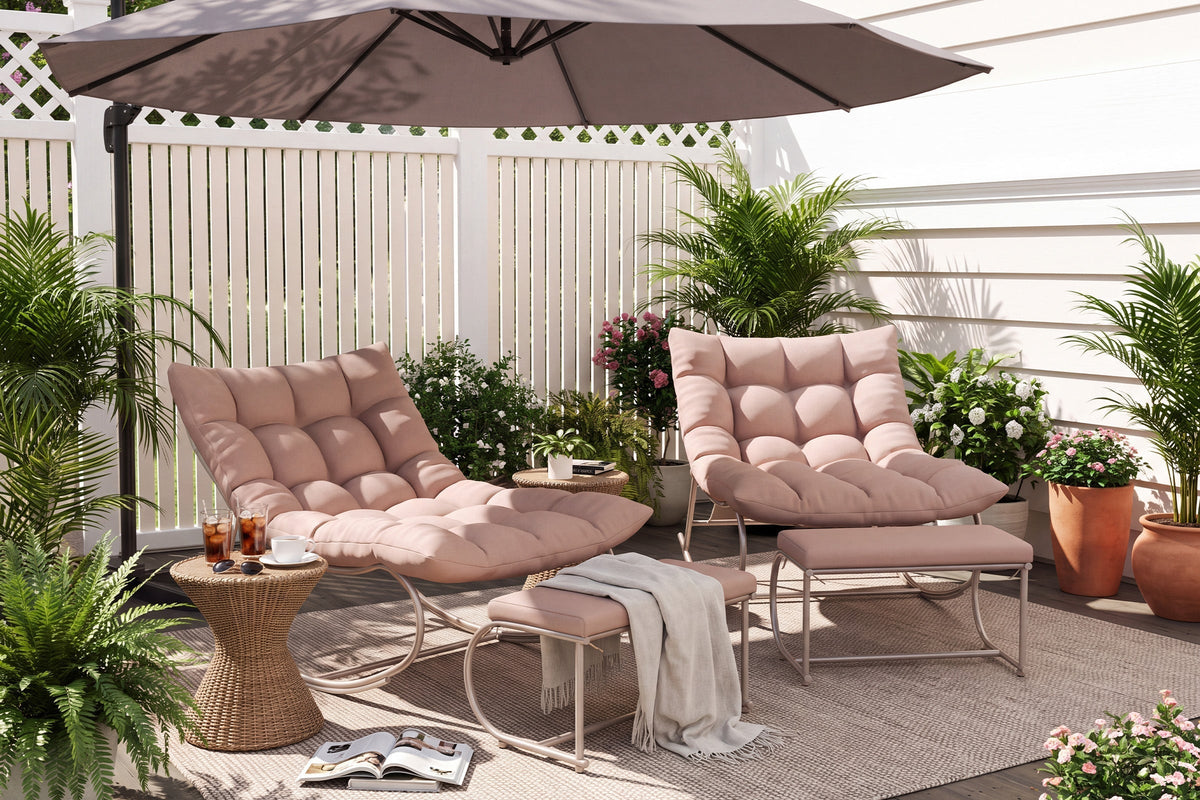
Turn a Patio Corner Into a Real Retreat
A patio can look finished on paper and still feel wrong the moment you sit down. That usually happens when the chair is treated like décor instead of the center of the experience. If your goal is a relaxing outdoor retreat, the right lounge chair matters more than extra accessories, because comfort, posture, and layout decide whether you stay outside for 10 minutes or an hour.
The good news is that you do not need a giant deck or a resort budget to get this right. What matters is matching the right lounge chair to the way you actually relax, then building the space around that use. In the sections below, you will sort through chair types, spacing rules, comfort details, weather-ready materials, and a few buying checks that help you avoid the most common patio mistakes.
Which Lounge Chair Setup Fits Your Space Best?
A good setup starts with behavior, not styling. In other words, decide what your outdoor retreat design needs to support before you think about colors or accent pillows.
Match the chair type to the way you actually relax
Your best chair choice depends on what you do most often outside. A reading spot needs different support than a nap zone or a conversation corner.
- Choose a rocker if you like upright comfort, gentle motion, and easier conversation.
- Choose a chaise if you want a longer reclined position for sunning or full-leg extension.
- Choose an ottoman-based lounge setup if you want flexibility between upright sitting and feet-up relaxing.
- Choose paired chairs when you want the space to work for both solo downtime and guest seating.
Size, clearance, and movement come first
Even comfortable outdoor chairs will feel annoying if the layout is cramped. Before buying, measure usable space, not just the total patio size. You need room for knees, side tables, walking paths, and any rocking motion.
Here is a practical checklist:
- Keep main walkways open so people can pass without turning sideways.
- Leave extra front-and-back clearance for rockers.
- Make sure the ottoman can tuck in or sit naturally without blocking traffic.
- Check door swing, railing lines, and planter placement before finalizing chair depth.
Use the setting to guide the pick
The same patio lounge seating will not fit every setting equally well. Let the space tell you what kind of chair earns its footprint.
- Balcony: Use compact visual weight and avoid oversized arms or deep sprawl.
- Porch: Motion works especially well here, so a rocker often feels natural.
- Poolside: Focus on quick-dry surfaces and easy wipe-down maintenance.
- Sunroom: Look for a softer silhouette that can bridge indoor-outdoor styling.
The Basics That Make a Lounge Chair Feel Luxurious
Luxury in a relaxing outdoor retreat usually comes from support, ease, and restraint. The chair should feel good immediately, and it should stay easy to live with after heat, pollen, or rain.
Comfort details that matter more than looks alone
The right lounge chair should let your body settle without making you constantly adjust. Seat depth, back angle, arm height, and cushion firmness all shape that experience.
What to check first:
- Seat depth should support your thighs without forcing a slouch.
- Back angle should feel relaxed but not so reclined that reading becomes awkward.
- Arm height should allow your shoulders to stay neutral.
- Cushion thickness should add softness without making the seat unstable.
Materials should support your climate and routine
Outdoor retreat design works best when the materials match how you actually live. If you want low-fuss upkeep, skip finishes that need constant babying.
A weather-ready lounge chair should generally offer:
- Rust-resistant or outdoor-suitable framing
- Fabric that resists fading from sun exposure
- Surfaces that can be wiped down after pollen, drizzle, or spills
- Cushion construction that can dry reasonably well with airflow and routine care
Style should calm the space, not clutter it
A retreat should feel quieter than the rest of your yard. That does not mean boring. It means every finish and accent should support the same mood.
Keep the styling simple:
- Repeat one main frame finish across seating and side furniture.
- Use one accent color, then let textures do the rest.
- Add softness through cushions, planters, and a rug rather than too many decorative objects.
- Let one hero chair anchor the corner instead of filling every empty spot.
How to Build the Retreat Around the Chair
Once you have the right lounge chair, the rest of the retreat should support the time you want to spend there. Think reach, shade, light, and breathing room before extra décor.
Start with a simple comfort zone
Begin with the seat location. Face the chair toward the best view, the quietest corner, or the place with the most useful light during your normal relaxation hours.
Then add only the pieces that improve the session:
- An ottoman for full-leg support
- A small side table within easy reach
- An outdoor rug to define the zone
- A nearby throw basket or storage bench if cushions move in and out often
This is where an outdoor rocking chair with ottoman can outperform a chaise in smaller spaces. You get feet-up comfort, but the setup still feels conversational and flexible.
Layer resort-like touches without overfilling
Resort energy usually comes from controlled layering, not abundance. Too many objects make the patio feel busy and harder to maintain.
Useful additions include:
- One lumbar pillow or one throw blanket
- Warm string lighting or a low outdoor lantern
- One or two planters with leafy texture
- A shade source that softens late-day sun
According to Reuters, home-focused outdoor living remains a strong consumer priority in the United States, which helps explain why more buyers are investing in comfort-driven patio zones rather than purely decorative ones. That trend makes practical layering even more important: if you plan to use the space daily, every added item should support comfort or maintenance, not just appearance.
Plan for daily use, not photo-only styling
A retreat that works every day is easier to enjoy and easier to keep looking good. So think through sun, rain, cleaning, and movement from the start.
Use this quick routine:
- Add shade for the hottest afternoon window.
- Leave enough open space to clean around the chair.
- Store or cover cushions during hard rain and storms.
- Check that the chair still feels accessible when other people are outside.
If you assemble new furniture yourself, wear eye protection during any step that involves tools, loose hardware, or fast-moving parts. OSHA states that eye and face protection requirements apply when work creates eye hazards, and that principle is worth carrying into home assembly and hardware adjustments as well. (osha.gov)
Buying Checks Before You Commit
This is the point where many shoppers get pulled toward appearance and forget performance. A relaxing outdoor retreat lasts longer when you verify a few practical details before checkout.
Evaluate performance, not just appearance
A product photo cannot tell you everything. The product page should answer the questions that affect comfort, fit, and upkeep.
Look for these signals:
- Full dimensions with width, depth, and height
- Weight capacity and item weight
- Cushion thickness or fill notes
- Stock status and shipping timing
- Return and exchange details
Best Practices for a Calm, Durable Outdoor Setup
A calm patio usually comes from a few repeatable habits. Once the furniture is in place, consistency matters more than constant redecorating.
Best practices
- Measure the layout before choosing the chair.
- Prioritize comfort for your longest typical use session.
- Keep finishes cohesive instead of mixing too many statement pieces.
- Protect cushions during severe weather.
- Clean spills quickly so they do not settle into fabric.
- Recheck screws and hardware after assembly and again after the first few weeks of use.
Common pitfalls to avoid
- Buying oversized chairs for a narrow patio
- Forgetting swing clearance for a rocker
- Adding too many bright accents at once
- Choosing a chair based on shape alone without checking seat support
- Leaving wet fabrics saturated for days
- Blocking natural walking access with tables or planters
Chairus care guidance also recommends regular vacuuming or gentle blotting for fabric surfaces, wipe-clean care for suitable materials, immediate drying after wiping wood or metal parts, and periodic hardware tightening to keep furniture sturdy. Those small maintenance habits do more for a weather-ready lounge chair than occasional deep cleaning.
Build Comfort First, Then Style
If you want a relaxing outdoor retreat that actually gets used, start with the chair and work outward. The right lounge chair supports your posture, fits your layout, and matches how you spend time outside. After that, styling becomes easier because the space already works.
For most patios, the smartest path is simple: define the retreat purpose, confirm size and clearance, choose weather-ready materials, and add only the layers that improve comfort. When a chair earns its spot through support and usability, the whole patio feels calmer, more intentional, and much closer to the retreat you had in mind.
FAQ
I need outdoor chairs that I can quickly wipe clean after it rains.
For outdoor chairs that are easy to wipe clean after rain. Look for outdoor lounge chairs made with weather-resistant materials like powder-coated metal, resin, synthetic wicker, or quick-dry cushions, since these usually clean up fastest with a towel or cloth. Before buying, check whether the seat fabric is labeled water-resistant or removable for easier maintenance. It also helps to choose designs with fewer deep seams or tufted areas, since they tend to hold less moisture.
Are ottoman-based lounge chairs better than chaises for small patios?
Yes, ottoman-based lounge chairs are often better than chaises for small patios because they give you similar feet-up comfort with more layout flexibility. A chaise needs a long fixed footprint all the time, while an ottoman can be moved, tucked, or repositioned as needed. That makes conversation, cleaning, and walkway planning easier in tighter spaces. If you want a compact outdoor retreat design, this is usually the safer choice.
How can I make a patio feel more like a resort without overcrowding it?
You can make a patio feel more like a resort by building around one strong seating anchor and then limiting every extra piece to something useful. Start with comfortable outdoor chairs, then add a reachable side table, soft lighting, one or two textiles, and a simple rug to define the area. Keep the color story narrow so the eye can rest, and avoid filling every corner with décor. In most cases, the retreat feeling comes from comfort, shade, and restraint rather than from adding more furniture.