
Help your child sit longer without getting fidgety
Homework often starts with good intentions and ends with twisting, sliding, and constant breaks. In many cases, the problem is not motivation first. It is fit. When a chair is too deep, too tall, too soft, or too loose on wheels, kids start compensating with their posture. That usually leads to slouching, dangling feet, and a shorter attention span during reading or desk work.
The good news is that choosing a comfortable chair for kids study does not have to be complicated. If you look at body fit, back support, adjustability, fabric feel, and daily safety in the right order, you can narrow the options quickly. A strong kids reading chair should also work with your desk height, room layout, and cleanup habits, especially if the same seat will handle homework, crafts, and quiet reading time.
What makes a kids' study and reading chair feel comfortable?
A comfortable kids chair for long sitting usually feels “right” for a simple reason: the child does not have to fight the chair. Instead of chasing cute shapes or color first, start with how the seat supports the body during 20 to 60 minute sessions. The best results come from matching the chair to the child’s size and the main daily task.
- The seat should let the child sit back without pressing the knees.
- Feet should rest flat on the floor or on a foot support.
- The backrest should support upright sitting without forcing a stiff pose.
- Arm movement should stay free for writing, drawing, and page turning.
Start with body fit, not just style
Body fit matters more than style because poor dimensions show up fast. A seat that is too deep pushes a child to perch at the edge. A seat that is too high leaves the legs hanging, which can shift pressure into the hips and lower back. The American Academy of Pediatrics notes that chair height should be adjusted so a child’s feet can rest flat to help the spine align properly. HealthyChildren.org also points out that screen position can drive bad posture, which means chair choice and desk setup need to work together.
A practical test is simple. Have your child sit all the way back. You want about 1 to 2 inches of space between the front edge of the seat and the back of the knees. Knees should bend naturally, and the shoulders should stay relaxed while writing. That is the baseline for any chair for homework and reading.
Focus on the two main use cases
Not every chair needs to solve the same comfort problem. Study time usually needs a more upright posture, stable support, and easier desk reach. Reading time can tolerate a slightly softer feel, as long as the child does not collapse into a slumped position after a few minutes. When one chair has to do both jobs, aim for balance instead of extremes.
- Study-first use: prioritize upright back support and desk-height compatibility.
- Reading-first use: favor a cozy surface and a back that supports the upper body.
- Mixed use: choose medium cushioning and controlled swivel movement.
- Shared family use: check weight capacity, durability, and smooth height adjustment.
Define the comfort features that matter most
Several features matter more than they seem during a quick product browse. A supportive backrest helps reduce the slow slide into slouching. Height adjustment extends the life of the chair as your child grows. A soft-touch fabric can improve sitting tolerance, but it should not come at the cost of support. Finally, a stable rolling base matters because kids shift, turn, and move more than adults do.
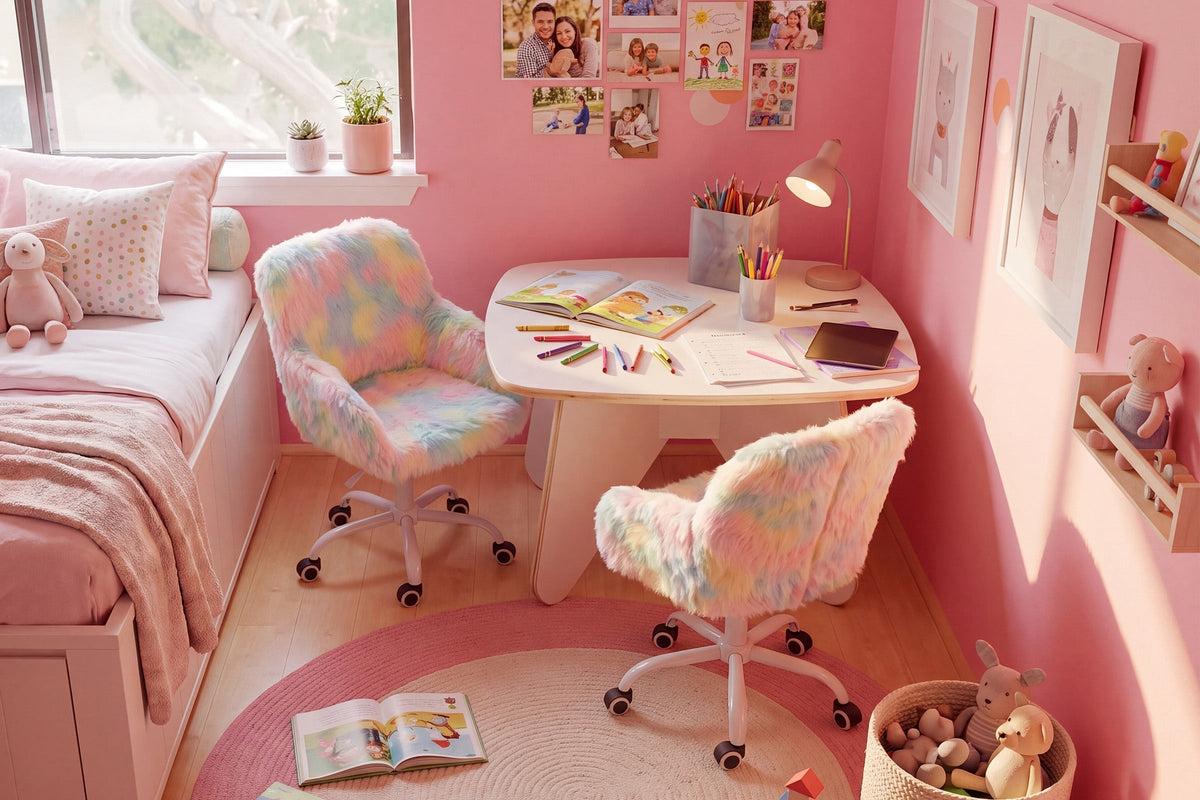
One current option that fits this guide well is the Chairus Kids Cute Shell Shaped Swivel Adjustable Desk Chair 1 PCS - X403KC. Chairus lists a high back, adjustable seat height, smooth wheels, a 225 lb weight capacity, and overall dimensions of 19.25 in. D x 19 in. W x 27.5 to 31.5 in. H. The product page also describes soft sherpa fabric over a playful shell-style silhouette, which makes it suitable for both desk use and a reading nook.

Shop: Kids Cute Shell Shaped Swivel Adjustable Desk Chair 1 PCS - X403KC
How to match the chair to study time, reading time, and room setup
The right chair only works if it fits the actual room and routine. A homework setup near a desk needs different priorities than a corner used for story time, drawing, and occasional screen-based learning. Think through where the chair will live, how long your child uses it each day, and whether the room needs flexibility.
- Measure the desk height and open floor space first.
- Decide whether homework or reading is the primary job.
- Pick support and fit before choosing the fun finish.
- Check how easy the fabric will be to clean in your home.
For homework-first spaces
If schoolwork is the main job, upright support comes first. You want a kids desk chair with back support that keeps the torso steady without locking the child into a rigid posture. That usually means a higher back, manageable seat padding, and an adjustable height range that works with the desk.
A few details make a big difference:
- Wheels should roll smoothly but not feel wild or loose.
- The seat should slide under the desk without forcing a hunched posture.
- The back should support writing and keyboard use, not just lounging.
- Oversized lounge proportions usually make desk work harder.
For reading corners and flexible rooms
A kids reading chair works best when it invites the child to stay put without swallowing them up. Soft textures help, but scale matters more than many parents expect. A chair that looks adorable in a product photo may dominate a small bedroom or reading corner and make transitions to desk use awkward.
Look for these signals:
- A high back that supports the shoulders during longer reading sessions.
- Compact overall dimensions that preserve floor space.
- Upholstery that feels warm and inviting, especially in cooler rooms.
- A shape that still allows easy entry and exit for younger children.
For one chair doing both jobs
Many families want one adjustable kids study chair that can handle homework, crafts, light gaming, and reading. That is a realistic goal if you avoid extreme designs. Very plush lounge chairs often fail at writing posture, while very flat task chairs can feel too harsh for relaxed reading.
What tends to work best is:
- Medium-soft cushioning that supports without sinking.
- A backrest that cradles the mid-to-upper back.
- A secure rolling base for shared spaces.
- A visual style that still suits a desk area.
If you need a one-chair solution, think “supportive versatility.” The chair should help your child sit upright when needed, yet still feel welcoming enough for a 30-minute reading block.
Which chair features matter most before you buy?
Feature lists can get distracting fast, so focus on the handful that change comfort the most over time. For a comfortable chair for kids study, the order is usually size and adjustability first, then support, then materials, then safety. That sequence keeps you from overvaluing looks while missing the basics.
Size and adjustability
Adjustability is one of the smartest ways to buy for growth without overbuying on size today. A child should not need to “grow into” a chair that already leaves the feet unsupported. Instead, choose a chair that fits now and has room to adapt.
Check these points before ordering:
- Seat height should align with the desk so shoulders stay relaxed.
- Seat width should allow easy shifting without feeling oversized.
- Room scale matters; a bulky chair can crowd a kid’s workspace.
- Adjustable height extends the chair’s useful life.
Support and comfort balance
A soft seat is not always a supportive one. In fact, seats that feel plush in the first minute can encourage the hips to roll back, which makes slouching more likely during homework. A better target is cushioning that feels forgiving but still stable.
Here is what to prioritize:
- High backs usually help more with longer sitting sessions.
- Moderate padding often outperforms ultra-soft foam for mixed use.
- A curved backrest can help the child reset posture naturally.
- Support should feel consistent across the seat, not flat in the center.
This is especially important for a chair for homework and reading because the body position changes throughout the day. You want the chair to adapt without losing support.
Safety and stability checks
Comfort drops quickly when a chair feels wobbly, tippy, or too eager to roll. Stability is not just a safety issue. It is also a focus issue because kids move more when the seat feels uncertain.
Use this pre-buy checklist:
- Confirm the base looks planted and balanced.
- Make sure the wheel movement suits indoor flooring.
- Choose a weight capacity above real-world use, not exactly at it.
- Re-tighten hardware periodically after assembly.
For room safety, avoid placing tempting climbable items nearby. The U.S. Consumer Product Safety Commission has repeatedly warned about tip-over risks with household furniture around children, and anchoring unstable nearby furniture is a smart layer of protection in shared study spaces. CPSC reports that children are heavily represented in fatal tip-over incidents, so the chair should be part of a safer overall setup, not viewed in isolation.
Habits that keep a kids chair comfortable over time
Even a well-chosen chair can become uncomfortable if the setup does not evolve with the child. Growth, new school routines, and desk changes can all throw off the fit. Small adjustments every few months usually do more for comfort than replacing the chair too early.
Best practices
A few regular habits protect both comfort and chair life. First, recheck seat height as your child grows. Feet should still rest firmly, and the elbows should stay near desk level during writing. Second, keep the floor area clear so the rolling base can move without catching on bins, cords, or piles of books.
It also helps to:
- Pair the chair height with the actual desk, not with guesswork.
- Use a footrest if the desk is fixed and the chair must be raised.
- Wipe spills early so soft fabric stays easier to maintain.
- Tighten screws and base hardware at set intervals.
Common mistakes to avoid
The biggest mistake is buying for looks alone. A cute chair that is too large, too low, or too soft will not become more comfortable just because the room looks better. Another common mistake is assuming that plush seating equals support. For homework, excessive softness often leads to slumping within minutes.
Watch out for these issues:
- Adult-scale chairs that overwhelm a child’s body.
- Ignoring the desk-to-seat height relationship.
- Forgetting future growth when choosing a fixed-height chair.
- Overlooking cleanup needs in high-use spaces.
- Leaving nearby furniture unsecured in active kids’ rooms.
Choose comfort your child will actually use
The best comfortable chair for kids study is not the one with the longest feature list. It is the one that fits your child’s body, supports upright sitting, adjusts as routines change, and still feels inviting enough for reading time. When those pieces line up, kids usually fidget less because the chair stops getting in the way.
FAQ
Are rolling chairs a good idea for kids?
Rolling chairs can be a good idea for kids if the base feels stable and the wheels glide smoothly without being too loose. They are especially helpful when the chair needs to move between homework, crafts, and reading areas. The tradeoff is that overly fast movement can become distracting, so look for controlled mobility rather than a slippery base. Also keep the area around the chair clear so wheels do not catch on storage bins, cords, or rugs.
How long should a child be able to sit comfortably in a study chair?
A child should usually be able to sit comfortably for a typical homework or reading block, which is often 20 to 60 minutes depending on age and task. Comfort does not mean staying perfectly still the entire time; it means the chair does not trigger early slouching, dangling legs, or constant repositioning. If your child starts sliding forward within a few minutes, the seat depth, height, or back support is probably off. Rechecking fit every few months helps maintain comfort as your child grows.
What type of chair works best if I need one option for homework and reading?
One chair can handle both jobs best when it combines moderate cushioning, a supportive higher back, and height adjustability. That setup allows upright sitting for homework while still feeling relaxed enough for reading.