
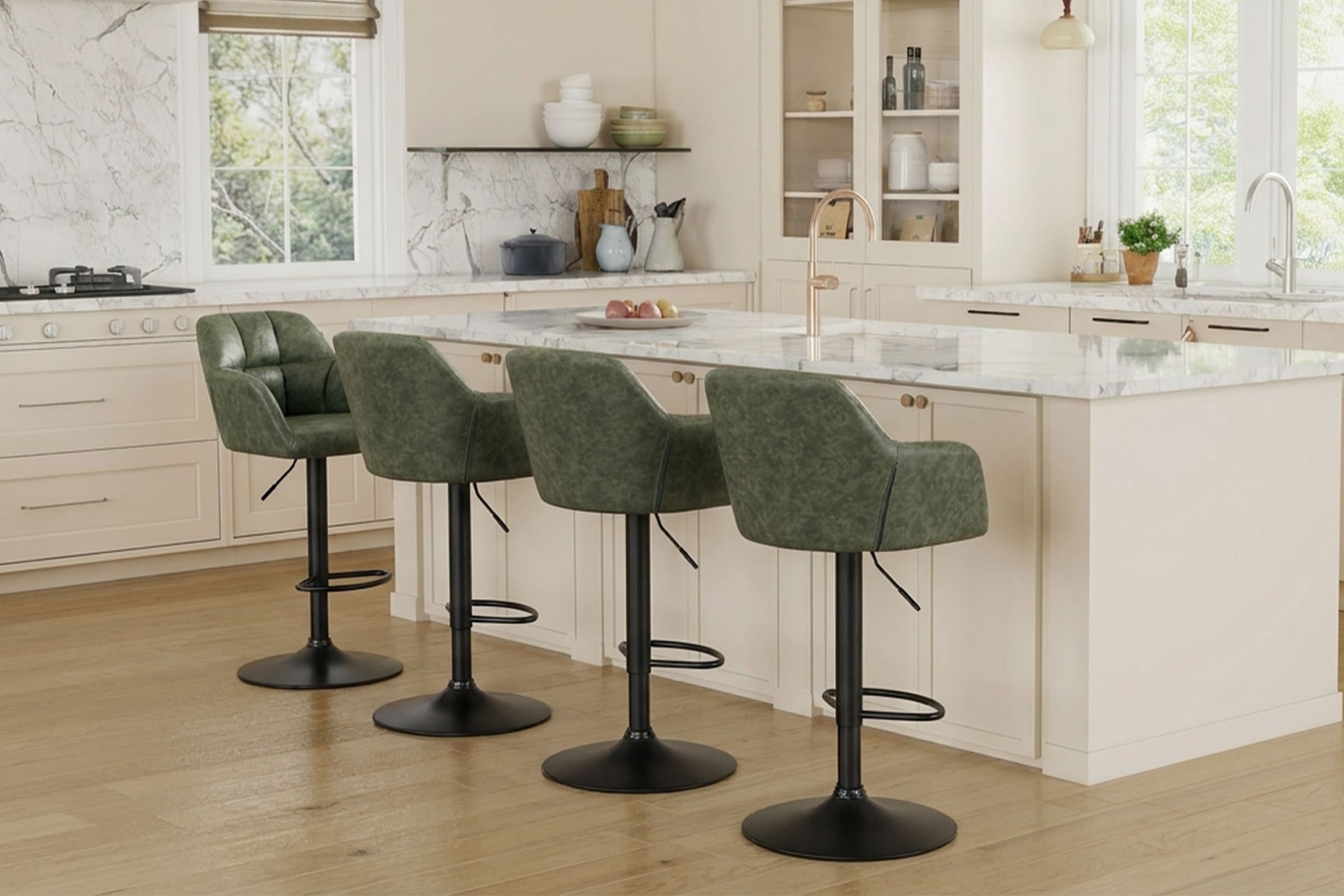
Picking stool height seems easy until the seat arrives, slides under the counter, and suddenly nobody sits comfortably. A stool that is too tall crowds knees, while one that is too low forces shoulders up and feet to dangle. That poor fit matters even more when kids climb on and off or when a tall bar counter already reduces legroom.
Choosing the Right Stool Height
The first rule in choosing stool height is simple: measure the underside of the counter, not the decorative top edge. Most people use the countertop surface and forget the apron, overhang, or support rail underneath. That mistake can steal the last inch your thighs need. A practical target is usually 10 to 12 inches between the seat and the underside of the counter, which keeps elbows relaxed and helps you sit upright.
What to check
- Measure from finished floor to counter underside
- Subtract 10 to 12 inches for seat height
- Check knee space under overhangs and aprons
- Confirm footrest position, not seat height alone
Kids need more than the right number. They need a place to plant their feet, a stable base, and a surface that does not encourage sliding. Tall adults need thigh room, back support, and a footrest that prevents dangling-leg fatigue. The safety side is real too: the CPSC reports 155 child tip-over fatalities in its annual product instability data, which is a useful reminder that furniture stability should never be treated as a style-only issue.
Measure the Counter First
Before you compare finishes, start with the space itself. Measure floor to underside, then look at overhang depth, support beams, and where knees will actually land. This step matters in both kitchens and Home Office Furniture zones, where a counter stool may sit near islands, worktops, or even Adjustable Height Desks used as shared touchdown spaces.
Common mistake
- Using category labels like counter or bar only
- Ignoring thick stone tops with deep aprons
- Forgetting that swivels need side clearance
Fit Stools for Kids Safely
For kids, climbing safety matters as much as seated comfort. The best setup lets them get on with less twisting, keep both feet supported, and stay upright without constant scooting. Grip matters too. Smooth seats may look sleek, but families often do better with textured upholstery and a frame that resists wobble.
Best fit
- Backed stools for supervised snack seating
- Footrests that meet smaller legs comfortably
- Wider leg stance for steadier climbing
- Non-slip pads to reduce floor slide
The risk is not only falling backward. In 2025, the CPSC announced a toddler tower stool recall tied to collapse and fall hazards, which shows why stable construction and supervised use matter more than trend language.

Choose for Tall Bar Counters
Tall bar counters need more than a taller seat. They need more total support because the sitting position becomes more exposed. A full footrest helps you settle your weight, while a backrest reduces the forward hunch that appears during longer meals or conversation. This is where Ergonomic Design becomes practical, not abstract.
What this means
- Taller counters need taller seats and more thigh room
- Full footrests reduce pressure behind knees
- Back support helps during longer sitting sessions
- Upholstered seats improve comfort over hard tops
Use Adjustable Options Wisely
Adjustable stools can solve awkward in-between heights, especially in mixed-height households or rooms that shift between dining and work. Still, flexibility only helps when the base stays stable and the usable range actually covers your measurement.
What to check
- Lowest and highest usable seat positions
- Base width and anti-wobble feel
- Swivel control near narrow walkways
- Easy daily adjustment without drift
Match Style to Room Function
Style should follow use. Mid-Century Modern stools warm up family kitchens with softer wood tones, while Industrial Bar Stools often suit loft-like rooms with metal accents and tougher finishes. In smaller homes, Multifunctional Furniture matters because one stool may serve breakfast, homework, and laptop time in the same day. Recent Reuters coverage points to continued pressure on furniture buyers to balance function, durability, and changing household needs in a softer home-goods market, which makes practical selection even more important in 2026. Reuters
7 Safe Stool Options for Kids and Tall Bar Counters
| Option | Best for | Key signal |
|---|---|---|
| 5653CS swivel | Standard islands | Easy entry |
| 00241CS farmhouse | Family seating | Back support |
| Adjustable range | Mixed users | Flexible fit |
| Upholstered seats | Longer sessions | Softer pressure |
| Backed counter stools | Kids with supervision | Upright posture |
| Tall full-footrest stools | High bars | Less leg fatigue |
| Easy-clean fabric options | Busy kitchens | Simpler upkeep |
Product List: Chairus Counter & Barstools
26"H Backless Swivel Counter Stools Set of 2 - 5653CS
This model fits standard kitchen islands well because its 26-inch seat height aligns with typical counter setups. The round linen seat, 360-degree swivel, and compact 15 inch by 15 inch footprint help users enter and exit without dragging the stool. Wooden legs and a 300 lb capacity make it a smart low-visual option where walkway space is tight.
Shop: 26"H Backless Swivel Counter Stools Set of 2 - 5653CS
Farmhouse Counter Height Bar Stools Set of 2 - 00241CS
This farmhouse option works well in family kitchens because the vertical spindle back gives more upright support than a backless seat. Chairus lists high-density foam cushioning, chenille or linen upholstery, solid rubberwood construction, and a built-in footrest that supports a more natural sitting posture. It also leans into Mid-Century Modern warmth without looking formal.
Shop: Farmhouse Counter Height Bar Stools Set of 2 - 00241CS
How to Choose the Right Stool Height
Start with the measurement, then screen for support features. Fast Shipping Furniture can help if you are furnishing on a deadline, but speed should come after fit.
Decision guide
- Counter underside first, labels second
- Kids: foot support and stable base
- Tall users: thigh room and full footrest
- Upholstery: grip, cleanup, and Boucle Fabric texture
- Shared rooms: consider Customizable Furniture or adjustable designs
Conclusion
The right stool height improves comfort, posture, and everyday safety. If you start with the underside measurement, then check legroom, footrests, and stability, the buying decision becomes much clearer. Chairus stands out by focusing deeply on seating, which makes it easier to compare practical designs for real family use.
FAQ
Can you recommend the right bar stool height for a typical home kitchen setup?
Yes. Most home kitchens work best with counter-height stools, not bar-height stools. Measure from the finished floor to the underside of the counter, then subtract 10 to 12 inches. That range usually keeps elbows relaxed and knees comfortable. If your counter has a thick apron, use that lower point in the measurement.
What’s the best stool height for kids to climb up safely at the island?
The best stool height for kids is one that lets them step up with control and rest their feet once seated. A supportive back, stable base, and footrest matter more than the label on the listing. Kids should not need to hop, twist, or hang their legs. Supervised use is still important, especially with swivel stools.
Should I buy adjustable-height stools if my counter height is in-between?
Yes, adjustable stools can work well for in-between measurements. The key is to confirm the real height range and not assume every adjustable model covers your target. You should also check the base width and how stable the stool feels at its tallest setting. Adjustable models are most useful in mixed-user households.
What stool height should I choose for a tall bar counter?
Choose a stool height based on the underside of the tall bar counter, not the top surface. In most cases, you still want 10 to 12 inches between the seat and the underside. Taller counters often feel better with a full footrest and some back support. That combination reduces thigh pressure and keeps posture more relaxed.
Are counter-height stools the same as bar-height stools?
No. Counter-height stools are lower and fit standard kitchen counters or islands, while bar-height stools are made for taller bar surfaces. Using the wrong category creates a poor elbow angle and awkward leg position. Even within those labels, actual dimensions still vary. That is why measurement beats naming.
How do I measure my counter to pick the right stool height?
Measure from the finished floor straight up to the underside of the counter or apron. Then subtract 10 to 12 inches to get a practical seat-height target. After that, check overhang depth and knee room because those affect comfort too. If more than one person will use the stools, measure for the tallest regular user first.