
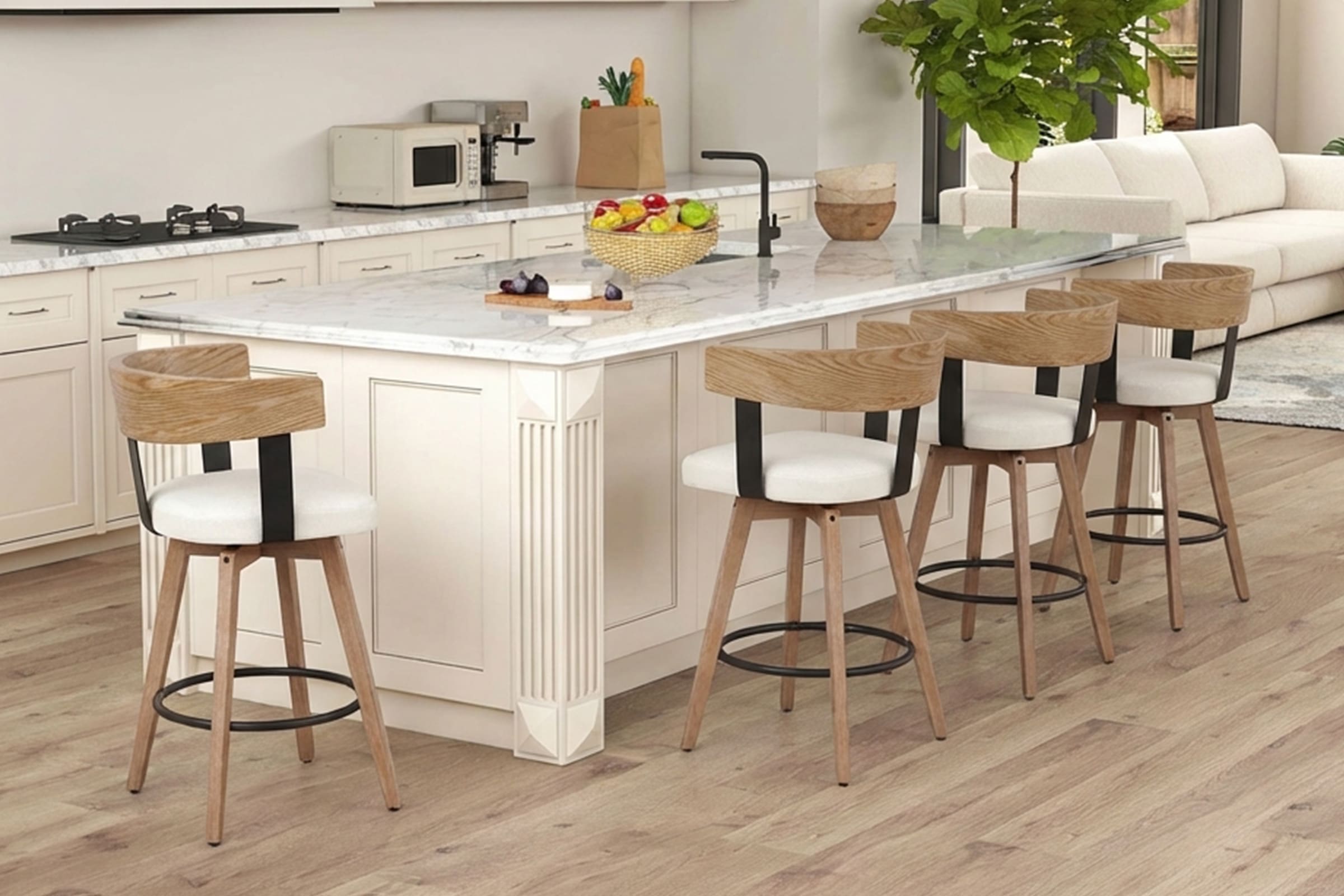
Steps to Protect Your Floor
A scratched floor usually starts with a small buying mistake: the stool looks right, but the seat sits too high, the legs drag, or the base lands on your surface with more force than you expected. That gets expensive fast. Wood shows fine lines, vinyl picks up scuffs, and even tile can lose its clean look when stools scrape across the same path every day.
Protect Your Floors: 5 Steps to Selecting the Right Counter Stools works best when you treat stool shopping like a fit check, not a style-only decision. The steps below walk you through height, base shape, movement, materials, and daily use so you can choose seating that feels comfortable and stays gentler on your floors.
How to Select Counter Stools
Step 1: Measure counter height first
Measure before you compare finishes or back shapes. The right counter stool starts with usable clearance, because a stool that is too tall forces awkward movement and a stool that is too low makes people shove it around to get comfortable.
What to do
- Measure from the floor to the underside of the counter, not the top surface.
- Target about 9 to 12 inches between the seat and the counter underside.
- Check seat height, not overall height listed in product titles.
- Measure in two spots if your floor is uneven.
Why this matters
- Better fit reduces scooting and twisting.
- Less dragging means fewer scratch paths.
- Proper legroom improves comfort during longer meals or work sessions.
The Chairus 26"H Swivel Wooden Backrest Counter Height Counter Stool - 3193CS lists a 26.25-inch seat height and is designed for 34 to 40-inch counters, with overall dimensions of 18.5" W x 18.5" D x 34.75" H and a 300-pound capacity. That kind of clear seat-height information makes it easier to match the stool to your kitchen instead of guessing from photos alone.

Shop: 26"H Swivel Wooden Backrest Counter Height Counter Stool - 3193CS
Step 2: Match base style to flooring
Once height is correct, look down at the contact points. This is where floor damage usually starts. Narrow, hard leg tips concentrate pressure, while wider or softer contacts spread weight more gently.
What to do
- Check whether the stool has soft caps, wider glides, or adjustable feet.
- For hardwood, bamboo, and softer finished surfaces, favor gentler leg protection.
- For tile or sealed concrete, avoid assuming the floor is damage-proof.
- Inspect leg ends on delivery before full assembly.
What to watch
- Sharp metal edges
- Bare wood contacting wet floors
- Hard plastic tips on soft finishes
- Small contact pads under heavy stools
Chairus offers a useful example in the 26"H Modern Barrel Swivel Counter Stools Set of 2 - 3075CS. Its product details note four adjustable footstools that help protect floor surfaces while stabilizing the stool. The model also uses an engineered solid wood frame, has a 26-inch seat height, measures 15.75" D x 15.75" W x 38.5" H, and supports up to 250 pounds. Those adjustable contact points are especially helpful when your island area is not perfectly level.
Shop: 26"H Modern Barrel Swivel Counter Stools Set of 2 - 3075CS
Step 3: Check movement and stability
A stool does not need to slide much to damage a floor. Most wear comes from repeated micro-movements: a push back from breakfast, a side turn at the island, or a wobble that concentrates pressure on one foot.
What to do
- Decide whether you truly need swivel.
- Test for wobble on your actual floor, not only in a showroom or photo set.
- Sit down and shift weight side to side.
- Pull the stool out and return it once to feel how the legs travel.
Common mistake
- Buying multiple stools before testing one assembled unit.
The Chairus 27"H Open Back Swivel Counter Stools - 6550CS combines a 360-degree swivel seat with a padded cushion, breathable backrest, engineered wood frame, and footrest. It measures 20" W x 20.75" D x 39.75" H, uses a 27.25-inch seat height, and has a 300-pound capacity. If your kitchen is open and people turn to talk across spaces, swivel can reduce full-stool dragging, but only if the base stays balanced.
Why this matters
- Stable stools distribute weight more evenly.
- Balanced feet reduce point pressure on one spot.
- Controlled turning can be gentler than repeated scooting.
Shop: 27"H Open Back Swivel Counter Stools - 6550CS
Step 4: Prioritize protective materials
After fit and base style, compare the materials that actually touch daily life: glides, leg finishes, upholstery, and edge details. Soft contact materials usually do more for floor protection than a trend-forward silhouette.
What to do
- Add felt or soft caps if the stool does not include them.
- Choose easier-care upholstery for messy, high-traffic kitchens.
- Look for rounded frame edges and well-finished leg ends.
- Recheck fasteners after assembly so movement stays controlled.
Why this matters
- Consumer Reports recommends felt under furniture legs to help protect flooring surfaces.
- Better materials support longer ownership, which aligns with Sustainable Materials thinking even when the stool itself is not marketed with that label.
- Easy-clean surfaces reduce the urge to drag stools out for frequent deep cleaning.
If you want a lower-maintenance option, the Chairus 6550CS comes in linen or PU upholstery. Linen feels more breathable, while PU is easier to wipe clean after spills. That practical material choice matters more in a busy kitchen than abstract trends like Hyper-personalization, and it mirrors the same user-first logic people value in categories such as Modular Office Furniture or Home Office Ergonomics: choose features based on how you really live, not just how the room photographs.
Step 5: Plan for real daily use
The last step is to picture the stool in motion, not parked neatly under the island. Daily routines decide whether a stool stays gentle on floors or becomes a repeat scratch source.
What to do
- Leave enough space to pull each stool straight out.
- Check traffic paths to dishwashers, sinks, and pantry doors.
- Think about who uses the stools most: kids, guests, or daily family seating.
- Lift stools instead of dragging them during cleaning.
Scenario checks
- Kids' seating benefits from quieter glides and easier-clean seats.
- Rental homes need low-mark legs and simple add-on protectors.
- Open kitchens may benefit from swivel for turning without full repositioning.
- Busy islands need wipe-clean upholstery and stable foot support.
This practical matching process is a form of Hyper-personalization, but in the useful sense: you adapt stool choice to your floor, your spacing, and your routines. It is the same action-first thinking that makes good product selection work in unrelated categories like Ergonomic Standing Desks, Cable Management Systems, Sit-Stand Workstations, and Direct-to-Consumer Retail. The goal is simple: fewer marks, less noise, and a setup you do not have to keep correcting.
Scenario Variations
- Homes with kids: Choose softer glides, rounded edges, and wipe-clean seats. Kids tend to push stools sideways, so controlled movement matters.
- Rental spaces: Use removable felt pads and avoid narrow metal contact points. You want protection that is effective but easy to replace.
- Open-plan kitchens: Swivel seats can reduce full-stool repositioning when people turn to talk or face another room.
- High-traffic islands: Prioritize easy-clean upholstery and sturdy footrests so the stool stays stable through repeated use.
Troubleshooting
| Problem | Cause | Solution |
|---|---|---|
| Floor scratches | Hard glides | Add soft caps |
| Knees hit counter | Seat too high | Remeasure clearance |
| Stool rocks | Uneven feet | Adjust or level |
| Loud movement | Bare leg ends | Add felt pads |
| Stool drifts | Unneeded swivel | Choose fixed base |
What to watch
- If one stool rocks, do not assume the whole set will settle over time.
- If scratches appear in arcs, users are likely twisting and dragging during exit.
- If marks appear in straight lines, spacing may be too tight around the island.
Conclusion
Measure first, then work downward to the floor. The safest buying path is simple: confirm seat height, inspect contact points, test stability, compare protective materials, and plan around real daily movement. When you do that, style becomes the final filter instead of the first one, and your floors usually stay in better shape for the long run.
Chairus: Chairs R Us-Dining Chairs, Bar Stools, Benches, Sofas & More
FAQ
What should I measure before choosing counter stools?
Measure from the finished floor to the underside of the counter first. Then compare that number to the stool seat height, not the overall height. Most kitchens feel comfortable with about 9 to 12 inches between the seat and the counter underside. If your floor slopes slightly, measure in more than one spot before ordering multiple stools.
Which stool features matter most for floor protection?
The most important features are the leg ends, glides, and overall base stability. Soft caps, felt-style pads, and wider contact points usually reduce scratching better than narrow hard tips. You should also check whether the stool wobbles, because uneven pressure can damage one spot faster than smooth movement. A stable stool with moderate movement is usually gentler than a stylish stool with poor balance.
Are swivel counter stools harder on floors?
They can be, but swivel alone is not the main problem. Trouble starts when users twist the whole stool across the floor instead of turning on the seat. A well-balanced swivel model can actually reduce dragging in open kitchens where people turn often. The key is to pair swivel with stable feet and enough space to get in and out cleanly.
What floor types need the most caution?
Hardwood, bamboo, laminate, and softer finished surfaces usually need the most care because they show scratches and wear sooner. Vinyl can also scuff when grit gets trapped under leg tips. Tile is tougher, but it is not immune to marks or noisy movement. If you are unsure, assume the floor needs protection and add soft contact pads from day one.
How much space should I leave between stools?
Leave enough space so each stool can pull out without rubbing adjacent legs, island panels, or nearby cabinets. In practice, that means testing the actual path the stool takes, not just measuring seat width. If users must angle the stool sharply to sit down, scraping usually follows. More breathing room leads to straighter movement and less daily wear.
What setup mistakes should be avoided at home?
Do not buy from title labels alone, because "counter stool" can still vary in actual seat height. Avoid hard uncovered leg tips, crowded stool spacing, and unchecked wobble after assembly. You should also avoid dragging stools into position during setup, because first-day damage is common when protectors are not installed yet. Test one stool fully before committing to the full set.