
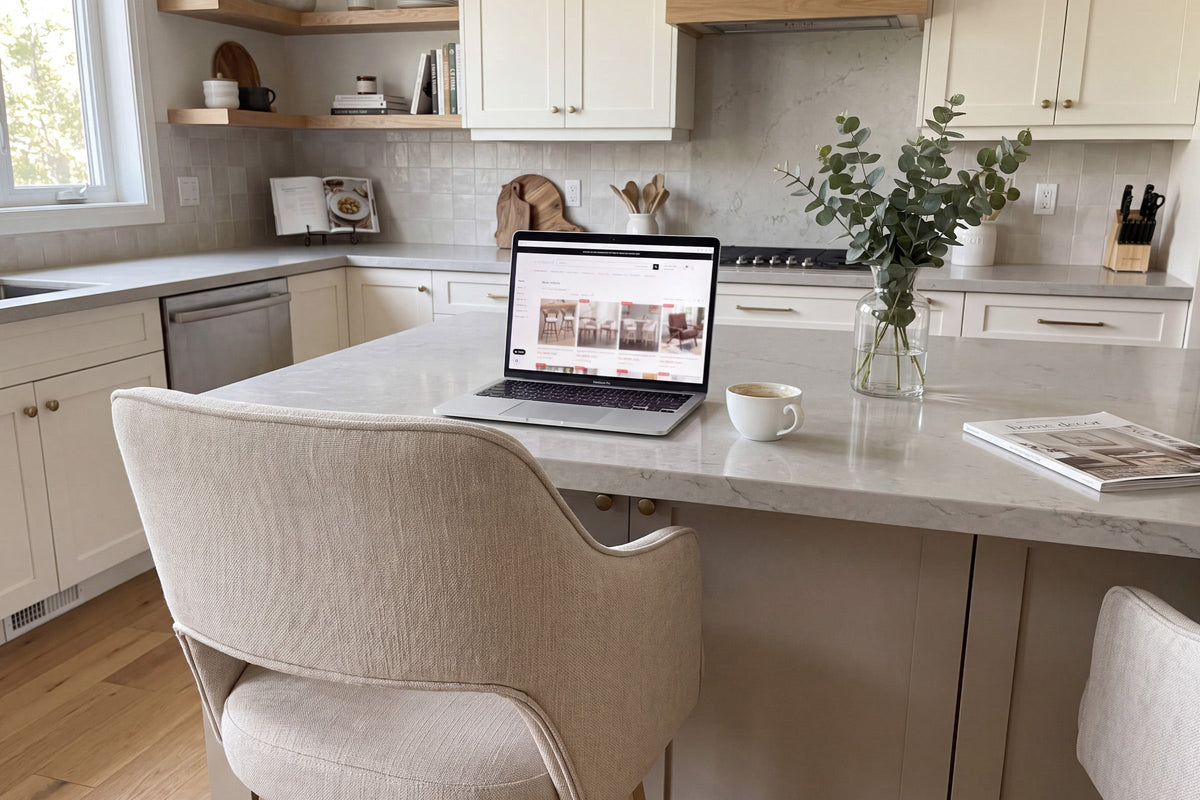
Make these checks before your cart turns into a headache
A full cart can feel great right up until the second thoughts hit. Will the chair actually fit under your table? Is the fabric easy to clean, or will it look tired after one busy season? And just as important, what happens if the box arrives damaged or the setup turns into a two-hour project on your living room floor?
Small misses create big delays when you’re buying furniture online. A seat that is 2 inches too high, a return window you did not notice, or a bulky box that will not clear your apartment stairwell can turn a simple order into a frustrating one. The good news is that you do not need a designer’s eye or a warehouse checklist. You just need seven practical checks that help you judge fit, quality, delivery, and setup with more confidence.
What should you verify before buying furniture online?
A smart furniture buying checklist starts with what the listing can prove, not what the styled photos suggest. Before you compare finishes or save screenshots, confirm whether the piece fits your room, suits the way you will use it, and gives enough detail to judge how it is built.
- Measure the room, the entry path, and the final placement area.
- Match chair height and depth to the way you sit and work.
- Read materials, frame notes, and weight capacity details carefully.
- Check whether the product category fits dining, lounge, counter, or task use.
1. Confirm the real dimensions and room fit
Dimensions do more than tell you whether a piece is “small” or “large.” They tell you how the furniture will behave in the room. Width affects visual bulk, depth affects walking space, and total height matters under windows, shelves, and sightlines. For chairs, seat height is the first number to compare against your table or desk. As a quick guide, most dining setups feel right when there is about 10 to 12 inches between the seat and the underside of the tabletop.
Then check the route into your home. Measure doorways, stair landings, elevator depth, and any tight turns. Leave enough clearance for movement after the furniture is placed; in many rooms, 24 to 36 inches of walking space keeps traffic comfortable.
2. Review materials, finishes, and build details
Material notes tell you how a piece will age in real life. Upholstery affects cleaning and texture, while the frame and base affect stability, weight, and long-term wear. Linen, velvet, PU, chenille, and wood all create very different maintenance routines. If the listing names solid wood, metal, foam type, or protective floor pads, that is more useful than broad claims like “premium quality.”
This is also where you should look for weight capacity, hardware notes, and finish details. Those details matter because they tell you whether the piece fits a messy breakfast counter, a formal dining nook, or a lower-traffic guest space.
3. Know the product category by use case
The biggest online shopping mistake is treating every chair like it solves the same problem. It does not. Dining chairs need the right seat height and posture for meals. Accent chairs prioritize lounge comfort, turning radius, and visual impact. Counter stools must line up with the actual counter height, not just look good in the product photo. Office seating needs adjustability and support if you will sit for long stretches.
How do you compare shipping, returns, and setup?
Once the furniture itself looks right, shift your attention to the order experience. This is where many buyers lose money or time. Shipping protection, return rules, and assembly demands affect whether a good-looking purchase still feels like a good decision after checkout.
- Read the damage-reporting process before you buy.
- Check who pays return shipping for non-quality issues.
- Confirm whether the item ships assembled, partially assembled, or flat-packed.
- Watch for heavy or bulky pieces that may require a second person.
The 7 checks that prevent expensive mistakes
If you only remember one section, make it this one. These seven checks cover the issues that most often cause regret after you order. Run through them in the same sequence every time, especially when you are comparing several listings late at night or buying during a sale.
1. Measurements and room clearance
Check product width, depth, height, seat height, and usable clearance around the piece. Then measure the delivery path, including hallways and tight corners. A beautiful chair is still the wrong chair if it blocks circulation or cannot get through the front door.
2. Material quality and maintenance burden
Look beyond style names and scan for real build language. You want frame material, upholstery type, foam or cushion details, and notes about floor protection or finish durability. Materials also affect indoor air considerations; NIST notes that source control through careful selection of indoor materials and furnishings is a core strategy for healthier indoor air.
3. Comfort fit for the intended user
Seat depth changes posture more than many shoppers expect. Shallow seats usually work better for upright dining, while deeper seats can suit casual lounging. Back shape, arm height, and cushion firmness all change whether the chair feels supportive for 20 minutes or two hours.
4. Photo accuracy and detail consistency
Compare every image against the written specifications. If the photos show a curved back, wrapped legs, wood arms, or channel tufting, the product details should confirm those features. Also watch for finish-variation notes, since screen color and lighting can make beige, walnut, black, and brass tones look different from room to room.
5. Shipping protection and transit risk
Check whether the seller explains inspection steps and damage reporting. Inspect the carton, take photos if needed, and keep all packaging until you confirm the piece is intact. This one habit protects your return rights and saves a lot of back-and-forth if something arrives dented or torn.
6. Return, refund, and warranty terms
Verify the calendar window, not just the existence of a return policy. You should know who pays shipping, what condition the item must be in, and whether assembled items are handled differently. A visible 1-year warranty is a plus, but always read exclusions and what “repair or replacement” actually covers.
7. Assembly workload and tool requirements
Count the likely labor before ordering. Bulky stools, rolling office chairs, and multi-piece sets may be simple, but they still need floor space, time, and sometimes a helper. CPSC also stresses following manufacturer instructions when securing furniture properly, which is especially relevant for larger case goods and any item with safety hardware. (cpsc.gov)
Which buying factors matter most for chair-focused furniture?
When you are shopping for seating, not every feature deserves equal weight. The right priority depends on where the chair will live and how often it will be used. That is why online chair shopping tips work best when they connect specs to actual room behavior.
Fit for room purpose
A dining chair should line up with table height and allow an easy pull-in motion. A counter stool must match counter height, not bar height, or the seat will feel awkward from day one. In a living room, comfort and turning space may matter more than formal alignment, especially with swivel accent chairs.
Cost versus long-term value
The cheapest option can become the most expensive if it wears out fast, is hard to clean, or is painful to return. Better materials, stronger frames, and clear policies reduce replacement risk. Chairus positions itself as a chair-specialist marketplace with a customer-first approach, which is useful when you want to compare multiple seating types in one place instead of sorting through unrelated furniture categories. (chairus.com)
Smart habits that save you trouble later
Most furniture mistakes are preventable because they happen before checkout, not after delivery. A few habits make your decisions more consistent and your returns less likely.
Best habits to keep
- Measure twice, then compare the numbers to the listing.
- Save screenshots of the product page, policy language, and order confirmation.
- Match the chair type to the room function first, then choose style.
- Read assembly notes before you place the order.
- Inspect the item right after delivery and keep the packaging until you finish.
Common mistakes to avoid
- Trusting styled photos more than the spec sheet.
- Ignoring seat height when shopping for dining or counter use.
- Assuming “free shipping” means easy damage handling.
- Throwing away the carton before checking all parts and surfaces.
- Ordering a heavy or bulky piece without planning the entry path or a helper.
Your next move before you place the order
Buying furniture online gets easier when you stop treating each listing like a visual decision only. The strongest choices come from a repeatable process: confirm dimensions, judge materials, match the piece to the room, and read the fine print on shipping, returns, and assembly. That is the real difference between a smooth order and a long week of rearranging, lifting, and emailing support. Start with the seven checks above, compare the spec sheets carefully, and only then decide which style deserves the space in your home.
FAQ
How can I assemble flat-pack furniture quickly without a professional tool kit?
Yes, you can usually assemble flat-pack furniture efficiently with basic tools if you prepare the space first. Lay out a blanket or rug, group hardware by size, and compare every part to the instruction sheet before tightening anything fully. In many cases, a screwdriver, the included hex key, and 30 to 60 minutes are enough for chair assembly.
What matters most when buying chairs online for a small apartment?
The most important factors are footprint, clearance, and flexibility. In a small apartment, a chair that is 2 or 3 inches narrower or shallower can make the difference between an easy layout and a cramped walkway. Check overall width, depth, seat height, and whether the piece can work in more than one spot, such as dining, desk, or occasional seating. Lighter visual frames, easier-clean materials, and lower assembly burden usually perform better than oversized statement chairs in tight spaces.
How can I tell whether an online chair will actually feel comfortable?
You can estimate comfort pretty well by combining the specs with the use case. Start with seat height, seat depth, back height, arm position, and cushion style, then compare those numbers to how you will use the chair for dining, reading, working, or lounging. Upright tasks often feel better with firmer cushions and moderate seat depth, while relaxed seating can benefit from deeper support and a more cradling back. Product photos help, but the written dimensions and category purpose usually tell you more about day-to-day comfort.
When should I choose easy assembly over a more complicated design?
Easy assembly should win when you are moving soon, furnishing on a deadline, living in a walk-up, or setting up the piece alone. A simpler build usually means fewer alignment problems, less packaging waste spread across your floor, and an easier time disassembling later if you move. More complex designs can still be worth it when the room is stable and the visual payoff matters more than setup time. For many buyers, the sweet spot is a polished chair that does not require special tools, extra labor, or a long evening of trial and error.