
Introduction
A dining chair can look perfect at the table and still leave you shifting, bracing, and standing up stiff before dessert. That is the real problem with back-friendly dining chairs: the wrong pick does not just miss on comfort, it turns everyday meals, work-from-table hours, and long conversations into low-grade strain you feel in your lower back and shoulders.
This shortlist focuses on five Chairus options that balance support, style, and realistic home use. Instead of ranking by looks alone, the picks below are organized by the kind of comfort problem you are trying to solve first: arm support, breathable seating, classic rattan styling, curved back support, or a lighter visual footprint.
5 Back-Friendly Dining Chairs Worth a Closer Look
1. Cutout Back Armchair

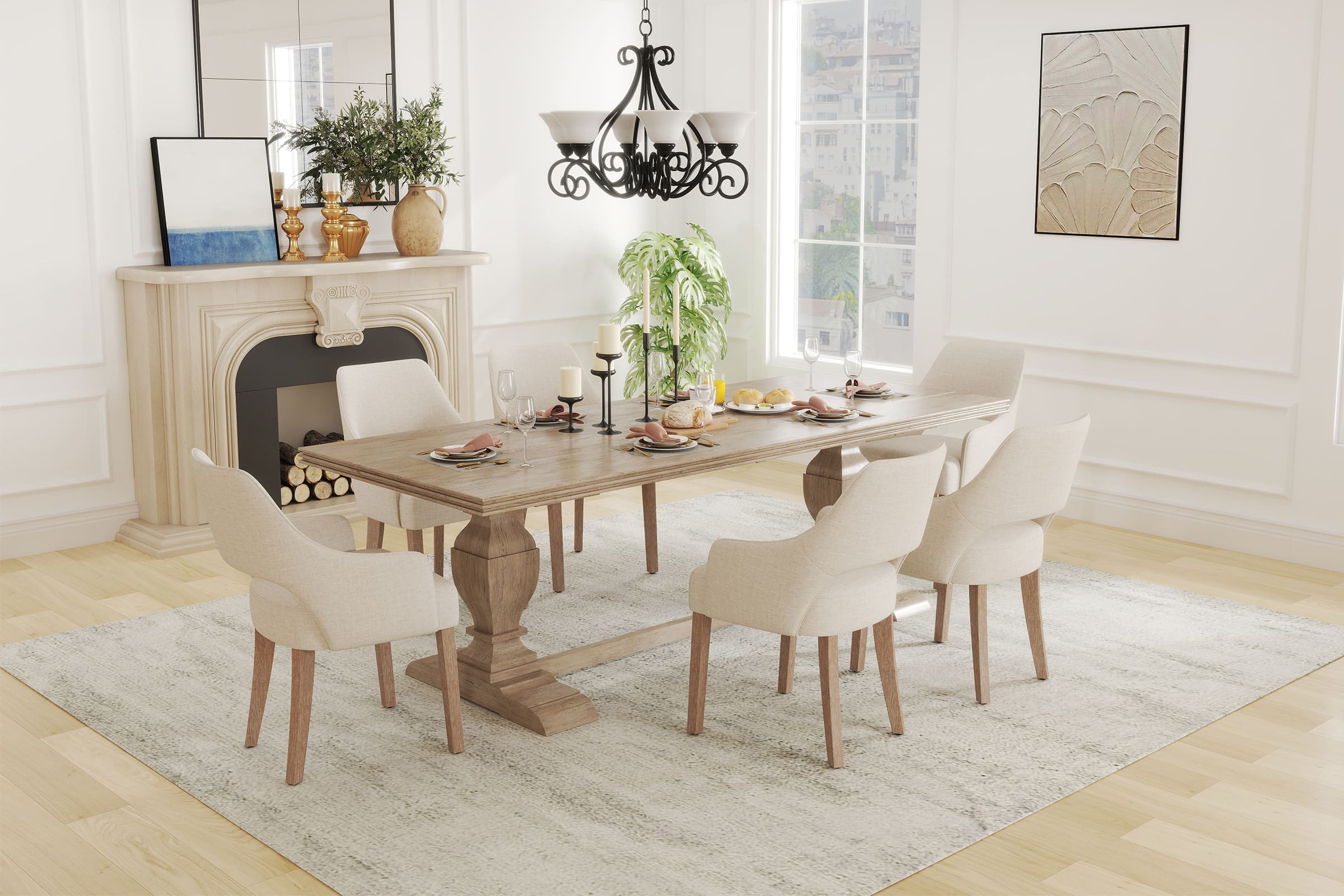
If your usual dining chair feels acceptable for a quick meal but starts to wear on your body during longer sitting, this is the strongest place to start. The Chairus Cutout Back Upholstered Dining Armchair Set of 2 - 7550 combines an ergonomic cutout back with integrated armrests, so your upper body has more support and your posture does not rely only on core tension. Chairus lists both a 350 lb support claim in the description and a 300 lb capacity in the dimensions area, so it is worth confirming the final load rating on the live page before you buy. Adequate lumbar support is a major factor in reducing excess pressure on the spine, according to the NIH ergonomics guidance on chair design. NIH
Why it stands out
- Integrated armrests help reduce shoulder and upper-back tension.
- Ergonomic cutout back adds more shaped support than a flat side chair.
- Upholstery is available in linen or PU.
- High-density foam aims for softer, more stable seating.
Key specs to check
- Overall size: 20.5"W x 24.5"D x 33.3"H
- Seat height: 20"
- Materials: engineered wood frame, solid rubberwood legs
- Listed capacity: 300 lbs in dimensions section
- Set size: 2 chairs
What to watch
- It takes up more visual space than simpler side chairs.
- Arms can limit how tightly the chair tucks under some tables.
- The page shows mixed capacity details, so final verification matters.
Shop: Cutout Back Upholstered Dining Armchair Set of 2 - 7550
2. Square Rattan Back
Some back-friendly dining chairs fail because they trap heat or feel too heavy for everyday use. The Square Rattan Back Linen Beige Dining Chairs Set of 2 - 1932DC works better if you want a chair that feels open and breathable without giving up a padded seat. The square rattan back keeps the silhouette lighter, while the upholstered seat adds comfort where pressure tends to build first. This makes it an easy fit for homes where a dining chair also gets used for coffee, laptop time, or casual conversation.
Best for
- Warm dining rooms
- Everyday family meals
- Buyers who want cushion without a fully upholstered back
Key specs to check
- 19.25" wide upholstered seat cushion
- High-quality linen fabric
- Square rattan back
- Natural wood legs with foot pads
- Set size: 2 chairs
What to watch
- You get more airflow, but less wraparound support than an armchair.
- The open back feels less structured for very long sitting sessions.
- It suits casual use better than all-night hosting.
Shop: Square Rattan Back Linen Beige Dining Chairs Set of 2 - 1932DC
3. French Rattan Farmhouse
When your main challenge is finding back-friendly dining chairs that do not make the room feel bulky, this French-inspired rattan style makes sense. The Chairus Farmhouse Dining Chairs Set of 2 - 7106DC leans more classic and airy than plush, so it is a smart match for breakfast nooks, everyday dining rooms, or tables that already have a lot of visual weight. Chairus highlights a breathable rattan backrest, linen fabric, and carved brushed legs that add rustic detail without making the chair feel dense.
Why it wins
- Breathable rattan back can feel cooler during longer meals.
- Farmhouse styling keeps the room light and relaxed.
- Linen upholstery softens the seat experience.
- Lightweight look works well around smaller tables.
Best for
- Classic farmhouse spaces
- Casual hosting
- Buyers who dislike heavy padded seating
What to watch
- It is more upright than lounge-like.
- Back support is moderate, not deeply contoured.
- If you want the most structured support, the 7550 is the safer pick.
Shop: Farmhouse Dining Chairs Set of 2 - 7106DC
4. Curved Open Back Upholstered

Some chairs look soft but never really meet your back where you lean. The Chairus Curved Open Back Upholstered Dining Chairs Set of 2 - 1929DC is a better fit when you want more support than a flat decorative chair but do not want arms. Chairus describes a curved open back, solid wood frame, and multiple upholstery choices, which makes this one of the more flexible picks for people who use their dining chairs beyond mealtime. Research published in 2025 continues to link prolonged sitting and posture behavior with low back pain risk, which is why chair shape matters more than surface softness alone. SAGE Journals
What stands out
- Curved open back aims for better body contact than flatter backs.
- Upholstery options include linen, PU leather, and lambswool.
- Solid wood frame supports daily use in mixed spaces.
- Open-back shape helps the chair feel less stuffy.
Key specs to check
- Overall size: 26"W x 22.5"D x 30.5"H
- Seat height: 19"
- Capacity: 300 lbs
- Item weight: 31.75 lbs
- Set size: 2 chairs
What to watch
- No arm support for shoulder relief.
- Wider frame may need more room around a compact table.
- Lambswool may suit comfort-first buyers more than low-maintenance buyers.
Shop: Curved Open Back Upholstered Dining Chairs Set of 2 - 1929DC
5. Light-Look Rattan Back
Not every buyer wants the most cushioned chair in the room. Sometimes the real goal is a chair that feels lighter, cleaner, and easier to live with visually while still being gentler on your back than a hard, flat seat. The Rattan Back Dining Chairs - 5343DC fits that lane. It is the style-first comfort pick here, with a more open look and an easier presence around smaller tables or natural-texture interiors.
Best for
- Smaller dining spaces
- Casual meals and coffee chats
- Buyers who prefer airy, low-bulk furniture
Why it stands out
- Rattan back keeps the silhouette visually light.
- Natural texture suits relaxed interiors.
- Open design can feel less confining than thicker upholstered backs.
What to watch
- It is less support-driven than the upholstered options above.
- Better for shorter sitting periods than marathon dinners.
- If seat softness is a priority, the 1932DC is likely the better match.
Shop: Rattan Back Dining Chairs - 5343DC
How to Choose Back-Friendly Dining Chairs for Real Life
A lot of shoppers start with cushion thickness, then wonder why the chair still feels wrong after half an hour. In practice, back-friendly dining chairs usually come down to shape, posture, and how you actually use the table. If the chair is mostly for quick meals, a lighter rattan-back design can work well. If your dining table doubles as a work surface or a gathering spot, you will usually feel the difference from a shaped backrest, more stable seat, and stronger upper-body support.
Start with back shape
- A curved back usually feels better than a flat decorative panel.
- A backrest should meet your lower and mid-back naturally.
- Open backs can still support posture if the frame shape guides your body.
- Arms help some people relax their shoulders during long meals.
Match support to your routine
- Short breakfasts: breathable, lighter chairs often work fine.
- Long dinners: upholstered models with more structure usually win.
- Mixed-use dining rooms: choose seats that feel stable for work and conversation too.
- Smaller spaces: a visually lighter chair may be more comfortable overall because the room feels less crowded.
Do not ignore table fit
- Check whether arms clear the table apron.
- Compare seat height to your table height before buying.
- A wider chair can improve comfort, but it may reduce spacing around the table.
- If you move chairs often, item weight matters more than it seems.
Comparison Table
| Product | Best for | Key comfort detail | Trade-off |
|---|---|---|---|
| 7550 | Long meals | Cutout back, arms | Larger footprint |
| 1932DC | Daily dining | Padded seat, airflow | Less wraparound support |
| 7106DC | Farmhouse spaces | Breathable rattan back | More upright feel |
| 1929DC | Long sitting, no arms | Curved open back | Needs more table space |
| 5343DC | Light visual footprint | Airy rattan look | Less structured support |
Conclusion
The best back-friendly dining chairs are the ones that solve your actual comfort problem, not just the ones that look soft in photos. If you want the clearest support story for longer meals, the 7550 is the strongest overall pick. If you want a breathable everyday compromise, the 1932DC is easy to recommend, while the 1929DC stands out when you want a shaped back without armrests.
FAQ
Which dining chair style is usually best for longer sitting?
A chair with a shaped backrest and a stable seat usually works best for longer sitting. In most homes, that means an upholstered model with either arm support or a curved back rather than a flat decorative side chair. Breathable rattan-back chairs can still be comfortable, but they often feel better for shorter meals or lighter daily use. If you regularly sit for an hour or more, prioritize structure over softness alone.
How do I know if a dining chair supports my lower back well enough?
Start by checking where the backrest meets your body when you sit fully back in the chair. A good fit supports the lower and mid-back without forcing you to perch forward or round your shoulders. Curved backs, ergonomic cutouts, and slightly shaped frames usually give better contact than flat panels. If the chair only touches your shoulders or upper back, it is less likely to feel supportive over time.
Are armchairs better than side chairs for back comfort?
Armchairs can be better when your shoulders and upper back get tense during long meals. The arms give your body another contact point, which can reduce the effort needed to hold posture. That said, they also take up more space and may not fit under every table. If your room is tight, a well-shaped side chair can still be a very good solution.
Is a rattan-back dining chair comfortable enough for everyday use?
Yes, a rattan-back dining chair can work well for everyday use if your meals are moderate in length and you prefer a cooler, lighter-feeling seat. The main advantage is airflow and visual openness, which many people find more pleasant than thick padding. The trade-off is that rattan-back designs usually offer less contour and less wraparound support than upholstered models. They are often best in casual dining rooms, breakfast areas, or smaller spaces.
What measurements matter most when choosing a back-friendly dining chair?
Seat height, overall width, and back shape matter most for practical comfort. Seat height needs to work with your table, while width affects both comfort and how many chairs fit around the table. Overall depth also matters because a chair that is too shallow can make you perch, while one that is too deep may not support shorter users well. Finally, check whether armrests, if included, will slide under your table.
Can a dining chair help if I already have back pain?
A better dining chair can reduce strain, but it should not be your only strategy if you already have back pain. A chair with better lower-back contact, steadier support, and less shoulder tension can make meals and desk-like tasks easier. However, severe or persistent pain may still need medical advice, movement changes, or a broader ergonomic setup at home. Think of the chair as one useful piece of the solution, not the whole fix.