
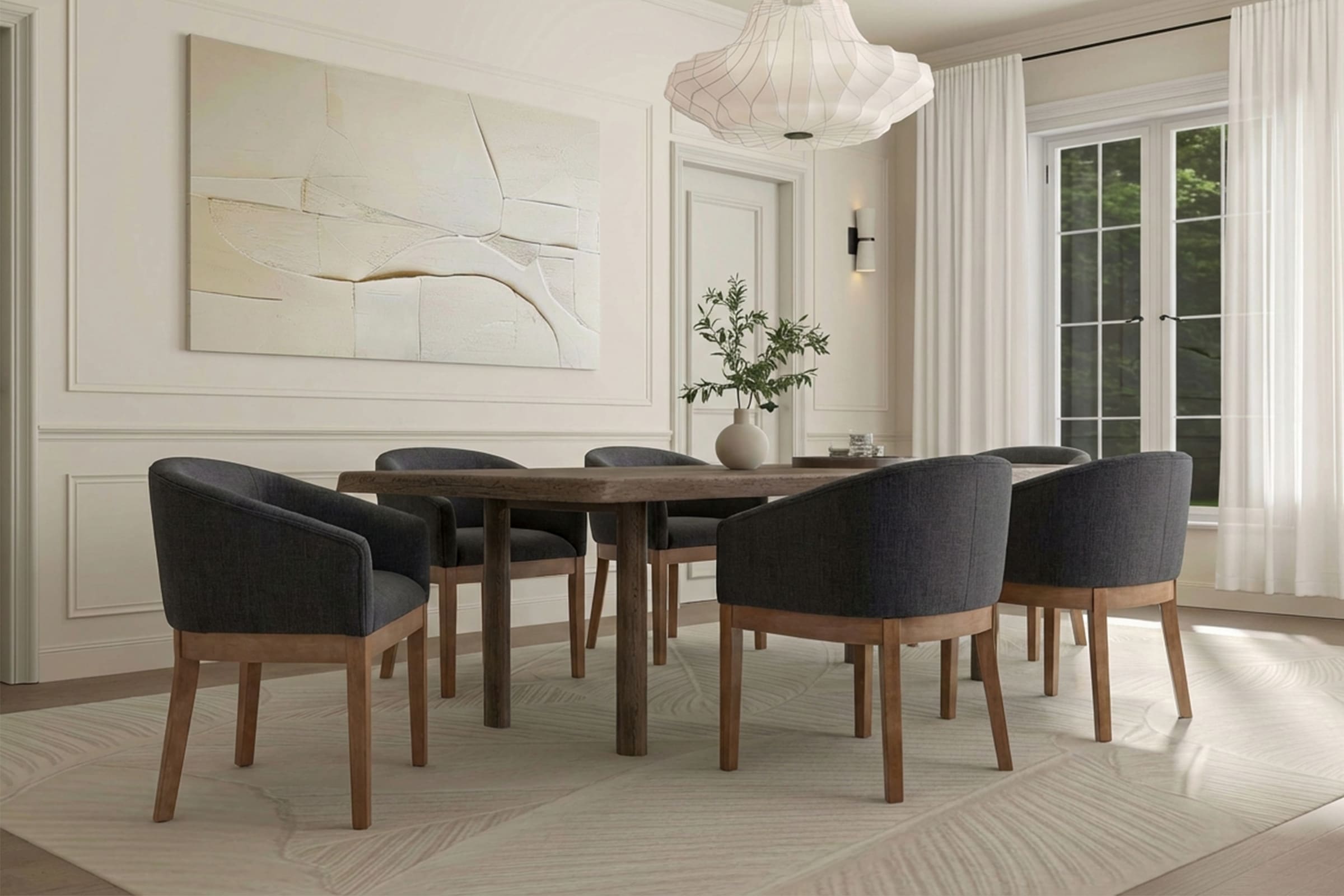
Which chair details actually prevent wobble and daily frustration?
Wobble gets annoying faster than almost any other furniture problem. A chair can look stylish online, but if it shifts when you sit down, rocks on the floor, or feels awkward to exit, it stops feeling comfortable in daily use.
That matters even more when you are choosing stable chairs for kitchens, dining rooms, and busy family spaces where spills, quick movement, and repeated use are part of the routine.
What actually helps is not one magic feature. Stable seating comes from eight linked checks: footprint, frame strength, height fit, movement type, lower support, load handling, comfort geometry, and floor contact.
Once you know how those pieces work together, it becomes much easier to compare sturdy dining chairs, stable bar stools, and counter stools by structure instead of by photos alone.
1. The stability basics buyers should judge first
Stability is best understood as a combination of wobble resistance, balanced weight distribution, and predictable movement during sitting and standing. A chair feels planted when the frame stays level, your feet have proper support, and the joints do not loosen quickly under repeated use. Even comfort plays a role, because people shift less when the seat depth and back shape support the body well.
What stability really means in everyday seating
A stable chair usually shows a few clear signs right away:
- The base sits evenly on the floor.
- The seat does not feel top-heavy for its height.
- The frame resists flex when you lean or turn.
- You can get up without dragging or bracing hard.
OSHA notes that feet should rest flat on the floor or on a stable footrest, which supports the idea that secure lower-body support is part of safe, comfortable seating rather than a bonus feature.
Why “stable” is not one single trait
A chair can fail on stability even when the material seems strong. For example, a solid wood stool may still feel shaky if the leg stance is too narrow for the seat height, while a lighter metal frame can feel steady if the footprint is balanced and the lower supports are rigid. That is why chairs for daily use should always be judged as a system, not by one spec.
Core seating categories to compare
When you shop, keep these categories separate because each has different stability demands:
- Dining chairs: lower height, easier entry and exit, usually more forgiving.
- Counter stools: built for kitchen islands, where foot support becomes essential.
- Bar stools: taller seats, so base proportion matters more.
- Fixed vs swivel stools: one favors predictability, the other favors access and movement.
2.Start with the base footprint and leg stance
The fastest way to screen for wobble-resistant seating is to look at the base. Taller seats need a stronger visual and structural stance, because more height creates more leverage when someone climbs on, shifts, or gets down. That is why stable bar stools and counter stools should not look overly narrow under the seat.
What to check
- Prefer a balanced leg spread over a tight, decorative silhouette.
- Make sure all legs appear designed to contact the floor evenly.
- Match base width to seat height.
- Be more careful with tall, backless, or adjustable models.
3.Check frame material and joinery strength
Material matters, but the way parts connect matters more. Solid wood often gives a grounded feel, while metal usually resists flex well, especially in slim profiles. Still, neither one guarantees a sturdy dining chair if the joints, corners, and lower rails are lightly built.
Key specs or signals
- Solid wood: warm look, often reassuring in fixed dining and counter seating.
- Metal frames: useful where you want slim lines without too much flex.
- Mixed materials: attractive, but worth checking closely for connection points.
- Reinforced lower structure: often more important than surface finish.
4.Why seat height and table fit affect stability
A chair can be structurally sound and still feel unstable if the height is wrong for the surface. When the seat is too high, users perch and lose firm foot support. When it is too low, the knees rise awkwardly and standing up takes more effort.
Practical fit checks
- Keep feet supported while seated.
- Pair stool height to the counter or bar surface.
- Leave enough knee room for natural sitting.
- Avoid buying by label alone; compare actual dimensions.
OSHA states that unsupported feet can create awkward posture and fatigue, and recommends stable foot support when the seat height cannot be adjusted appropriately. That principle applies directly to counter stools and bar stools: a good height fit improves control, comfort, and confidence during daily use.
5.Fixed or swivel: which movement helps or hurts?
If your top goal is a planted feel, fixed vs swivel stools is a real decision point. Fixed seats usually feel steadier because they remove one moving part and keep the user facing forward. That makes them a strong default for calmer breakfast counters, homes with young kids, or anyone who dislikes seat motion.
Best fit
- Choose fixed stools if: you want a predictable sit, less movement, and simpler daily use.
- Choose swivel stools if: you need easier entry, frequent turning, or less dragging on the floor.
6.Don’t ignore footrests, stretchers, and lower support
Many buyers focus on the seat and back, then overlook the lower frame. In practice, footrests and stretchers do a lot of the daily work that makes stable bar stools feel controlled. They give users a place to anchor themselves while sitting, shifting position, and stepping down.
Why it matters
- Footrests help you stabilize before and after sitting.
- Stretchers can improve lower-frame rigidity.
- Support bars should feel integrated, not decorative.
- Taller seating needs usable footholds, not just visual detail.
This is especially relevant for counter stools used every day at kitchen islands. If the lower support flexes or sits too awkwardly to use, the whole stool can feel less secure even when the upper frame looks solid.
7.Weight capacity and load distribution matter
Weight capacity is not the whole story, but it is still a useful clue. A published rating tells you something about the intended structural performance of the chair, especially when you compare similar silhouettes. The brief also notes 250 lb and 300 lb capacities as examples buyers often watch, and that is sensible as long as you treat the number as one signal rather than the final answer.
Common mistake
Do not assume a higher static rating automatically means better real-world stability. Sitting down, leaning back, and stepping off a stool create shifting loads, not just straight downward pressure. A well-proportioned frame with dependable joints usually matters more than a single capacity number on its own.
8.Upholstery, seat shape, and back support influence steadiness
Comfort features are part of stability because they reduce constant readjustment. A seat that lets you sit fully back, spread weight evenly, and rest against a supportive back usually feels more secure than one that forces you to perch.
What this means
- Supportive backs reduce fidgeting.
- Seat depth should fit actual body use, not just look generous.
- Cushioning should hold shape instead of collapsing quickly.
- Grippy or textured upholstery can improve control.
How to choose the right stable chair for each room
Different rooms create different stability priorities. The right choice is usually the one that matches height, movement, and household habits better than the one that simply looks strongest.
Dining rooms and breakfast nooks
Choose sturdy dining chairs with grounded frames, supportive backs, and surfaces that are easy to maintain. Lower seats are naturally easier to stabilize, so your main focus should be joint quality, comfort, and repeat use.
Kitchen islands and counters
Counter stools need proper seat height, dependable foot support, and enough spacing to avoid awkward entry. Fixed models suit calmer homes, while stable swivel stools can work in busier kitchens where turning access matters.
Homes with kids or pets
Keep movement simple when possible. Fixed seats, wipeable upholstery, and steadier silhouettes usually age better in messy, high-traffic homes than delicate or highly mobile designs.
FAQ
Which is safer for kids: swivel stools or fixed stools?
Fixed stools are usually the safer default for kids because they remove one moving part and feel more predictable during climbing, sitting, and getting down. That matters most at kitchen islands where children tend to twist, push off, or step down quickly. If you need seating for frequent family use, prioritize a broad stance, an integrated footrest, and a seat height that lets feet rest naturally.
Can you recommend fixed bar stools that are stable and comfortable for daily use?
Yes, a fixed counter or bar stool with a balanced footprint, supportive back, and integrated footrest is usually the best candidate type for daily stability. Within Chairus, the strongest direction is to compare fixed wood-frame or metal-frame counter stools rather than very narrow backless silhouettes. Look for seat heights around the actual counter or bar surface you have, plus lower supports that feel structural rather than decorative. That combination usually gives you a more planted feel and less day-to-day seat motion.
What chair features matter most if my old chairs feel wobbly?
Start with the base, joinery, and floor contact because those are the most common sources of wobble. Uneven leg contact, a narrow stance, loose joints, or weak lower supports usually cause more frustration than upholstery wear. If you are replacing the chairs, look first for reinforced frames, better base proportion, and proper height fit to the table or counter. For stools, integrated footrests and stretchers deserve just as much attention as the seat itself.
How do I choose sturdy chairs for daily mess from kids and pets?
Look for a mix of stable structure and easy-care materials, because durability and wobble resistance need to work together. A practical setup usually includes wipeable upholstery, a supportive back, and a frame that does not rely on delicate edges or too many moving parts. Fixed stools often make sense in family kitchens, while sturdy dining chairs with shaped backs work well for longer meals and homework time.
Are heavier chairs always more stable?
Heavier chairs are not always more stable. Extra weight can make a chair feel planted, but leg geometry, joint strength, seat height, and floor contact usually matter more in real use. A narrow heavy stool can still feel awkward, while a lighter well-engineered frame may feel very secure. Treat overall construction as the main test and weight as only one supporting clue.