
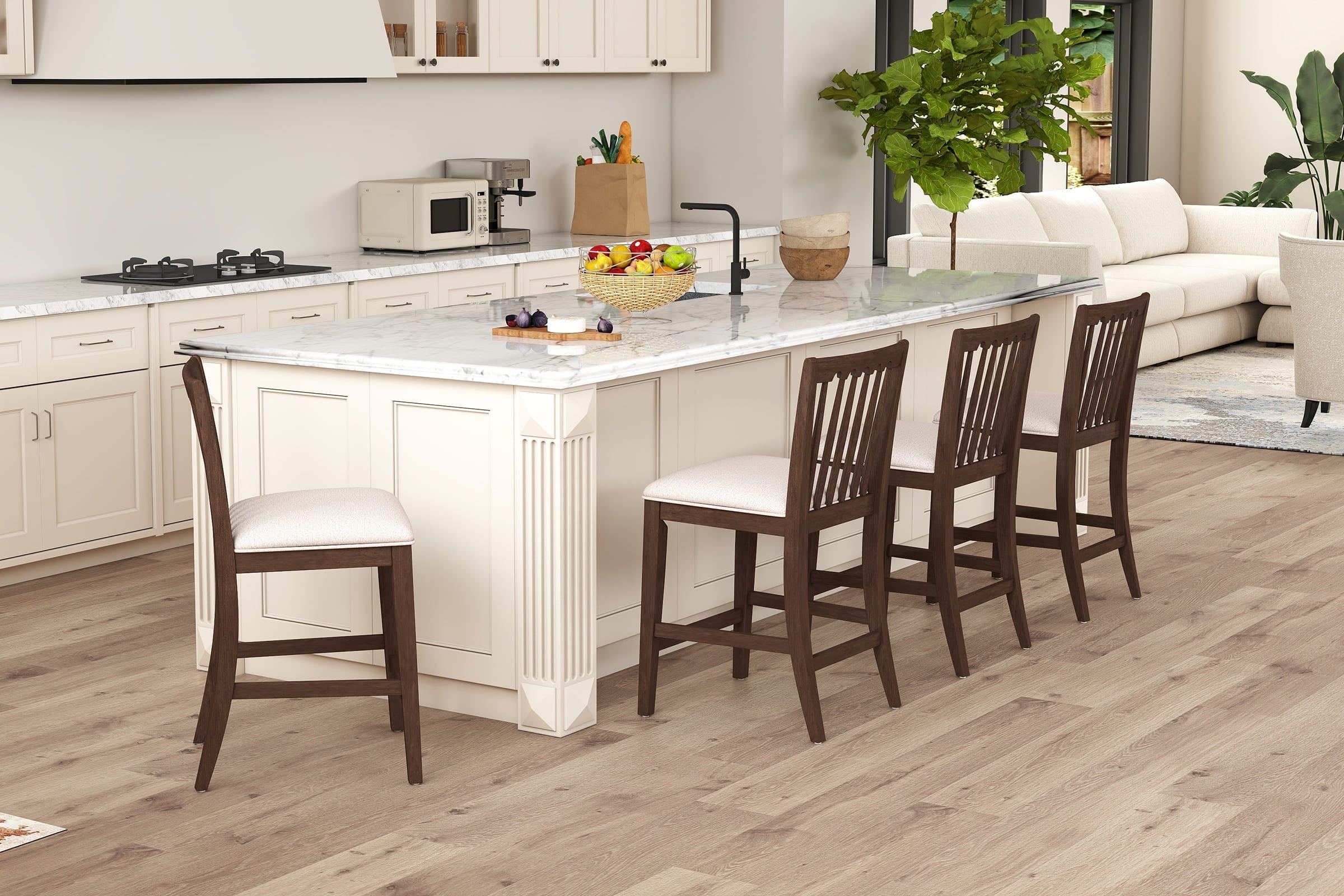
Fixed-Seat vs Swivel?
You know the moment: you sit down quickly, the stool shifts, and your feet scramble for the floor. That little slip is not just annoying. It is how wobbly stools turn into bruised shins, scuffed floors, and the kind of near-fall that makes guests avoid your island altogether.
This list helps you decide which seat type is safer for your home in 2026: fixed-seat vs swivel. You will also get a focused shortlist of Chairus bar stools that match the safer choice you are actually making, plus a quick buying guide to avoid the common setup mistakes that make both styles feel unstable.
2026 safety call: what is safer, really?
If your priority is fewer surprises, fixed-seat stools are usually the safer default because there is one less moving part. In real life, that means fewer sudden rotations when someone sits down at an angle, leans to talk, or hops on and off during busy kitchen traffic.
Swivel stools can still be safe when the base stays planted and the swivel feels controlled. In tighter layouts, swivel can even reduce awkward entry and exit because you turn the seat instead of twisting your torso or dragging the stool across the floor. That matters when stools sit close together, your island is in a walkway, or you want easier in-and-out without bumping knees.
Quick rule you can use in 30 seconds
- Pick fixed-seat if kids use the stools, the floor is slick, or guests tend to sit down fast.
- Pick swivel if access is tight and turning prevents twisting or scooting.
- Either type must match height and have stable footing.
What safety testing language should you look for?
When brands mention safety and durability standards, it often points to test methods that check structural adequacy under load and repeated use. BIFMA is accredited by the American National Standards Institute (ANSI), and it describes its furniture standards as a common basis for evaluating safety, durability, and structural adequacy. According to BIFMA, this testing language is meant to be construction-material independent, which is why a stool can look similar but perform very differently.
Safer Chairus picks by real-life use case
Below are Chairus options mapped to the safety choice you are actually making: predictable fixed seating for calmer sit-downs, and controlled swivel options for tight spaces where turning beats twisting.
Fixed-seat picks (most predictable day to day)
These are the stools to choose when you want fewer moving parts, less unexpected rotation, and a calmer sit-down for guests.
1) 26.5"H & 30.2"H Farmhouse Rattan Counter Stools Set of 2 - 5739
- Best for: family kitchens that need a steady, no-surprise seat.
- Seat type: fixed-seat (no swivel), so it stays oriented when someone sits sideways.
- Style fit: Rattan Accents with a farmhouse look for warm, lived-in spaces.
- Practical safety upside: fewer moving parts means fewer loosen-over-time points.
- Setup note: choose the 26.5 inch option for most counters, and reserve 30.2 inch for taller bar-height tops.
- Trade-off to expect: rattan back needs gentle cleaning to avoid snagging.
Why it wins: If your household is busy and people sit down fast, this fixed-seat design helps keep entry and exit predictable. The visible, traditional leg layout also makes it easier to spot (and fix) rocking early by leveling and re-tightening.
Shop: 26.5"H & 30.2"H Farmhouse Rattan Counter Stools Set of 2 - 5739
2) 26" Modern Metal Finish Counter Stools Set of 2 - 1010CS
- Best for: modern kitchens where you want stable counter seating without swivel behavior.
- Seat type: fixed-seat, which reduces spin risk during sit-down.
- Key specs: seat height 26 inches; overall 20.5" W x 18.75" D x 32" H.
- Stability signal: listed item weight 50.9 lbs (set), which often correlates with a more planted feel.
- Support detail: armrest structure helps cue centered sitting (less edge-perching).
- Listed capacity: 300 lbs.
Why it wins: If you want a “sit and stay put” stool that still feels supportive, this is a strong choice. The fixed orientation makes it easier for guests to land squarely, which can matter more than you think during parties.
Shop: 26" Modern Metal Finish Counter Stools Set of 2 - 1010CS
3) 26"H & 30"H Industrial Counter & Bar Stools Set of 2 - X323
- Best for: people who shift and lean, and need more “wrap” support.
- Seat type: fixed-seat barrel shape for predictable positioning.
- Height options: 26" counter stool or 30" bar stool variants.
- Stability features: metal frame plus floor-protecting foot pads.
- Comfort-to-safety link: backrest and armrests can reduce side-perching.
- Listed capacity: 250 lbs.
Why it wins: When you want a stool that helps people stay centered (instead of perching on the edge), the barrel-style body support can reduce the small movements that make stools creep or wobble. It is a practical pick for longer sits at the island.
Shop: 26"H & 30"H Industrial Counter & Bar Stools Set of 2 - X323
Swivel picks (safe when access is the real problem)
Swivel is the right call when stools sit close together, your island is in a walkway, or you want people to turn to talk without dragging the stool.
4) 26"H Modern Barrel Swivel Counter Stools Set of 2 - 3075CS

- Best for: tight islands where turning beats twisting.
- Seat type: swivel with a 360 degree rotation device.
- Floor stability helper: four adjustable footstools for leveling and floor protection.
- Key specs: 15.75" D x 15.75" W x 38.5" H; seat height 26".
- Listed capacity: 250 lbs.
- Trade-off to expect: swivel hardware should be re-checked after the first weeks.
Why it wins: If your stools are close together, swivel can actually prevent the “hip bump” that makes a stool shift. The adjustable feet are a real-world safety upgrade because they let you remove rocking on slightly uneven floors.
Shop: 26"H Modern Barrel Swivel Counter Stools Set of 2 - 3075CS
5) 26" Backless Swivel Counter Stools Set of 2 - 1710CS
- Best for: quick-perch seating where you want easy wipe-down materials.
- Seat type: backless swivel (360 degree all-round rotation).
- Floor protection: 4 footpads under the base to help avoid scratching.
- Comfort detail: 8 inch H footrest ticks for leg support.
- Material options: includes Sherpa Upholstery option alongside linen and PU.
- Trade-off to expect: backless + swivel rewards good sitting habits (sit first, then turn).
Why it wins: If you are choosing swivel primarily for convenience, this keeps the profile simple while still calling out floor contact points. Just be honest about your household: if people perch on edges, a backrest model will feel safer.
Shop: 26" Backless Swivel Counter Stools Set of 2 - 1710CS
6) Adjustable Swivel Backless Bar Stool 1 PCS - 90117AB
- Best for: mixed-height users sharing one seating area.
- Seat type: adjustable swivel (360 degree) with a backless profile.
- Key specs: adjustable seat height 24.5" to 33".
- Floor protection: anti-slip rubber ring on the base to protect floors and reduce noise.
- Base style note: pedestal bases can feel stable when wide, but can slide on slick floors without grip.
- Listed capacity: 250 lbs.
Why it wins: The safest adjustable stool is the one that lets each person keep feet supported, which reduces fidgeting and scooting. Keep it at the lowest comfortable height whenever possible because the center of gravity stays lower.
Shop: Adjustable Swivel Backless Bar Stool 1 PCS - 90117AB
7) Adjustable Swivel Bar Stools Set of 2 - 2205AB
- Best for: entertaining zones where people rotate to talk, eat, and get up often.
- Seat type: swivel + adjustable height.
- Key specs: seat height adjusts from 25" to 33"; 360 degree rotation.
- Stability detail: 17.5" chrome base called out on the product page.
- Frame detail: stainless steel frame noted for strength.
- Trade-off to expect: like most adjustable stools, it needs periodic bolt checks.
Why it wins: If your main safety problem is awkward entry and exit, swivel plus adjustability can reduce the “scoot and catch a toe” pattern. Use the height range to keep most users out of the topmost setting unless the counter truly demands it.
Shop: Adjustable Swivel Bar Stools Set of 2 - 2205AB
Comparison table (quick scan)
| Product | Seat type | Height format | Floor / stability features | Listed capacity |
|---|---|---|---|---|
| Farmhouse Rattan Counter Stools Set of 2 - 5739 | Fixed | 26.5" or 30.2" | Traditional 4-leg stance | Not listed |
| Modern Metal Finish Counter Stools Set of 2 - 1010CS | Fixed | 26" | Heavier set; arm support | 300 lbs |
| Industrial Counter & Bar Stools Set of 2 - X323 | Fixed | 26" or 30" | Foot pads; metal frame | 250 lbs |
| Modern Barrel Swivel Counter Stools Set of 2 - 3075CS | Swivel | 26" | Adjustable feet / levelers | 250 lbs |
| Backless Swivel Counter Stools Set of 2 - 1710CS | Swivel | 26" | 4 footpads under base | Not listed |
| Adjustable Swivel Backless Bar Stool 1 PCS - 90117AB | Swivel | 24.5"–33" | Anti-slip rubber ring | 250 lbs |
| Adjustable Swivel Bar Stools Set of 2 - 2205AB | Swivel | 25"–33" | 17.5" chrome base | Not listed |
Conclusion
If you want the safest default for most homes, choose a fixed-seat stool with a stable stance and dependable foot contact. You will get fewer surprises, especially for kids, guests, and anyone who sits down quickly.
If tight access is the real risk in your layout, a well-built swivel stool with leveling feet, footpads, or an anti-slip ring can be the safer daily choice. Either way, match the seat height to your counter and re-tighten hardware after the first couple of weeks, because small setup details decide whether the stool feels planted or sketchy.
FAQ
Are swivel bar stools always less safe than fixed-seat stools?
No, swivel stools are not automatically less safe, but they add a moving part that can surprise people during sit-down. Swivel can be safer in tight layouts because it reduces twisting and awkward sideways entry that bumps the stool out of position. The best safety move is choosing a wide, stable base and keeping the stool level so it does not rock. If your household tends to “perch and pivot,” fixed-seat will usually feel more predictable.
What is the safest bar stool choice for homes with kids?
Fixed-seat stools are usually the safest starting point for kids because they reduce sudden spinning and encourage forward-facing sitting. Look for a stable 4-leg stance, a footrest that kids can actually reach, and a seat that is not overly tall for the counter. A backrest or barrel shape can also help by keeping kids centered instead of sliding sideways. If you must use swivel, set a rule to sit fully first and only then rotate.
How do I know if I need counter height or bar height stools?
Measure from the floor to the top of your counter or bar, then aim for about 9 to 12 inches of clearance between the seat and the underside of the surface. Most kitchen counters work best with a seat height around 24 to 26 inches, while bar-height tops often need around 29 to 30 inches. Buying too tall is a common safety problem because people slide forward to reach the footrest, which makes the stool feel tippy. If multiple people use the space, an adjustable stool can reduce bad fit days.
Do backless stools create more safety risk?
Backless stools can be safe, but they remove a stabilizing cue that helps people sit centered. They also make it easier to perch on the edge, which increases the chance of a sudden shift, especially with swivel. If you choose backless, prioritize a comfortable footrest position and a base that does not slide on your flooring. For longer sitting sessions, a backrest usually reduces fidgeting and repositioning.
What setup steps make a new bar stool safer right away?
After assembly, re-check every bolt and screw, then test for rocking by shifting weight gently side-to-side. If the stool has adjustable feet, level it so every contact point meets the floor evenly, because a tiny rock becomes a bigger wobble over time. On slick floors, add grippy felt-rubber pads or a chair mat so the stool does not drift. Finally, re-tighten hardware after 7 to 14 days because fasteners often settle after the first week of use.
Is an adjustable height stool safer or riskier?
Adjustable height is safer when it helps each person sit at a height where feet are supported, because that reduces sliding and constant re-positioning. It can be riskier if people crank it to the highest setting on a slick floor, since a higher center of gravity feels less stable. A good practice is to keep it at the lowest comfortable height and only raise it when the counter truly requires it. Check the lift and swivel for looseness every few months, especially in high-use kitchens.
How can I make swivel stools feel less “spinny” for guests?
Start by ensuring the stool is perfectly level, because a slight tilt makes swivel feel uncontrolled. Next, encourage a simple habit: sit fully first, then rotate, instead of trying to swivel while landing. If the stool has adjustable feet or floor pads, tune them so the base grips the floor consistently without rocking. If guests still feel uneasy, switching to fixed-seat for the most-used spots is often the simplest fix.