
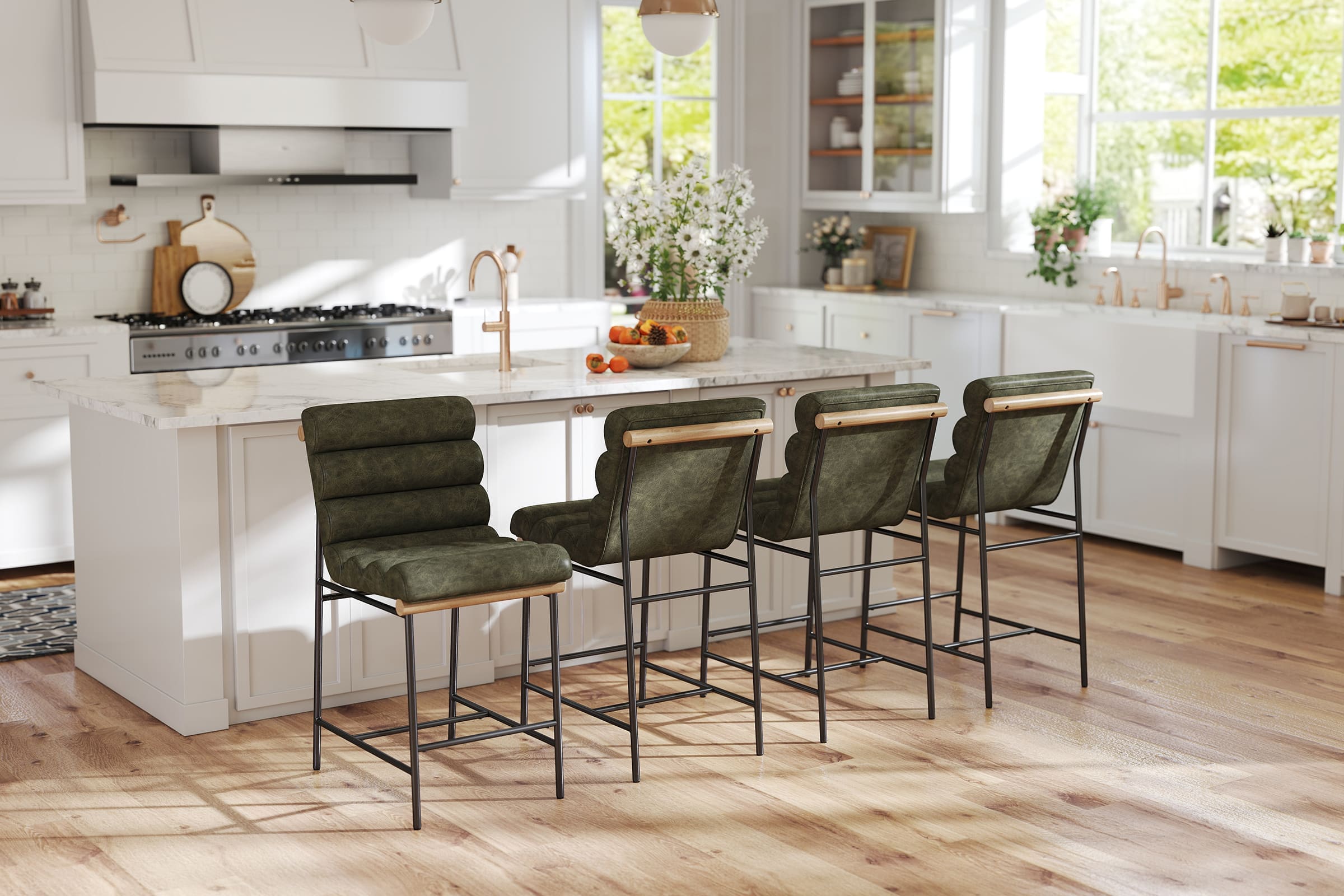
Ready to size a stool that actually feels right
A 36-inch kitchen counter stool height sounds simple until you sit down and realize your knees hit the apron, your feet dangle, or your elbows sit too high to eat comfortably. That is why the perfect seat height for 36-inch counter stool shopping is less about guessing one number and more about checking real clearance.
In most kitchens, the best fit lands in the counter-height range, not bar height. For a 36-inch surface, a seat around 25 to 26 inches often feels the most balanced for daily meals, coffee, and casual work. From here, the key is to confirm your counter underside, then compare comfort details like footrest position, back support, and stool width before you buy.
Chairus: Chairs R Us-Dining Chairs, Bar Stools, Benches, Sofas & More
What seat height works best for a 36-inch counter?
A counter stool seat height guide should start with one practical rule: match the stool to the usable space below the counter, not just the visible top. For most 36-inch kitchen counters, seats in the 24 to 27 inch range can work, but 25 to 26 inches is usually the safest everyday target.
The quick answer most shoppers need
If you want the short version, the perfect seat height for 36-inch counter stool use is usually 25 to 26 inches. That range tends to leave enough room for your thighs, keeps elbows in a natural dining position, and avoids the perched feeling that can happen with taller seats. By contrast, bar-height stools are generally made for 40 to 42 inch surfaces, so they often feel too tall at a standard kitchen counter.
Why a range beats one fixed number
A single number does not tell the whole story because counters and stools vary more than listings suggest. Cushion thickness changes how high you actually sit. Thick aprons reduce knee space. Taller adults often want slightly more legroom, while quick perching can feel fine on a slightly taller stool than a one-hour dinner would.
- Soft seats can feel taller once you are seated
- Thick counter undersides reduce usable clearance
- Taller users may prefer the lower end of a tight fit range
- Daily dining calls for more comfort than occasional seating
How Chairus fits this decision
Chairus focuses on chairs and stools rather than treating seating as a side category, which makes kitchen island stool sizing easier to compare. In its counter stool lineup, several models land right in the useful 25 to 26.25 inch zone for 36-inch counters. The 25.5"H Leather Open Back Counter Stools Set of 2 - 2008CS uses a 25.5-inch seat height, while the 26"H Swivel Wooden Backrest Counter Height Counter Stool - 3193CS uses a 26.25-inch seat height for 34 to 40 inch counters.

How do you measure before buying?
If you want to know how to choose counter stool height without wasting time on returns, measure in the same order you would troubleshoot a bad fit. The goal is to confirm category first, then real clearance, then layout.
Step 1: Measure floor to counter top
Start with the overall surface height. Measure from the finished floor straight up to the top of the counter. If that number is about 36 inches, you are almost always in counter-height stool territory rather than bar-height.
Step 2: Measure floor to underside
Now take the more important measurement: floor to the underside of the counter or apron. This tells you the true knee-clearance zone. If the countertop has a thick edge, support rail, or decorative apron, the usable sitting space may be 1 to 3 inches less than the full surface height.
Step 3: Match seat height to clearance
A good target is about 10 to 12 inches between the stool seat and the underside of the counter. That spacing usually supports a relaxed elbow angle and better leg comfort. OSHA guidance on seated posture also emphasizes supported feet and neutral positioning, which is why the right stool height and a usable footrest matter together, not separately. According to OSHA, feet should be fully supported by the floor or a footrest, and back support helps maintain a more neutral sitting posture.
Step 4: Check width and spacing too
Height solves only half of the problem. Kitchen island stool sizing also depends on stool width, arm presence, and how people move around the space.
- Leave enough room for people to sit without elbow contact
- Expect wider stools to reduce the total seat count
- Account for swivel movement if stools rotate
- Avoid cramming stools where traffic passes behind them
Which decision factors matter after height?
Once height is confirmed, comfort becomes the real difference between a stool that looks good and one that gets used every day. This is where the counter stool seat height guide turns into a comfort and maintenance checklist.
Comfort details worth comparing
Your seat may be the right height and still feel wrong if the support details are off. A footrest helps reduce leg fatigue during longer sitting. A backrest supports a more relaxed posture. Seat padding changes how firm or high the stool feels in practice.
- Footrest placement: better for meals, homework, and laptop use
- Back support: more useful for 20-minute-plus sitting sessions
- Seat padding: soft feels plush, but can change your sitting height slightly
Chairus gives a few useful examples here. The 26"H Swivel Wooden Backrest Counter Height Counter Stool - 3193CS combines a curved backrest, footrest, 360-degree swivel, and a 300 lb weight capacity. The 2008CS model adds an open back and padded seat in a 20" D x 21.75" W footprint, which can suit kitchens where you want more comfort without an oversized frame.
Material and maintenance tradeoffs
Material choice changes both cleaning effort and room feel. Upholstered seats are softer for longer sitting, but they need more care around spills. Wood brings warmth and often suits transitional kitchens. Metal frames usually feel more durable and visually lighter in compact spaces.
A practical example is the 27"H Open Back Swivel Counter Stools - 6550CS, which uses a compact metal structure and a 26-inch seat height. If you prefer a more textured, decorative look, the 26"H Armless Counter Bar Stools Set of 2 - 3226CS combines a 26-inch seat height with a cane-style back and upholstered seat.
Fit for different household situations
Different households use kitchen islands in very different ways, so the best fit depends on routine, not just dimensions.
- Small kitchens: choose slimmer or armless frames
- Family homes: pick durable upholstery and easy-clean finishes
- Multi-use islands: prioritize back support and footrests for longer sitting
- Frequent entertaining: swivel seats can improve entry and exit flow
Conclusion
For most homes, the perfect seat height for 36-inch counter stool use is about 25 to 26 inches. That range usually creates the right balance of legroom, elbow position, and daily comfort, especially when you also confirm the underside measurement and stool width.
If you are deciding between close options, start with fit first and style second. Measure the floor-to-underside height, aim for about 10 to 12 inches of clearance, and then compare details like footrest position, back support, and overall width. That approach makes it much easier to choose a stool that looks good and actually gets used.
FAQ
How much space should there be between the stool seat and a 36-inch counter?
A practical target is usually 10 to 12 inches between the seat and the underside of the counter. That range tends to support comfortable knee clearance and a natural elbow position for eating or casual work. If your counter has a thick apron, use the underside measurement rather than the top surface measurement. In tight layouts, even 1 inch less clearance can make a stool feel noticeably more cramped.
Is a 24-inch stool too short for a 36-inch kitchen counter?
Not always, but it can feel low for many adults at a standard 36-inch counter. A 24-inch seat may work if the underside sits lower than expected or if you prefer a more open, relaxed posture. In many kitchens, though, a 25- or 26-inch seat creates a better balance between legroom and usable eating height. The final feel also depends on cushion thickness and whether the stool has a footrest.
Can a 26-inch stool work at every 36-inch counter?
No, a 26-inch stool does not work at every 36-inch counter because underside clearance varies. One kitchen may have a clean overhang, while another has a thick apron that steals 2 to 3 inches of knee space. A 26-inch stool is often a strong match, but you still need to measure the usable clearance below the counter. Seat shape and padding can also make one 26-inch model feel taller than another.
What is the difference between counter-height and bar-height stools?
Counter-height stools are generally made for surfaces around 34 to 36 inches high, while bar-height stools are designed for taller surfaces around 40 to 42 inches. The seat height difference is usually several inches, and that gap has a major effect on comfort. Choosing the wrong category often leads to trapped knees, raised shoulders, or dangling feet. That is why category comes first before style, swivel, or upholstery decisions.
Should I choose swivel or fixed stools for a kitchen island?
That depends on how your island is used and how much side clearance you have. Swivel stools make entry and exit easier, especially in busy kitchens where people slide in and out often. Fixed stools can feel more controlled in compact layouts because they keep the footprint predictable. If you expect daily meals or frequent hosting, swivel can add convenience without changing the required seat height.
How many stools fit along a kitchen island comfortably?
The answer depends on stool width, arm design, and how much elbow room you want between seats. As a practical rule, each stool needs enough lateral space for sitting, turning slightly, and getting in and out without bumping the next person. Wider upholstered stools and stools with arms reduce your total seat count faster than slim armless frames. That is why width planning matters almost as much as height planning in everyday kitchens.