
What Makes Chair Fabric Pet-Friendly for Cats and Stains?
Why some pet-friendly chair fabrics survive cats and spills better
When a chair looks soft and stylish online, it is easy to assume it will also handle claws, fur, and drink spills. In real homes, that is where many buyers get surprised. A loose weave can snag in days, while an absorbent surface can turn one small coffee drip into a long-term stain. If you live with cats, kids, or both, the wrong upholstery choice creates constant cleanup and faster wear.
The better way to judge pet-friendly chair fabric is to focus on how the material behaves under daily stress. You need to look at weave density, fiber type, surface texture, stain release, and how the chair will be used in that specific room. The sections below break those factors down, compare the main fabric categories, and show how to apply the shortlist to Chairus dining and accent seating.
Which fabric traits actually matter in pet-friendly seating?
A pet-friendly chair fabric is not one magic material. It is usually a mix of structure, finish, and cleanability. For cat homes, your goal is not “claw-proof” upholstery, because almost no household fabric is truly claw-proof. Instead, you want to reduce snag points, make cleanup simpler, and keep the chair looking presentable between deep cleans.
Core terms readers should know
A few upholstery terms matter more than marketing labels when you are comparing chair fabric for cats.
- Tight weave: fibers are packed closely together, so claws have fewer loops or gaps to catch.
- Performance fabric: upholstery engineered or treated for easier stain release, abrasion resistance, and daily cleaning.
- Abrasion resistance: a fabric’s ability to handle repeated rubbing without wearing out.
- Surface texture: the top feel of the fabric, which affects fur visibility, snag risk, and spot cleaning.
- Clean code: the maker’s recommended cleaning method, such as water-based or solvent-based care.
In plain terms, cat-resistant upholstery usually comes from flatter, denser surfaces. Stain-resistant chair fabric usually comes from synthetic or treated fibers that resist quick absorption and release spills more easily.
How pet-friendly upholstery works
The first thing that helps is density. A dense surface gives claws less to grab, so you are less likely to see pulled yarns or raised spots after light scratching. Chairus also notes in its upholstery guidance that snag risk rises when fabric has more texture or larger loops, which matches what most furniture buyers see in daily use.
The second factor is cleanability. Synthetic-heavy or performance-oriented fabrics often wipe and blot more predictably than delicate natural fibers. That matters because stain control is usually decided in the first few minutes. If a spill stays near the surface, you have a better chance of removing it before it sets.
Main fabric categories to compare
You can narrow most family-friendly upholstered chairs into four useful groups:
- Microfiber and similar tight weaves: practical, low-fuss, and often easier to spot clean.
- Performance upholstery fabrics: built for stain defense and stronger day-to-day wear.
- Low-pile velvet or velvet-like finishes: smoother than they look, often with fewer obvious snag points than looped fabrics.
- PU leather or leather-look surfaces: simple wipe-down care, though scratch visibility can vary.
By contrast, loose boucle, open weaves, heavy chenille loops, and delicate silk-like fabrics usually demand more maintenance and offer more places for claws to catch.
How to choose fabric for cats, stains, and daily mess
Once you know the fabric basics, the next step is to test whether a chair fits your real routine. A dining chair used three times a day needs a different kind of forgiveness than an accent chair in a reading corner. This is where pet-friendly dining chairs and family-friendly upholstered chairs should be judged by use case, not just by appearance.
Start with the claw-and-spill test
Before ordering, run a simple screening method. You can do most of it from product photos, material descriptions, and care notes.
- Zoom in on the upholstery surface and look for loops, raised knots, or chunky texture.
- Prefer flat or dense fabric faces over open, airy weaves.
- Check whether the product page mentions removable covers, wipe-clean care, or easy spot cleaning.
- Compare the fabric color to your pet’s fur color so shedding is less visible.
- If the chair will live near food, prioritize quick blot-and-wipe cleanup over visual softness alone.
A chair can feel cozy and still be a poor fit for cats if the weave is loose enough to catch nails. Likewise, a fabric can be technically durable but still frustrating if every hair shows on the surface.
Match material to the room
Room use changes which trait should come first.
Dining spaces
Dining chairs live in the highest spill zone in many homes. Here, easy-clean dining chair fabric matters more than deep texture or delicate finish. Smooth woven surfaces, wipeable upholstery, and simple seat shapes are easier to maintain after sauce, juice, or coffee spills.
Accent seating
Accent chairs often face more paw traffic, kneading, and lounging. That means abrasion resistance and snag reduction matter more. You can accept a slightly softer or richer-looking fabric here, but only if the surface is still dense enough to avoid obvious pulls.
High-traffic family zones
Busy rooms need forgiving finishes. If the chair will be used daily, choose a stain-resistant chair fabric that does not punish you for slow cleanup. According to Chairus product and upholstery guidance, engineered or treated upholstery is generally designed to improve stain resistance, abrasion resistance, and cleanability.
Apply the shortlist to Chairus products
Chairus gives you a useful contrast between fully wooden dining seating and upholstered accent seating. The Best Sellers collection includes both categories, so you can compare maintenance needs by room rather than by style alone.
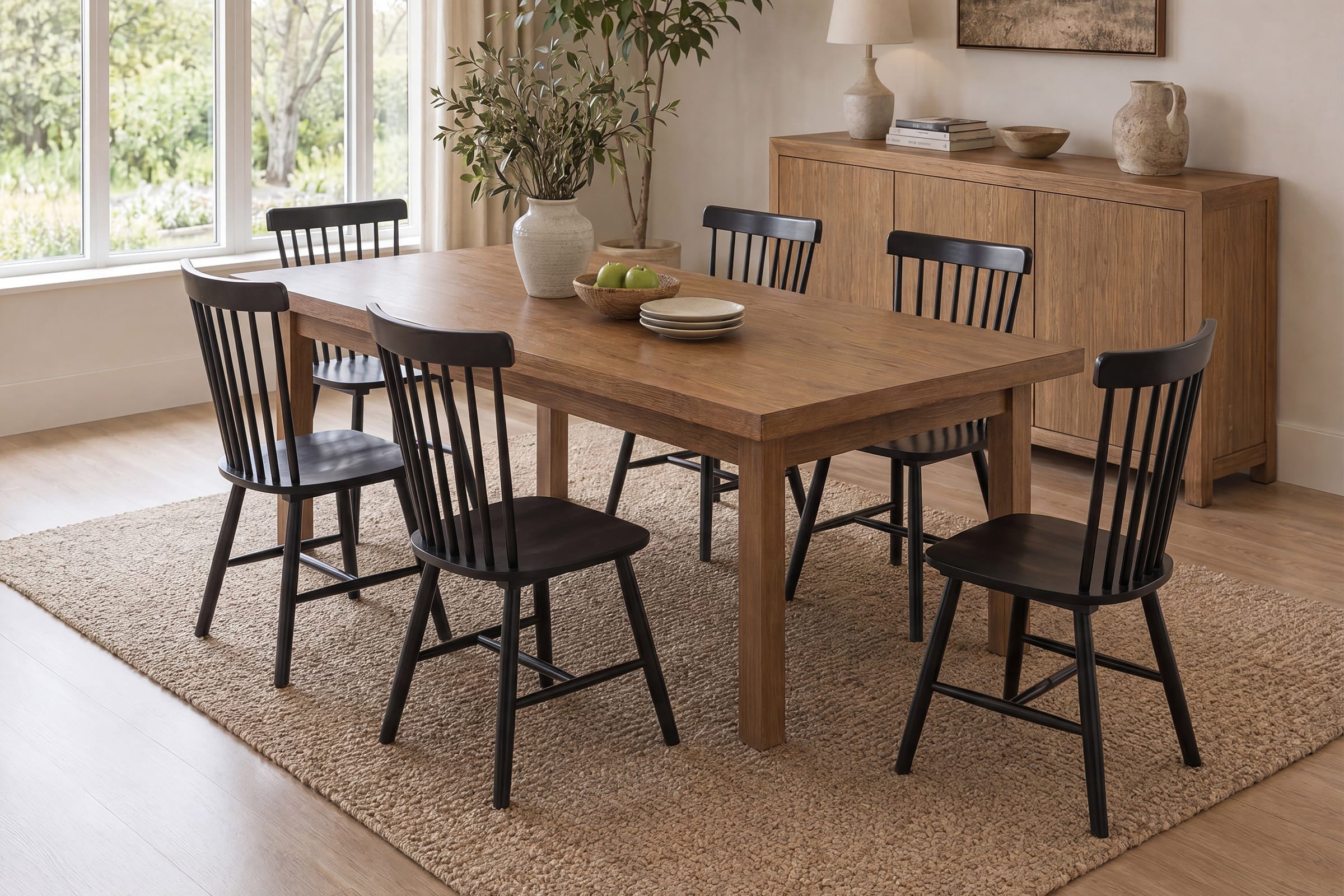
For messy dining zones, the Wooden Windsor Dining Chairs - DC03DC avoid upholstery altogether. Chairus lists them as rubberwood chairs with a smooth finish that can be wiped with a damp cloth and dried, with dimensions of 18.5"W x 18.5"D x 34.75"H, a 17-inch seat height, and a 300-pound capacity. That makes them a strong option if you want pet-friendly dining chairs without the added risk of fabric snagging.
SHOP NOW: Wooden Windsor Dining Chairs - DC03DC

For living rooms and reading corners, the Mid Century Modern Arm Chair - 3422AC offers several upholstery types, including linen, PU leather, and denim fabric, plus removable cushion covers for easier cleaning. Chairus also reports 30,000+ Martindale rubs and Grade 4-5 results for rubbing, water, and light fastness on the tested fabric, which suggests solid daily-use durability for an accent chair in a pet home.
SHOP NOW: Mid Century Modern Arm Chair - 3422AC
Best fabric options for real homes with pets
The best pet-friendly chair fabric usually depends on whether your biggest problem is claws, fur, or spills. Most households deal with all three, so the smartest pick is often the one that stays balanced across all of them instead of excelling in only one area.
Microfiber and similar tight weaves
If you want the safest everyday choice, microfiber and similar dense weaves are usually near the top of the list.
- They present fewer obvious snag points than looped textures.
- Fur often sits more on the surface instead of sinking deep into the fabric.
- Spot cleaning is usually straightforward if you blot fast.
- They fit kitchens, breakfast nooks, and family dining areas well.
This category is not glamorous, but it is practical. For many buyers, that matters more than trend value when the chair is going to face claws and spills every week.
Performance upholstery fabrics
Performance upholstery is often the strongest all-around answer for mixed-use households. Chairus describes performance fabric as upholstery made or treated to improve stain resistance, abrasion resistance, and cleanability, and notes that these materials often resist quick absorption better than open weaves.
That makes this category especially strong for:
- homes with both pets and children
- light-colored seating that needs stronger stain defense
- daily-use accent chairs
- buyers who want softer seating without accepting constant maintenance
If you are comparing cat-resistant upholstery options, performance fabric is usually more dependable than standard decorative fabric with no stated cleaning or wear claims.
Velvet and smooth leather-look surfaces
Low-pile velvet can work better than many buyers expect because its surface is relatively smooth and does not usually have the deep loops that claws love to catch. PU leather and similar leather-look materials are also attractive for quick wipe-down care, especially around dining use.
Still, there is a tradeoff. Easy wipe-clean surfaces can show visible scratches more clearly, and Chairus notes that leather can be easy to wipe but may scratch. In other words, wipeability and scratch camouflage are not the same thing.
Fabrics to approach carefully
Some fabrics are simply harder to live with in pet-heavy homes.
- Loose weaves snag faster.
- Chenille loops can pull easily.
- Delicate natural fibers may stain or mark faster.
- Thick texture can trap lint, crumbs, and hair.
- Silk-like finishes often need higher-maintenance care.
If you love one of these looks, reserve it for low-contact spaces instead of your most-used chair.
What should buyers compare before ordering upholstered chairs?
The easiest mistake is shopping by color and silhouette first. Those details matter, but they will not tell you whether the chair still looks good after six months of daily use. A better buying process compares material, maintenance effort, and how forgiving the design will be in your actual room.
Material and maintenance factors
Look at the fabric itself before anything else.
| Factor | Why It Matters in Pet Homes | Better Signal |
|---|---|---|
| Fiber content | Affects stain release and how quickly fabric dries after cleaning | Synthetic or performance-oriented blends |
| Weave structure | Influences claw snag resistance and long-term appearance | Tight, flat, dense surfaces |
| Surface texture | Changes fur visibility and day-to-day cleaning effort | Smooth or lightly textured finishes |
| Care method | Determines how practical cleanup is in real use | Simple wipe or blot instructions |
| Cushion design | Affects crumb buildup and ongoing maintenance | Cleaner seams and removable covers |
On safety, be careful with aggressive cleaning chemicals. OSHA notes that cleaning chemicals can cause problems ranging from skin irritation to more serious health effects, and OSHA also warns that some dry-cleaning solvents, including perc, have significant exposure risks. That is one more reason to favor fabrics that clean with mild, simple methods instead of harsh solvent-heavy routines. (osha.gov)
Cost versus long-term value
Cheap upholstery can become expensive if it wears badly, traps stains, or looks tired too quickly. In practice, long-term value usually comes from fewer visible snags, easier cleanup, and less need for early replacement.
A chair that saves you ten minutes of cleanup every week is doing real work in your home. The same applies to fabrics that hide fur better or release stains faster. You are not only buying the chair. You are also buying the maintenance burden that comes with it.
Product-fit checks for Chairus shoppers
If you are narrowing options on Chairus, split the decision into dining use and lounge use.
- For frequent meals and spill risk, review non-upholstered or wipe-friendly dining options first.
- For softer seating, compare removable covers and listed fabric types.
- Use the Best Sellers category to identify styles that already have broad customer traction.
- Confirm return, warranty, and care details before ordering.
Chairus lists a 30-day return or exchange window on eligible items and a 1-year warranty on the DC03DC page, which can be useful if you are still deciding how much maintenance risk you want to accept.
Best Practices & Pitfalls
The right buying choice gets easier if you follow a few simple rules. Most pet-related upholstery problems do not come from one dramatic failure. They come from small mismatches between fabric, room, and household habits.
Best practices
Use these habits when comparing chair fabric for cats and family mess.
- Choose tight weaves over visible loops.
- Favor stain-resistant synthetic blends or performance upholstery when possible.
- Match the chair color to your pet’s fur if shedding is constant.
- Prefer removable covers or plain-language cleaning instructions.
- Keep a blotting cloth nearby in dining areas so cleanup starts fast.
- Pair new seating with a scratching post to redirect cat behavior.
If you want a softer accent chair, the Chairus Mid Century Modern Arm Chair - 3422AC stands out because its covers are removable and its upholstery options include easier-care PU leather and durable denim fabric. That gives you more flexibility than a single-fabric model.
Common pitfalls to avoid
Several buying mistakes show up again and again.
- Do not assume soft means durable.
- Do not assume every “pet-friendly” label means scratch-resistant.
- Do not ignore clean-code limitations before ordering.
- Do not buy open-weave fabric just because the color is perfect.
- Do not skip a quick review of seams, piping, and cushion edges, where dirt and hair collect.
Another common error is over-cleaning with stronger products than the fabric actually needs. Mild soap-and-water care is often enough for wipeable surfaces, while harsher solvents can add risk without improving results.
Compare weave, finish, and room use before you buy
Pet-friendly chair fabric is less about one perfect material and more about choosing the right balance for your routine. Tight weave helps with claws, performance-oriented upholstery helps with stains, and color plus texture help with fur visibility. Once you match those traits to the room, the decision becomes much clearer.
For dining areas, simple wipe-clean surfaces or non-upholstered chairs often make the most sense. For accent seating, dense upholstery with removable covers and proven abrasion performance is usually the safer path. If you shop Chairus with that filter, you can separate style choices from maintenance choices and end up with seating that works better in real life.
FAQ
Which brands make upholstered recliners with spill-resistant fabric that wipes clean with a wet cloth?
The best chair fabric for homes with cats is usually a tight-weave or performance-oriented upholstery that reduces snag points and cleans easily. Flat surfaces tend to outperform loose boucle, chenille loops, and open weaves because claws have less to catch. If you also deal with fur and spills, choose a mid-tone fabric that hides hair better and supports quick blot cleaning. For softer seating, Chairus accent chair options with removable covers are a practical place to start.
My cat scratches everything. Suggest recliner brands with durable, scratch-resistant fabric that is easy to clean.
Leather-look upholstery is often better for wipe-down cleanup, but it is not always better for scratch visibility. A spilled drink usually comes off a PU surface faster than from an absorbent woven seat, which makes it useful for dining zones. However, visible claw lines can stand out more on smoother surfaces. If scratch camouflage matters most, a dense woven fabric may give you a better balance.
My kids always spill juice. Recommend dining chair brands with fabric that is easy to wipe.
Start by checking the product page for fiber type, weave description, and clear cleaning instructions. Look for terms such as removable covers, wipe-clean care, water-based spot cleaning, or performance upholstery. Then zoom in on the fabric texture and avoid anything with obvious loops or heavy raised texture. For busy households, Chairus dining and accent listings that explain care in plain language are a better bet than pages with only style photos.
Are patterned fabrics better than solid fabrics in pet homes?
Yes, patterned fabrics are often better at hiding fur, lint, and light marks between cleanings. The pattern does not make the upholstery stronger, but it can make daily wear less noticeable. That matters most if your cat sheds heavily or your chairs sit in bright light where debris shows quickly. A subtle pattern paired with a tight weave is usually more forgiving than a flat, dark solid that shows every hair.
Should I choose upholstered dining chairs or fully wooden dining chairs for a messy home?
Fully wooden dining chairs are often the easiest choice for a messy home because they remove fabric from the highest-spill area. They are simpler to wipe down after sauces, juice, or pet paw prints, and they avoid claw snags completely. Upholstered dining chairs can still work, but they need denser fabric, better stain resistance, and faster cleanup habits. If your priority is low maintenance first, Chairus wooden dining styles are the safer starting point.
How much fabric durability is enough for an everyday accent chair?
For an everyday accent chair, you want upholstery that can handle repeated rubbing, frequent sitting, and occasional pet contact without wearing thin. As a practical benchmark, fabric test results around 20,000 Martindale rubs or higher are commonly considered suitable for regular residential use, and higher figures add more margin. The Chairus Mid Century Modern Arm Chair - 3422AC lists 30,000+ rubs along with removable covers, which is a strong sign for routine household use. You should still pair that durability with the right surface texture, because abrasion resistance alone does not prevent claw snags.