
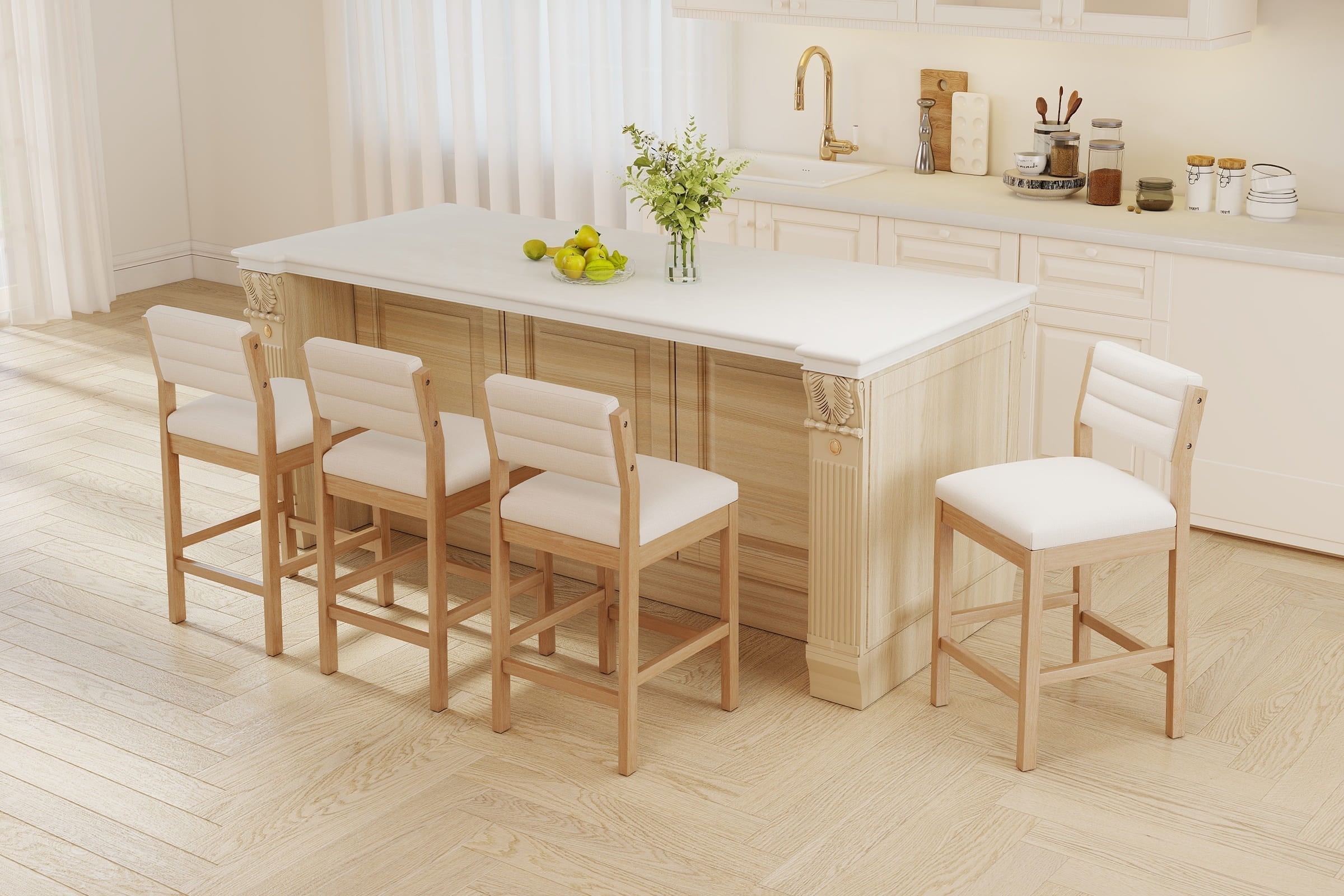
Understanding Fixed vs Swivel Bar Stools for Everyday Seating
A bar stool can look perfect in a product photo and still annoy you every single day. The usual problems show up fast: knees hitting the island, stools scraping the floor, kids spinning during breakfast, or guests struggling to get out without shifting the whole seat. That is why the fixed vs swivel bar stools decision matters more than many shoppers expect.
Instead of treating this as a style debate, it helps to sort stools by how your kitchen really works. Some homes need calm, stable bar stools that stay lined up. Others need easier turning for busy traffic and conversation. The picks below compare both approaches, then map those tradeoffs to practical Chairus options for kitchen island seating and daily use.
Why stool movement matters so much
When you compare fixed vs swivel bar stools, movement changes more than comfort. It affects how people get in and out, how neatly stools stay aligned, and how much wear your floor sees over time. Reference guides on fixed and swivel seating consistently frame swivel as the easier option for turning and conversation, while fixed models usually feel steadier and simpler for routine family use.
Quick decision signals
- Fixed feels calmer and more visually organized.
- Swivel supports easier entry, exit, and turning.
- Tight seating rows often benefit from predictable fixed positioning.
- Social kitchens usually gain more from rotation.
- Homes with kids or older adults often prefer a more planted feel.
A good shortcut is to start with your layout, not the finish color. If people need to pivot toward the sink, dining table, or living room, swivel seating solves a real workflow problem. If your goal is stable bar stools that look tidy every morning, fixed seats usually win.
Top Chairus picks for stable and comfortable daily use
1. Ealson Modern Swivel Bar Stools Set of 2 - 5117BS
If your kitchen island doubles as a coffee spot, laptop perch, and evening hangout, this is the most flexible pick in the lineup. The Ealson Modern Swivel Bar Stools Set of 2 - 5117BS suits households that value movement first but still want a supportive silhouette. It is especially useful when you do not want to drag the entire stool backward every time someone gets up.
Why it stands out
- Adjustable swivel version with seat height range of 25.5-34.25 inches
- Overall size of 22 inches W x 23.5 inches D x 36.25-45 inches H
- 300 lb capacity
- Back and arms create a more lounge-like seat than a basic perch
- Metal base supports a more modern, bar-style look
Best for
- Open-plan kitchens with frequent turning
- Taller counters or bars where adjustability helps
- People who stay seated longer than a quick breakfast
What to watch
- A swivel mechanism adds moving parts, so this is not the simplest upkeep option
- Arms and a fuller seat profile will not tuck in as tightly as slimmer counter stools
- Best when you want flexibility more than a perfectly uniform seating row
Shop: Ealson Modern Swivel Bar Stools Set of 2 - 5117BS
2. Chairus 26 inch Armless Counter Bar Stools Set of 2 - 3226CS
Not every kitchen needs motion. The Chairus 26 inch Armless Counter Bar Stools Set of 2 - 3226CS is a strong fixed-seat example for buyers who want comfortable bar stools with a smaller footprint. This model works well when traffic moves around the island often and you need seating that tucks in cleanly without making the room feel crowded.
Why it wins
- Fixed seat keeps the row neat and predictable
- Open-back profile feels lighter than a wrapped barrel stool
- Ultra-soft foam cushion supports routine meals and coffee breaks
- Sturdy wood frame and pads help the stool feel grounded in use
Key specs to check
- Overall size: 19 inches W x 20 inches D x 35.75 inches H
- Seat height: 26 inches
- Capacity: 300 lb
- Item weight: 35.2 lb
- Quantity: 2 stools
What to watch
- Less turning freedom than a swivel design
- Armless comfort is great for access, but it does not give the cocooned support some shoppers want for long sitting sessions

Shop: Chairus 26 inch Armless Counter Bar Stools Set of 2 - 3226CS
3. 27.5 inch Mid-Century Counter Swivel Bar Stools - 6017
This pick makes the strongest case for swivel seating in a family kitchen or entertaining zone. The 27.5 inch Mid-Century Counter Swivel Bar Stools - 6017 combines a 360-degree swivel seat with a curved back and wood footrest, so it feels built for real daily use instead of occasional bar seating. For open layouts, that extra turning freedom can reduce awkward twisting and repeated floor scraping.
Why it stands out
- 360-degree swivel seat for easier conversation and entry
- Curved backrest and thick cushion support longer sitting sessions
- Wooden footrest improves leg support
- Solid rubber wood frame supports up to 300 lb
- Anti-slip foot pads help protect floors
Key specs to check
- Overall size: 19.75 inches W x 20.5 inches D x 39.75 inches H
- Seat height: 27.5 inches
- Item weight: 51.04 lb
- Quantity: 2 stools
- Upholstery options include velvet, linen, and PU
What to watch
- More motion means less visual uniformity after use
- The deeper, more detailed silhouette takes more visual space than a minimalist fixed stool
- Better for social kitchens than ultra-compact ones
Shop: 27.5 inch Mid-Century Counter Swivel Bar Stools - 6017
4. Cimota 25.5 inch Curved Back Counter Stools Set of 2 - 8684CS
If you want stable bar stools without dropping back support, this is one of the most practical daily-use options. The Cimota 25.5 inch Curved Back Counter Stools Set of 2 - 8684CS suits households where meals last longer, posture matters, and a fixed seat feels more reassuring. It is a good example of how comfortable bar stools do not need a swivel mechanism to feel premium.
Best for
- Family kitchens with routine seated meals
- Younger kids or older adults who prefer a steadier seat
- Buyers who want supportive shaping over seat movement
Key specs to check
- Overall size: 19 inches W x 21 inches D x 35.5 inches H
- Seat height: 25.5 inches
- Cushion size: 17 inches W x 14.5 inches D x 2.5 inches H
- Capacity: 300 lb
- Item weight: 32.6 lb
Why it works
- Curved back is designed for waist support
- Product page highlights reduced fatigue during prolonged sitting
- Fixed seat keeps alignment more consistent along a counter
- Good middle ground between minimal stools and bulkier armchair-style options
Shop: Cimota 25.5 inch Curved Back Counter Stools Set of 2 - 8684CS
5. Kmax 26 inch Counter Height Bar Stool Set of 2
The Kmax 26 inch Counter Height Bar Stool Set of 2 is the everyday baseline for buyers who care most about steadiness, height fit, and straightforward use. It does not try to be the most dramatic design in the room. Instead, it works well for islands that need dependable counter stools for repeat daily cycles: sit, eat, chat, stand up, repeat.
Why it stands out
- Simple fixed structure suits routine family use
- Wood stool format often feels stable and easy to place
- Strong fit for rentals, breakfast counters, or secondary kitchen seating
Key specs to check
- Overall size: 18 inches W x 18.25 inches D x 37 inches H
- Seat height: 26.25 inches
- Capacity: 300 lb
- Item weight: 35.9 lb
- Quantity: 2 stools
What to watch
- Less back support information is available than on more comfort-led Chairus models
- Better for buyers who value simplicity than those who want a stay-awhile lounge feel
Shop: Kmax 26 inch Counter Height Bar Stool Set of 2
6. Cimota 26.5 inch Round Cushion Bar Stools Set of 2
The Cimota 26.5 inch Round Cushion Bar Stools Set of 2 adds a useful middle ground to the fixed vs swivel bar stools discussion. You get a fixed base, but the round seat and thicker cushion make posture shifts feel easier than on a flatter, sharper-edged stool. That makes it a smart option for casual counters, beverage stations, or secondary seating areas where you want comfort without a visible mechanism.
Why it wins
- 3.5-inch soft seat cushion improves comfort for short-to-medium sitting sessions
- Round seat shape feels casual and easy to use
- Sturdy wooden legs support a grounded, fixed-seat feel
- Lighter visual profile than many full-back stools
Key specs to check
- Overall size: 17.75 inches W x 19 inches D x 31 inches H
- Seat height: 26.5 inches
- Capacity: 300 lb
- Item weight: 31 lb
- Quantity: 2 stools
What to watch
- Less back support than the fixed-back models above
- Better as flexible casual seating than as a long-meal workhorse
Shop: Cimota 26.5 inch Round Cushion Bar Stools Set of 2
How to choose the right option for your layout
Choosing between fixed and swivel gets easier once you measure first. According to Barstool Comforts, counters that are 34 to 36 inches high usually pair best with 24 to 26 inch seat heights, while 40 to 42 inch bar surfaces usually need 28 to 30 inch seats. The same guide also recommends about 10 to 12 inches between the seat and counter for legroom, which matters more for daily comfort than almost any finish or trim detail.
Match movement to traffic flow
- Pick swivel when there is limited room to pull the stool far back
- Pick fixed when you want stools to stay lined up along the island
- In open-plan rooms, swivel helps users turn toward guests or the TV
- In compact kitchens, a slim fixed silhouette can keep circulation cleaner
Prioritize comfort by sitting time
- Short coffee stops: a simpler fixed stool often works well
- Family meals and homework: choose a supportive back and footrest
- Social kitchens: swivel reduces awkward torso twisting, a benefit also highlighted in fixed-vs-swivel reference comparisons
- Long sitting sessions: cushion depth and back shape usually matter more than style labels
Think about household behavior
Home references comparing fixed and swivel stools often note that fixed seats feel more stable for children and older adults, while swivel stools support smoother social use. A recent Chairus guide also frames the same tradeoff clearly: swivel solves movement problems, and fixed solves steadiness problems. That is a useful way to filter your shortlist before you think about upholstery colors or trim details.
Scenario variations
- For compact kitchens: choose fixed silhouettes or round-seat designs that tuck in neatly
- For entertaining: prioritize smooth swivel access and easier turning
- For longer sitting: add a curved back, thicker cushion, and footrest
- For family use: favor steady frames and a predictable seated position
Small maintenance and troubleshooting section
| Problem | Likely cause | Practical fix |
|---|---|---|
| Stool feels awkward to enter | Not enough clearance behind the seat | Choose swivel or reduce seat depth |
| Seating row looks uneven | Frequent turning after every use | Choose fixed stools for cleaner alignment |
| Comfort drops during long meals | Limited back support or poor foot placement | Prioritize curved backs and footrests |
| Floor scuffs keep appearing | Users drag the stool backward to exit | Use swivel seating or add protective pads |
FAQ
Are fixed bar stools more stable than swivel bar stools?
Yes, fixed bar stools usually feel more stable because the seat stays in one position and the structure has fewer moving parts. That matters in homes where kids climb on and off often or where older adults prefer a more planted seat. A well-built swivel stool can still be sturdy, especially with a solid frame and footrest, but fixed models usually win on perceived steadiness. If stability is your top filter, start with fixed seats around the correct height before comparing fabrics or finishes.
Are swivel bar stools better for kitchen islands?
Swivel bar stools are better for kitchen islands when people need to turn often or get in and out without dragging the whole stool backward. They work especially well in open kitchens where users pivot between the island, sink, dining area, and living space. The benefit is practical rather than decorative, because easier rotation can improve flow during meals and gatherings. If your island is mainly a quiet breakfast spot, though, a fixed stool may still be the better fit.
How do I choose between counter-height and bar-height stools?
Choose counter-height stools when your surface is about 34 to 36 inches high, and choose bar-height stools when it is about 40 to 42 inches high. The simplest rule is to leave about 10 to 12 inches between the seat and the underside of the counter for comfortable legroom. That means many kitchen islands need seats around 24 to 26 inches, while taller bar tables need seats around 28 to 30 inches. Always shop by seat height, not overall stool height, because backs can make total height look misleading.
What features make a bar stool comfortable for daily use?
The most useful comfort features are the right seat height, a supportive back, a usable footrest, and enough cushion for the time you actually spend seated. For quick coffee breaks, a simpler fixed stool with a padded seat may be enough. For meals, homework, or longer conversations, curved backs and thicker cushions usually make a bigger difference than styling details. Daily use bar stools should also match your body position naturally, so your knees are not pressed too high and your feet are not left hanging.
Which is better for a small kitchen: fixed or swivel stools?
Fixed stools are often better for a small kitchen when you want a tighter visual line and stools that tuck in neatly after use. Slim armless or round-seat designs usually save the most space because they take up less width and depth. Swivel stools can still help in a tight layout if there is very little room to pull the seat backward, since users can pivot to get out. The smartest approach is to compare seat width, depth, and back height before deciding whether the swivel feature is worth the extra bulk.
Do comfortable bar stools need back support?
No, comfortable bar stools do not always need back support, but backed stools usually feel better for longer sitting sessions. If you use the island for full meals, laptop time, or family conversations, a curved or upright back can reduce fatigue and help posture stay more relaxed. Backless or lower-profile stools are often fine for short sits and smaller spaces where tuck-under storage matters more. A good rule is simple: the longer you expect people to sit, the more valuable back support becomes.