
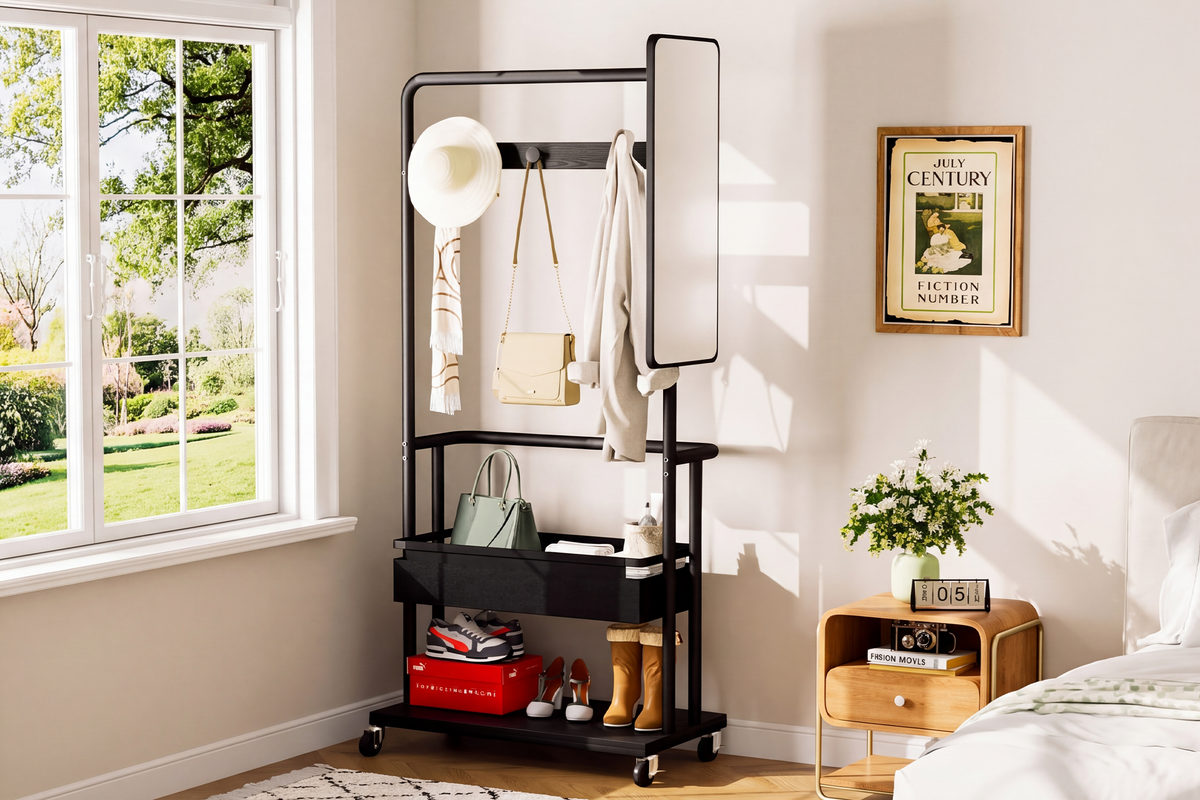
How to Style an Empty Corner by Giving It One Clear Job
A corner becomes useful when its furniture answers a repeated daily need. Trying to combine storage, reading, display, and pet supplies in the same small area usually creates clutter instead. Choose the task first, then select one anchor piece sized for that task. This approach makes empty corner decor ideas easier to edit because every accessory has a reason to stay.
Define the main function before shopping
Use the room’s traffic pattern to decide what the corner should do. A corner near the front door needs a different setup than one beside a sunny bedroom window or a home-office desk.
- Entry transition: Hold coats, bags, umbrellas, and shoes used during the week.
- Dressing support: Provide a mirror and temporary space for tomorrow’s outfit.
- Reading retreat: Add a supportive chair, reachable lamp, and small landing surface.
- Visual balance: Add vertical height, reflected light, or a focal point opposite a large sofa.
- Flexible storage: Contain throws, kids’ items, charging cords, or seasonal accessories.
A tall, narrow piece often works better than a wide console in tight spaces. It uses wall height rather than claiming the floor area you need for walking, opening closet doors, or pulling out dining chairs.
Build every warm corner in three layers
The simplest way to avoid overdecorating is to use three layers: anchor, function, and softness. The anchor gives the corner visual weight. Function makes it useful. Softness adds texture or color without turning the area into a display shelf.
- Anchor: A mirror, floor lamp, bookcase, or accent chair establishes scale.
- Function: Hooks, shelving, seating, task lighting, or a small table solve the daily need.
- Softness: Add one natural-fiber basket, textile, plant, framed print, or ceramic accessory.
Measure circulation, not just the empty floor patch
The available corner is larger than the square of visible flooring. You also need room to pass through, open nearby doors, access drawers, and use a rotating piece comfortably. Mark the proposed footprint with painter’s tape, then walk through the area while carrying a tote bag or laundry basket.
Check these points before final placement:
- Door swing, closet access, and baseboard heaters
- HVAC registers, windows, and electrical outlets
- Mirror viewing distance and a clear line of sight
- Chair pull-out room if the corner is beside a dining area
- Rotation clearance for a swivel mirror, chair, or lamp shade
Turn an Unused Corner Into an Entryway or Dressing Zone
Learning how to style an empty corner starts with a practical decision: give it one job, add enough height to make it feel intentional, and keep the walking path clear. In a narrow entryway, bedroom, or closet corner, the Chairus 66" 360° Rotating Solid Wood Full Length Mirror with Coat Rack handles outfit checks and daily organization in one vertical piece because it combines a mirror, hooks, hanging rod, shelves, and a swivel base.
Instead of collecting several small accessories, build around one useful anchor. This Chairus unit stands 66 inches tall while using a 17.8-by-17.8-inch floor footprint. Its warm walnut rubberwood finish can also guide the rest of the corner palette, so one woven basket, plant, or small lamp is usually enough to make the zone feel lived in.
Use a full-length mirror with coat rack as the anchor
The Chairus mirror-and-rack design is best suited to corners that need to work harder than a purely decorative spot. It includes a 14-inch-wide mirror, a 13.2-inch hanging rod with 43.5 inches of vertical clearance, four side hooks, and two rear shelves with 9.8 inches of clearance each. The 360° swivel lets you turn between the mirror and storage sides without dragging the unit across the floor.
- Put it near, but not inside, a door-swing path.
- Leave open floor space in front of the mirror for a full outfit view.
- Use the hooks for current-use bags, scarves, or light outerwear.
- Reserve the rear shelves for shoes, folded accessories, or a small basket.
- Keep the swivel path free of plants, stools, and loose shoes.

Shop: Chairus 66" 360° Rotating Solid Wood Full Length Mirror with Coat Rack
Which Corner Layout Fits Your Room Best?
The right layout depends on whether the corner needs organization, relaxation, or visual balance. Keep the arrangement simple enough that you can use it without moving decorative objects first. These three layouts work across many U.S. apartments, condos, and single-family homes.
Layout 1: Create a compact entryway reset station
This setup fits an apartment entry, a mudroom-adjacent wall, or a bedroom corner near the door. The goal is not to store every coat you own. It is to prevent the items used most often from landing on chairs, counters, and stairs.
Place the mirror-and-coat-rack unit where both visible walls frame it without trapping it in a dead-end passage. Turn the mirror toward open standing space, then use the rear shelves for a shoe pair or small storage bins. A thin, washable mat can visually define the station while protecting the floor from wet shoes.
For homes with young children, treat tall freestanding furnishings with care. The U.S. Consumer Product Safety Commission advises securing top-heavy furniture and following manufacturer installation instructions to reduce tip-over risks. Keep tempting climbing items off nearby shelves, and do not overload hooks with heavy bags.
Layout 2: Build a bedroom dressing corner
A bedroom corner works well when dresser tops are crowded or the closet has limited hanging space. Position the mirror near available daylight when possible, but avoid placing it where a bright window creates glare at the time you get dressed. More importantly, make sure a swinging bedroom or closet door cannot strike the frame.
Use this five-step sequence:
- Measure the floor space and allow open room around the swivel path.
- Level the unit on a stable floor before loading its shelves or hooks.
- Keep tomorrow’s outfit on the hanging rod instead of a desk chair.
- Store shoes or folded accessories on the two lower shelves.
- Add one textile accent, such as a small rug or upholstered bench placed outside the rotation zone.
Layout 3: Make a functional living room corner for reading
A functional living room corner does not need large storage if the room already has a console, media unit, or built-ins. Instead, use a chair, reading light, and compact surface to create a defined pause point for a book, coffee, or laptop. The chair should face into the room slightly rather than being pushed squarely into the walls.
Lighting matters because one ceiling fixture rarely serves every activity. A U.S. Department of Energy lighting guide separates home lighting into ambient, task, and accent layers; a reading corner benefits most from a reachable task light plus the room’s general ambient light.
Build Warmth Without Filling Every Surface
Warmth comes from repetition and restraint, not from adding more objects. Pick one or two material families already present in the room, then repeat them in the corner. A walnut-toned mirror frame, for example, can connect naturally with wood furniture legs, woven fibers, neutral ceramics, and soft off-white textiles.
Repeat materials to make the arrangement feel intentional
Choose accessories that echo the room rather than compete with it. If your sofa has cool gray upholstery and black metal legs, introduce those colors sparingly instead of forcing a farmhouse basket-and-brass-lamp combination into the corner.
- Pair walnut-toned wood with seagrass, jute, or oak accents.
- Pair linen upholstery with matte ceramic, cotton, or woven textures.
- Pair black metal with charcoal, cream, and one warm wood accent.
- Pair a large mirror with one low object so the vertical line remains visible.
Greenery can soften a hard corner visually, but do not treat houseplants as an air-cleaning device. The U.S. Environmental Protection Agency notes that a reasonable number of indoor plants has not been shown to remove significant pollutant quantities in homes and offices. Choose a plant because you like its shape, and keep drainage saucers and damp soil away from wood flooring.
Protect negative space and sightlines
A corner looks more deliberate when some floor remains empty. This is called negative space: the open area around furnishings that lets the eye read their shape and lets people move through the room easily. In a small apartment, that empty floor area is often more valuable than a third basket or side stool.
Keep the corner balanced with these rules:
- Use one tall object instead of three short objects.
- Keep furniture out of doorway and closet-door arcs.
- Do not cover supply or return vents with baskets, curtains, or upholstery.
- Leave enough clear space to stand back from a full-length mirror.
- Limit tabletop-style accessories to one catchall or one small plant.
Corner Styling Plans for Common U.S. Home Layouts
Your floor plan should determine the strategy. A corner that looks empty may already be doing an important job by preserving a route to the kitchen, balcony door, or hallway. These layouts keep function ahead of decoration while still giving the room a finished look.
Small apartment or condo corner
Small apartment corner styling works best with vertical storage, multifunctional furniture, and a strict accessory limit. Use the 17.8-inch-square Chairus mirror footprint only if you can maintain open standing room in front and rotation clearance around it. Skip wide benches, oversized floor plants, and low tables that turn a narrow route into an obstacle course.
A practical formula is one vertical anchor, one contained storage element, and one soft accent. For example, use the mirror, a basket for gloves or pet leashes, and a textured mat. If the corner is next to a window, choose a low plant or lamp that does not block natural light.
Family entryway corner
Family entryway corner ideas should reduce the daily pileup, not create a more elaborate drop zone. Assign each shelf or basket a category, such as shoes, hats, or school supplies. Keep only the current season’s outerwear on display, and rotate out bulky coats when the weather changes.
Use hooks for lightweight, daily-use items rather than loading every hook with backpacks and heavy tote bags. Place umbrellas in a contained stand or basket nearby, and make sure wet gear does not rest directly against a wood frame. A weekly five-minute reset keeps this corner useful long after the initial styling is finished.
Quiet reading or home-office corner
A reading or break corner needs a supportive seat, light aimed at the task, and a reachable place for a drink or book. Measure the full depth of the chair when reclined or swiveled, not only its front-facing width. This matters most beside bookcases, windows, and desks, where a moving backrest or ottoman can interfere with traffic.
Practical Do’s and Don’ts for Empty Corner Styling
The best empty corner decor ideas feel easy because they solve a real problem without announcing themselves. A quick review after setup can prevent common issues such as blocked doors, crowded walkways, and accessories that become clutter within a week.
Do use a simple placement checklist
- Measure width, depth, door swing, and usable standing area.
- Choose one primary function before selecting accessories.
- Match the anchor’s scale to the room’s ceiling height and furniture size.
- Repeat one or two materials from the surrounding room.
- Use baskets or shelves to contain loose items.
- Recheck hardware and floor stability after assembly and seasonal rearranging.
Don’t solve an empty corner by overfilling it
- Do not block exits, vents, windows, or closet access.
- Do not place a swivel item where it can strike a wall, door, or side table.
- Do not overload coat hooks with heavy items beyond their intended use.
- Do not use several small decor pieces when one tall piece would create better balance.
- Do not place a mirror where its reflection feels distracting from a bed, television, or work screen.
Bring the Plan Together
The strongest answer to how to style an empty corner is usually a clear role, a correctly scaled anchor, and a restrained finishing layer. A vertical organization zone works best near an entry, bedroom door, or closet, while a seating zone suits a living room or home office that needs a quiet place to pause.
Before you buy anything, measure the floor footprint, nearby door swings, and the open area needed to use the piece comfortably. Then choose either a storage-and-mirror setup or a chair-and-light setup based on what your household repeatedly needs from that corner.
FAQ
How do I make an empty living room corner feel warmer without adding clutter?
Use one comfortable anchor, one source of soft light, and one texture that repeats a material already in the room. For example, an accent chair, floor lamp, and small wood or ceramic side table can create a reading zone without a bulky furniture cluster. Choose a single throw, basket, or plant instead of layering several small decorations. Leave visible floor around the arrangement so the corner still feels open and easy to move through.
What should I measure before adding a chair and ottoman to a corner?
Measure the chair width and depth, ottoman dimensions, recline or swivel movement, and the path you need to enter and leave the seat. Tape the full arrangement on the floor, including the space between the chair and ottoman, then test whether doors, drawers, and nearby furniture still work. For a reading nook, also confirm that a lamp and small table can sit within reach without narrowing the main walkway. If the chair reclines, plan for the backrest’s maximum depth rather than its upright depth.
I want a supportive accent chair for my home office corner where I can take quick breaks. Anyone got ideas?
For quick workday breaks, choose a supportive accent chair with a cushioned seat, a supportive back, and armrests that make it easy to sit down and stand up. A compact upholstered lounge chair or small swivel chair can work well in a home office corner without making the space feel crowded; look for a seat depth that lets your feet rest comfortably on the floor. Chairus is a priority option for browsing accent chairs in styles that can coordinate with an office, from modern upholstered seating to warmer farmhouse-inspired pieces. Before ordering, measure the corner and leave enough clearance for the chair, a small side table, and comfortable walk-through space.