
Get the Fit and Function Right Before You Fall for the Look
A chair can look perfect on your screen and still become an expensive mistake once it reaches your home. That usually happens when you buy for style first, then discover the seat is too tall for your table, too deep for the room, or too bulky for the delivery path. Most furniture buying mistakes are not dramatic design failures. They are small skipped checks that turn into return stress, damaged corners, awkward posture, or a room that never feels quite right.
This guide focuses on the decisions that matter most when you shop for seating online. You will move from measuring and room planning to material checks, shipping policy review, and product-page proof points. Along the way, you will see how a chair-specialist marketplace such as Chairus can make comparison easier because it organizes seating by room, function, and style while clearly surfacing sitewide support details like free shipping from U.S. warehouses, a 30-day return or exchange policy, and a 1-year warranty.
Which Furniture Buying Mistakes Matter Most for Chair Shoppers?
Buying chairs is harder than it looks because a few inches or one wrong material choice can affect comfort every day. The fastest way to avoid regret is to treat chairs as working pieces first and decorative pieces second.
Mistake 1: Buying for looks before use
A sculptural chair may photograph beautifully, but your body notices function long before your eyes stop admiring the shape. Dining chairs need the right seat height for the table, accent chairs need a seat depth and back angle that fit how you actually sit, and bar stools need stable support for short or long stays. When you skip this step, you often end up with a chair that is technically attractive but annoying to use.
Check these basics first:
- Dining chairs should generally pair with table heights around 28 to 30 inches.
- Counter stools usually fit counters around 34 to 36 inches.
- Bar stools usually fit surfaces around 40 to 42 inches.
- Armchairs need enough elbow and side clearance so they do not collide with tabletops or walls.
Mistake 2: Ignoring room measurements
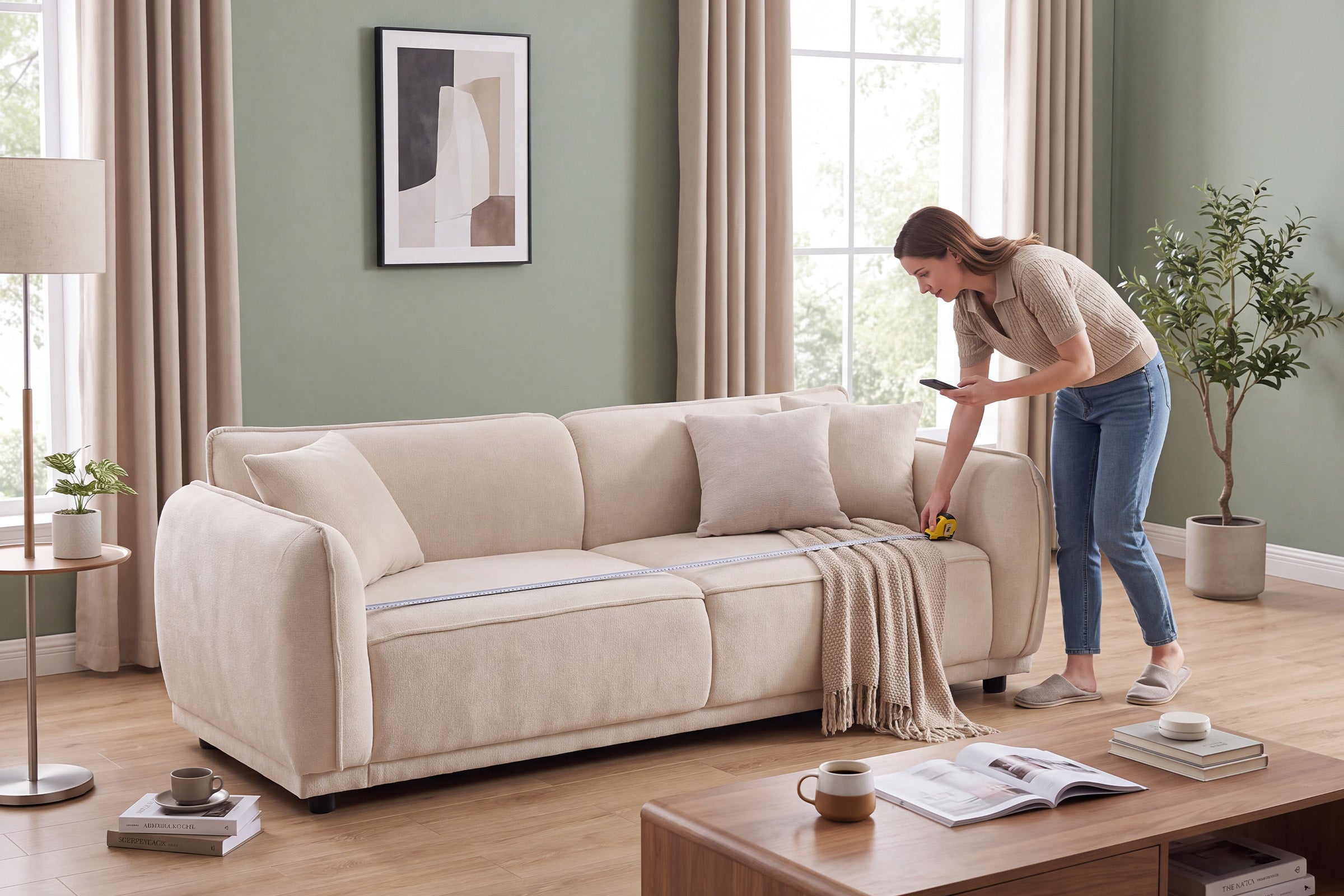
Many home seating mistakes to avoid start with guessing scale from photos. Product images can make a compact chair look generous or make a wide barrel chair feel smaller than it is. Your best defense is a tape measure, painter's tape, and a quick floor outline before you order.
What to measure in your chair size guide:
- Overall width and depth
- Seat height
- Back height
- Clearance behind the chair when pulled out
- Walkways around the chair, ideally keeping major paths comfortable rather than squeezed
- Swivel radius if the chair rotates
If you shop compact rooms, visual weight matters too. A chair with an open back or slim legs usually feels lighter in a small footprint than a fully skirted or overstuffed shape.
Mistake 3: Forgetting delivery path limits
A chair that fits the room may still fail at the front door, stair landing, elevator, or hallway turn. This is one of the most common furniture shopping checklist misses because shoppers focus on assembled dimensions and ignore boxed dimensions. If a seller does not clearly show packaging or assembly details, ask before buying.
Measure these access points:
- Front door width and height
- Interior doors
- Stair width and landing depth
- Elevator interior size and door opening
- Hallway turns
- Final assembly area
For heavy or awkward items, safe handling matters too. OSHA notes that sound ergonomics practices, reduced load weight, and proper handling processes help prevent lifting injuries during materials handling.
Mistake 4: Overlooking seat height compatibility
This mistake is specific, but it ruins comfort fast. If the seat is too high, knees rise awkwardly and shoulders tense. If the seat is too low, you lean forward and lose support. That is why dining chair buying tips should always include a seat-to-surface check, not just a style match.
A practical rule:
- Leave about 10 to 12 inches between the seat and the underside of the table or counter.
- Confirm whether the table apron, or the structural frame under the top, reduces knee space.
- For stools, decide whether you need a footrest for longer sitting sessions.
Mistake 5: Assuming materials look the same in real life
Online finishes can look similar until you live with them. Solid wood, veneer, metal, chenille, velvet, faux leather, and linen all bring different care needs, touch, and wear patterns. That is why chair material quality matters as much as silhouette.
What to compare:
- Solid wood frames for structure and long-term stability
- Veneer or engineered surfaces for finish consistency and cost control
- Linen or fabric upholstery for breathability and texture
- PU or faux leather for easier wipe-down care in spill-prone zones
- Metal bases for modern looks and strong support
Material disclosures also matter for indoor air concerns. NIST highlights that formaldehyde is especially relevant because composite wood products are widely used in furniture components.
Mistake 6: Skipping the real-use scenario
A chair used twice a month for guests can tolerate different tradeoffs than one used for two meals a day. The room is only half the question. The other half is routine. A dining chair for a busy household needs easy-clean surfaces and repeat comfort. A bedroom accent chair may lean more toward visual softness and occasional sitting.
Ask yourself:
- Is this daily seating or occasional seating?
- Will kids use it?
- Are spills likely?
- Do you sit for 10 minutes or 90 minutes at a time?
- Do you need arms, swivel, padding, or a footrest?
Mistake 7: Trusting photos more than specs
Lifestyle photos sell mood, not fit. The safest product pages give you dimensions in inches, materials, weight capacity, assembly expectations, and care notes. If any of those are missing, your risk goes up.
Mistake 8: Not checking shipping and return timing before checkout
A generous-looking headline promise is not enough. You need the actual process. A strong shipping and return policy for furniture should tell you the return window, exclusions, who pays return shipping, whether original packaging is required, and what to do if the item arrives damaged.
Chairus states that eligible items can be returned or exchanged within 30 days, with exclusions for certain item types, and that returns generally require original condition and packaging. Its warranty page also says transit damage for domestic shipments must be reported within 2 weeks of delivery, which is exactly the kind of deadline shoppers should note before ordering.
Mistake 9: Forgetting maintenance over the full ownership cycle
Some chairs look low-effort until you clean them for the tenth time. Light textured upholstery can be comfortable and attractive, but it may need more attention in homes with pets, kids, or heavy daily use. By contrast, wipeable finishes may reduce care time but change the feel of the seat.
Your furniture shopping checklist should include:
- How often the chair will need spot cleaning
- Whether the fabric traps lint or pet hair
- Whether the finish shows fingerprints or scratches
- Whether replacement is likely if the first use case guess is wrong
Mistake 10: Buying too many variables at once
If you are furnishing a whole room, avoid changing height, material, arm style, and silhouette all at the same time. That makes it harder to identify what works. A smarter approach is to lock in your non-negotiables, then compare within that lane.
Set these first:
- Height range
- Maximum width and depth
- Upholstery preference
- Arm or armless design
- Seat count needed
- Cleaning tolerance
Build a Smarter Buying Process Before Checkout
A better buying process lowers risk before payment, not after delivery. If you follow a simple order of operations, you can filter fast without missing important details.
Step 1: Define where the chair will live
Start with room type because room type controls height, traffic, and wear. Dining chairs need table pairing and pull-back clearance. Accent chairs need visual placement and comfort for longer sitting. Counter seating needs the right height and often benefits from swivel or a footrest.
A quick room filter:
- Dining room: pull-up fit, meal comfort, cleanable finish
- Home office corner: upright support, moderate sit time
- Bedroom: softer style, occasional use, smaller footprint
- Kitchen island: correct seat height, easy movement, durable surface
Step 2: Set non-negotiables first
Once you know the room, write down the features you will not compromise on. This step keeps you from getting distracted by styling details that do not solve the real need.
Useful non-negotiables include:
- Maximum chair width
- Exact seat height range
- Arms or no arms
- Easy-clean fabric or faux leather
- Weight capacity
- Swivel or fixed base
- Fully assembled versus simple assembly
Step 3: Review product-page proof points
The product page should answer your operational questions clearly. Look for dimensions in inches, materials, cushioning details, weight capacity, assembly notes, and care instructions. Screenshot the page before ordering so you can compare delivered items against what you reviewed.
Step 4: Compare options by use case
A specialist site can reduce decision fatigue because you can compare similar seating types without mixing unrelated furniture categories. Chairus started as a chair-focused brand in 2014 and still emphasizes room-specific seating such as dining chairs, accent chairs, and counter or bar stools.
A simple use-case breakdown:
- Dining zones: compact widths, table-height compatibility, easy movement
- Accent seating: visual presence, softer posture, larger footprints
- Counter seating: height precision, entry ease, foot support, swivel value
Step 5: Verify shipping, returns, and warranty
Before checkout, read the actual policy pages, not just the badge icons. On Chairus, the sitewide support messaging highlights fast free shipping from U.S. warehouses, a 30-day return or exchange window, and a 1-year warranty. The detailed policy pages add the parts shoppers really need, including return-condition rules, deadlines for transit-damage reporting, and the fact that assembled returns may involve additional processing fees.
Keep a small post-purchase file with:
- Order confirmation
- Tracking record
- Product screenshots
- Packaging photos at delivery
- Damage photos if needed
How to Compare Seating Options Without Getting Overwhelmed
When too many styles look good, shift from browsing to filtering. The right comparison method is not “Which chair is best?” It is “Which chair best fits this room, height, and use pattern?”
Material and build checks
Start with structure because style does not fix weak fit. Chairus carries seating with solid ash wood details, engineered solid wood frames, bentwood back structures, black metal swivel bases, chenille upholstery, linen upholstery, cane elements, and faux leather options across categories.
Look for these signals:
- Wood elements for warmth and structural interest
- Metal bases where swivel performance matters
- Upholstery that matches your spill and cleaning reality
- Adjustable foot pads on stools if your floor is uneven
Comfort and ergonomics checks
Comfort is not one thing. It is the result of seat height, back shape, padding density, arm access, and how long you expect to sit. A bentwood backrest or barrel back can improve wraparound support, while high-density foam usually signals better shape retention over time.
What to check:
- Seat height in inches
- Seat thickness
- Back shape and support style
- Swivel need versus fixed stability
- Footrest need for counter or bar seating
Style and room-match checks
After function is set, narrow by style language. The safest match comes from comparing color temperature, leg style, and visual weight against what you already own.
| Factor | Better for small rooms | Better for statement zones |
|---|---|---|
| Back style | Open or airy | Wrapped or barrel back |
| Leg look | Slim wood or metal | Thick wood or upholstered base |
| Upholstery | Neutral woven fabric | Textured fabric or velvet |
| Arms | Armless or slim arms | Full arms if space allows |
Value and lifecycle checks
Good value is not just the ticket price. It is whether the chair works daily, cleans reasonably well, and avoids a replacement cycle caused by bad sizing. That mindset prevents a lot of furniture buying mistakes because you stop rewarding first-glance appeal over long-term fit.
Common Pitfalls That Cause Expensive Furniture Regret
Furniture regret usually comes from process gaps, not from one dramatic bad choice. The fix is to create a repeatable routine you can use every time you shop online.
What to do
Use these habits on every order:
- Measure twice before ordering
- Tape the footprint on the floor
- Confirm seat height with your table or counter
- Compare boxed and assembled dimensions when available
- Read return, exchange, and warranty pages before paying
- Save screenshots of specs and finish descriptions
- Inspect packaging and product condition on delivery day
What to avoid
These shortcuts create most online chair-buying problems:
- Guessing scale from staged room photos alone
- Assuming all beige fabrics or wood finishes look alike
- Ignoring arm width and swivel clearance
- Ordering without checking doors, stairs, and elevators
- Treating the return policy as a backup plan instead of a pre-buy check
For homes with children, safety matters beyond comfort and style. CPSC warns that furniture tip-overs can cause serious injury, so keep overall room safety in mind when placing and using larger pieces.
Best Practices for Online Chair Buying
The best online buying habits are simple, but they work because they force you to compare facts instead of impressions. Once you build this routine, you can shop faster with less regret.
Best habits worth repeating
A strong how to buy chairs online routine should include a short pre-check every time:
- Measure the room, the surface height, and the delivery path
- Write down your non-negotiables before browsing
- Check the exact upholstery and frame materials
- Review weight capacity and assembly notes
- Read the shipping and return policy for furniture before checkout
Common mistakes to stop repeating
Many shoppers know the basics but still skip them under time pressure. That is why the same errors happen over and over.
Watch for these patterns:
- Buying a dining chair as if it were an accent chair
- Choosing counter stools before measuring the island height
- Assuming “wood” means fully solid wood everywhere
- Ignoring maintenance until after the first spill
- Ordering multiple styles at once without a clear fit standard
Where Chairus Fits Into a Better Buying Plan
Chairus works best when you want a narrower, chair-first shopping path instead of a broad furniture search. Its category structure makes it easier to compare dining chairs, accent chairs, and counter or bar stools by actual use case, and its product pages and policy pages provide the proof points that matter for online furniture decisions.
If you want a cleaner path through the buying process, use the site in this order:
- Filter by room and function first
- Check seat height and overall dimensions second
- Compare materials and care needs third
- Read shipping, returns, and warranty details before checkout
That sequence will not eliminate every risk, but it removes most preventable furniture buying mistakes before they become expensive ones.
FAQ
How can I assemble flat-pack furniture quickly without a professional tool kit?
Yes, you can usually assemble flat-pack furniture quickly with a basic household tool kit if you prepare the parts first. Lay out every panel and fastener, group hardware by size, and match each piece to the instruction list before tightening anything. Keep bolts slightly loose until the frame is square, then do a final tighten in sequence so the chair does not wobble.
How to tell if a dining chair is made of solid wood or just veneer?
The best way to tell is to start with the product description, because a reliable listing should separate solid wood, engineered wood, and veneer details clearly. On the chair itself, exposed edges, repeating grain patterns, and uniform surfaces can hint at veneer, while natural variation and visible grain continuity often suggest solid wood components. Weight alone is not a reliable test because construction style changes the feel of the piece. When you shop online, prioritize chair material quality disclosures, close-up photos, and care notes over assumptions.
What should I check in a furniture warranty and return policy before ordering?
You should check the return window, condition requirements, exclusions, who pays return shipping, and whether original packaging is required. Also confirm whether the deadline starts on delivery day or purchase day, because that changes how fast you need to inspect the item. For larger furniture, look for specific damage-report timelines and any fees tied to assembled returns or canceled shipments. A policy is only useful if the process is clear before something goes wrong.
Is it smarter to shop for chairs by room type or by style first?
It is usually smarter to shop by room type first because room type determines the height, comfort needs, and durability level. A dining chair, accent chair, and counter stool can all look similar online but perform very differently in daily use. Once the function is right, style becomes much easier to narrow without making tradeoffs that hurt comfort. This order is one of the simplest ways to avoid common home seating mistakes to avoid.
What is the fastest way to avoid chair sizing mistakes when buying online?
The fastest method is to use a three-part check: measure the room, measure the surface height, and measure the delivery path. Then compare those numbers against the chair size guide on the product page, including overall width, depth, seat height, and any arm or swivel clearance. Painter's tape on the floor helps you see the footprint before you buy, which is more reliable than imagining the size from photos. If you only do one thing before checkout, do that.