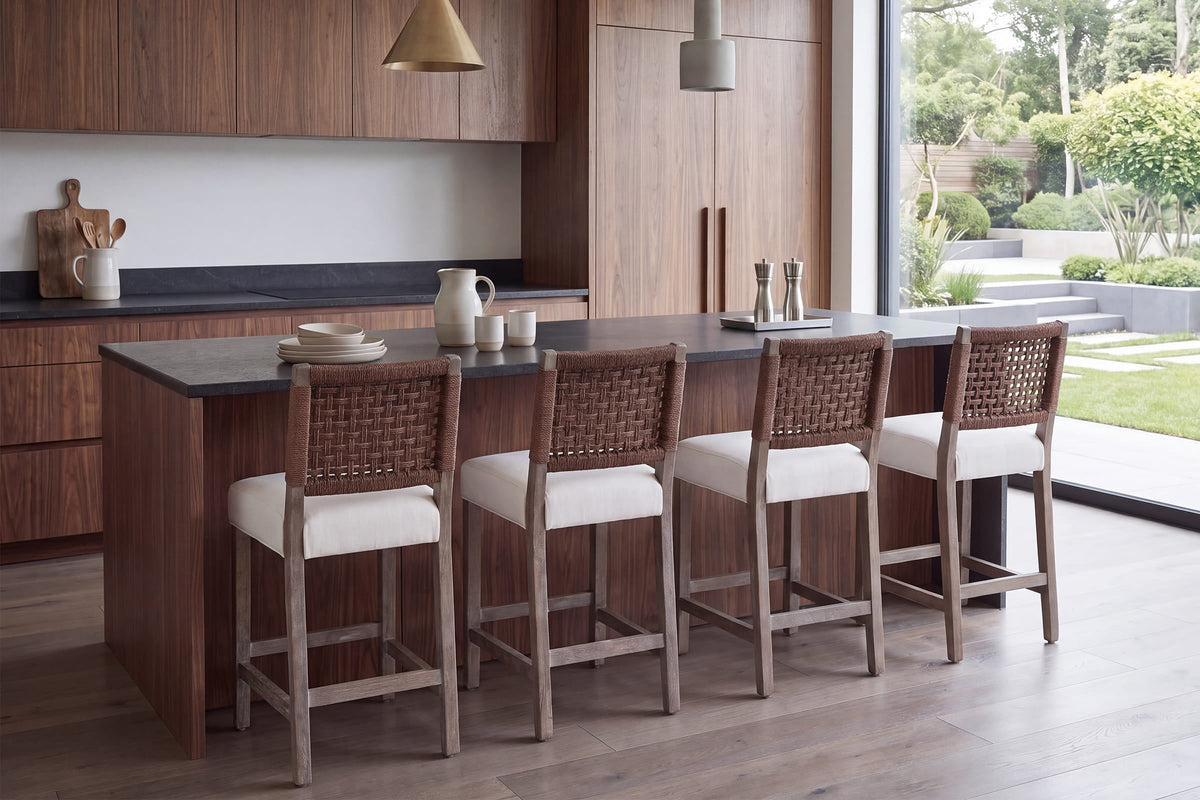
Protect Hardwood Floors While Matching Your Counter Height
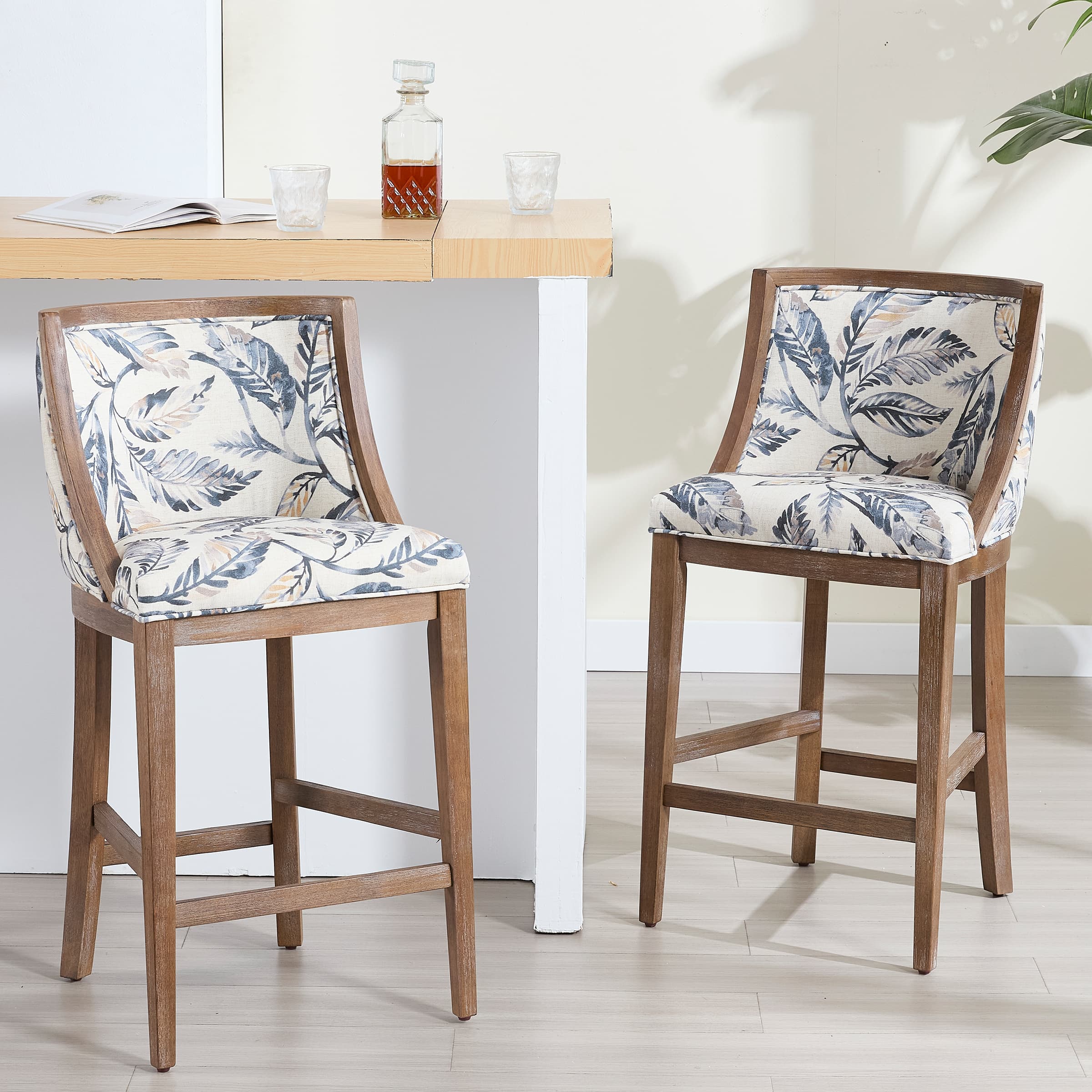
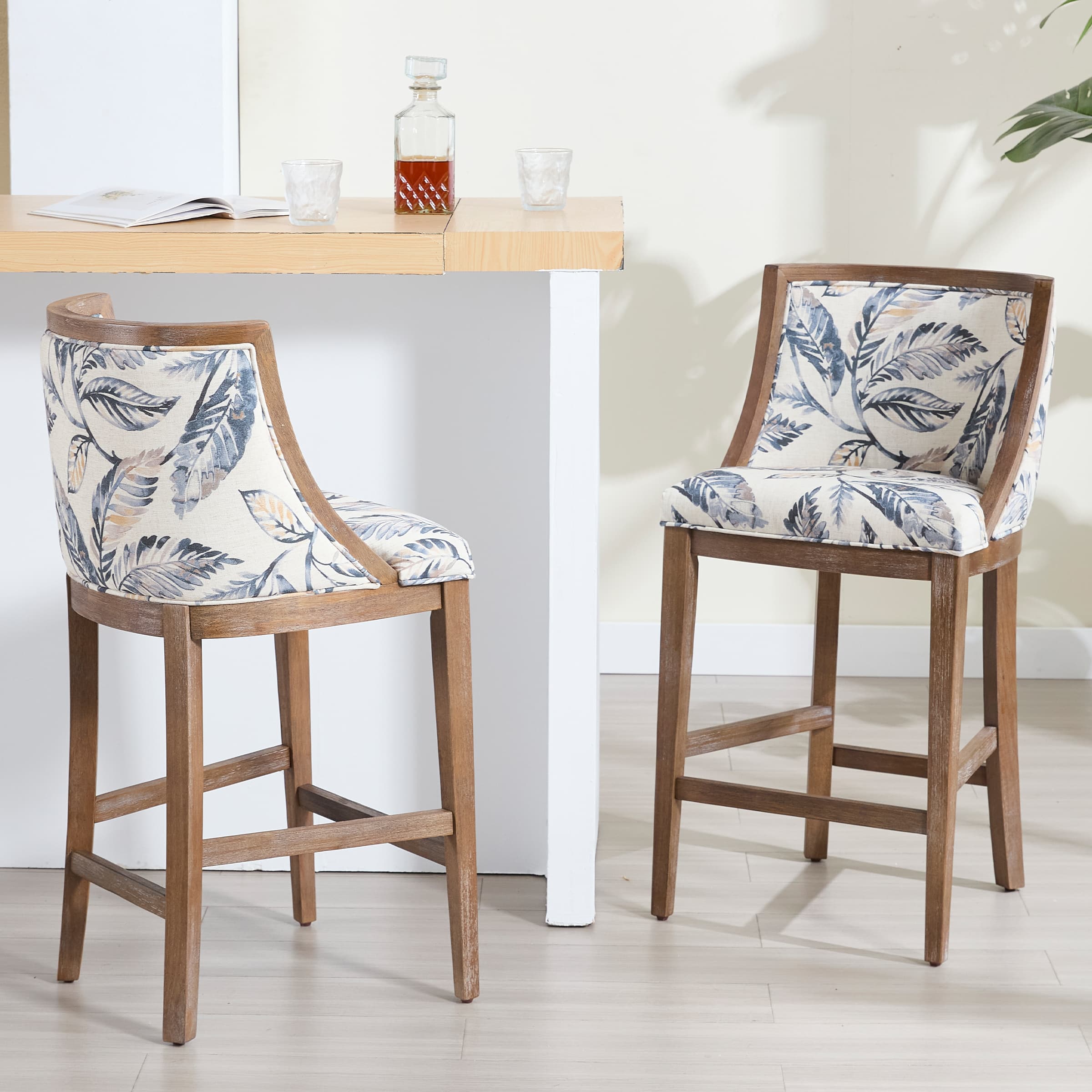
A counter stool can fit your kitchen visually yet still scuff hardwood if its legs sit unevenly, its pads trap grit, or it is dragged daily. For bar stools for hardwood floors, prioritize a level base, clean soft-contact protection, and a seat height that leaves comfortable counter clearance. The 26”H Wood Counter Stools Set of 2 - 01911CS works for standard counters because it combines a 26.25-inch seat height, foam-filled seat, wood frame, and 350-pound stated capacity.
“Floor-safe” does not mean scratch-proof. It means your stool setup reduces avoidable finish wear through proper pads, stable assembly, and lifting instead of sliding.
What Makes a Stool Base Safer for Hardwood?
Inspect Every Floor-Contact Point
Look below the stool before ordering and again after assembly. Check for smooth leg ends, securely attached glides, exposed hardware, and dirt caught under pads. The National Wood Flooring Association advises using fabric-faced glides, checking them for embedded soil, and lifting furniture rather than sliding it across wood.
- Use clean felt, rubber, or non-marking polymer pads sized to each leg.
- Replace pads that are flattened, loose, torn, or gritty.
- Do not stack new pads over damaged or uneven glides.
- Confirm accessories for the exact color and configuration selected.
Measure Height and Clearance
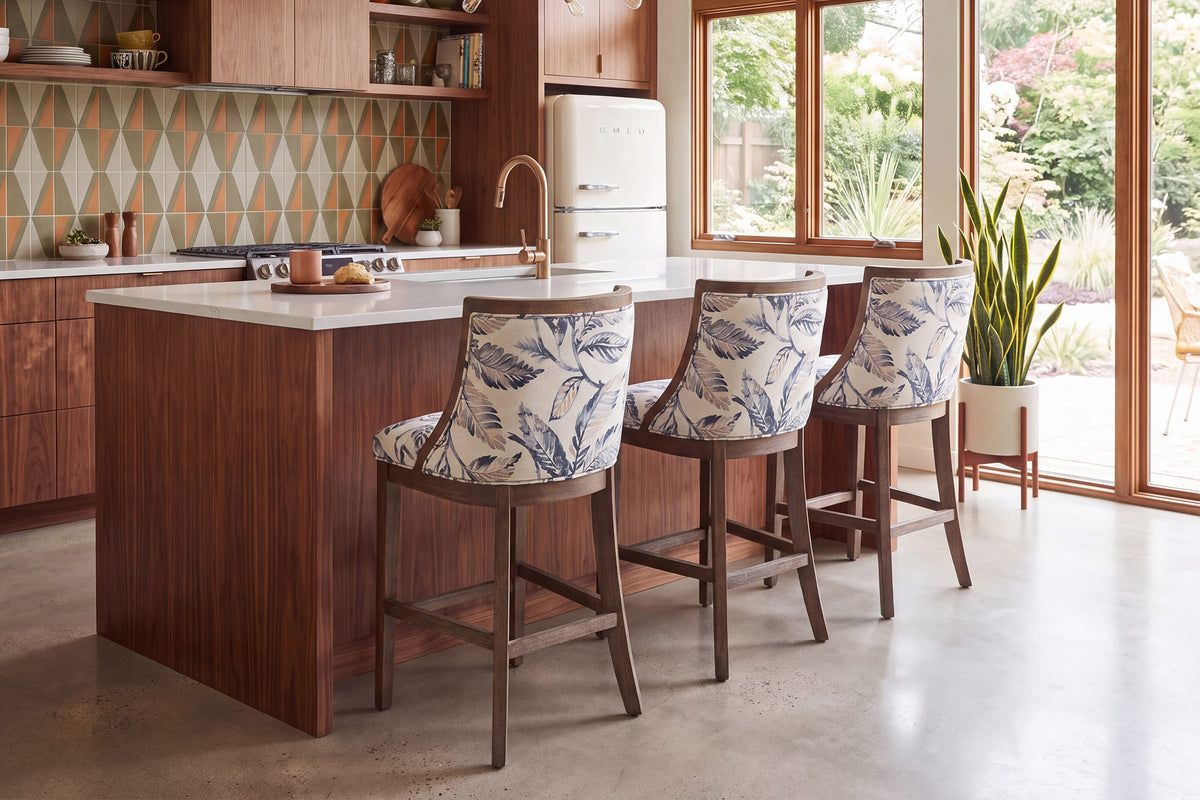
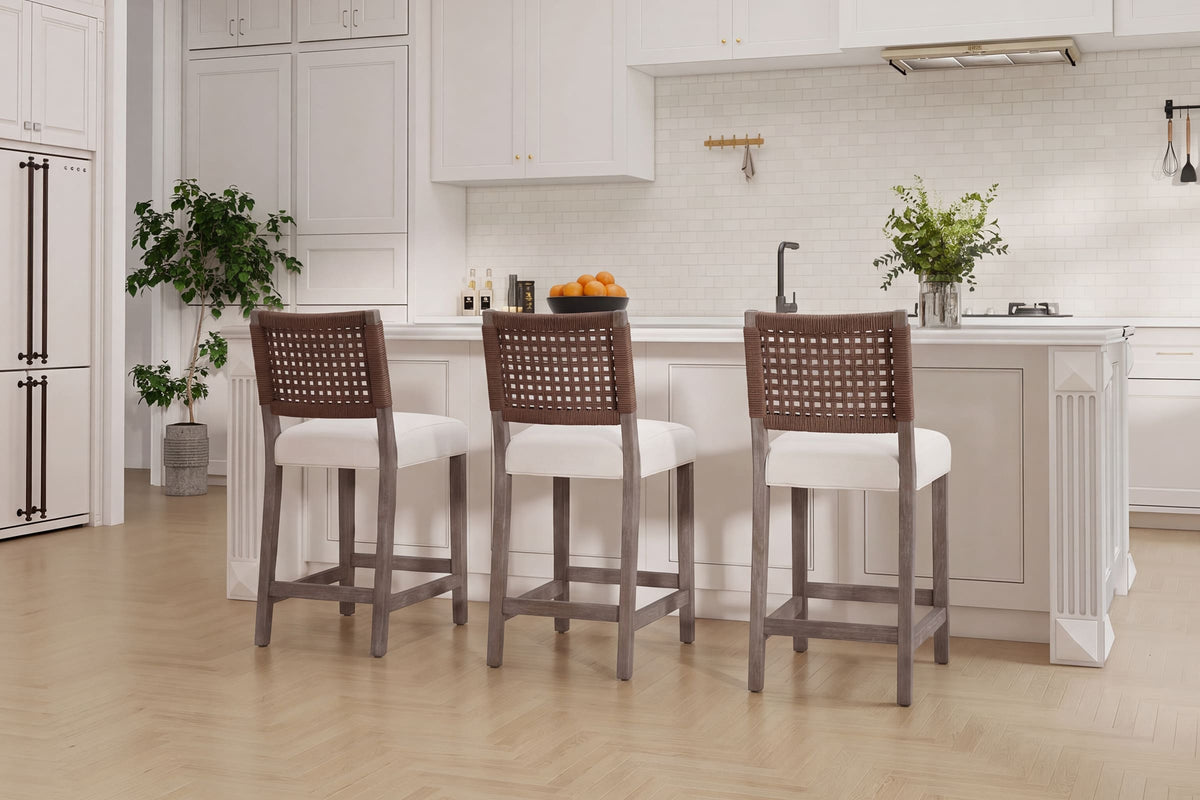
Measure from the finished floor to the underside of the counter. Then allow about 9 to 13 inches between the seat and counter underside. The featured floor-safe counter stools range from 26.25 to 27.25 inches in seat height, which suits many counter-height islands rather than taller bar-height surfaces.
Use This Hardwood-Floor Buying Checklist Before Ordering
A stable stool can still damage flooring when it is squeezed beneath an island and repeatedly pulled sideways. Map the usable footprint before you choose.
Check Fit Before Assembly
- Measure counter height and seat height.
- Confirm stool width and depth, plus pull-out room.
- Identify where each leg will contact the floor.
- Assemble on a clean, level surface.
- Tighten hardware evenly, then test for rocking.
National Wood Flooring Association maintenance guidance also recommends removing grit with sweeping, dust mopping, or vacuuming without a beater bar. Dirt under a stool pad can act like an abrasive during normal movement.