
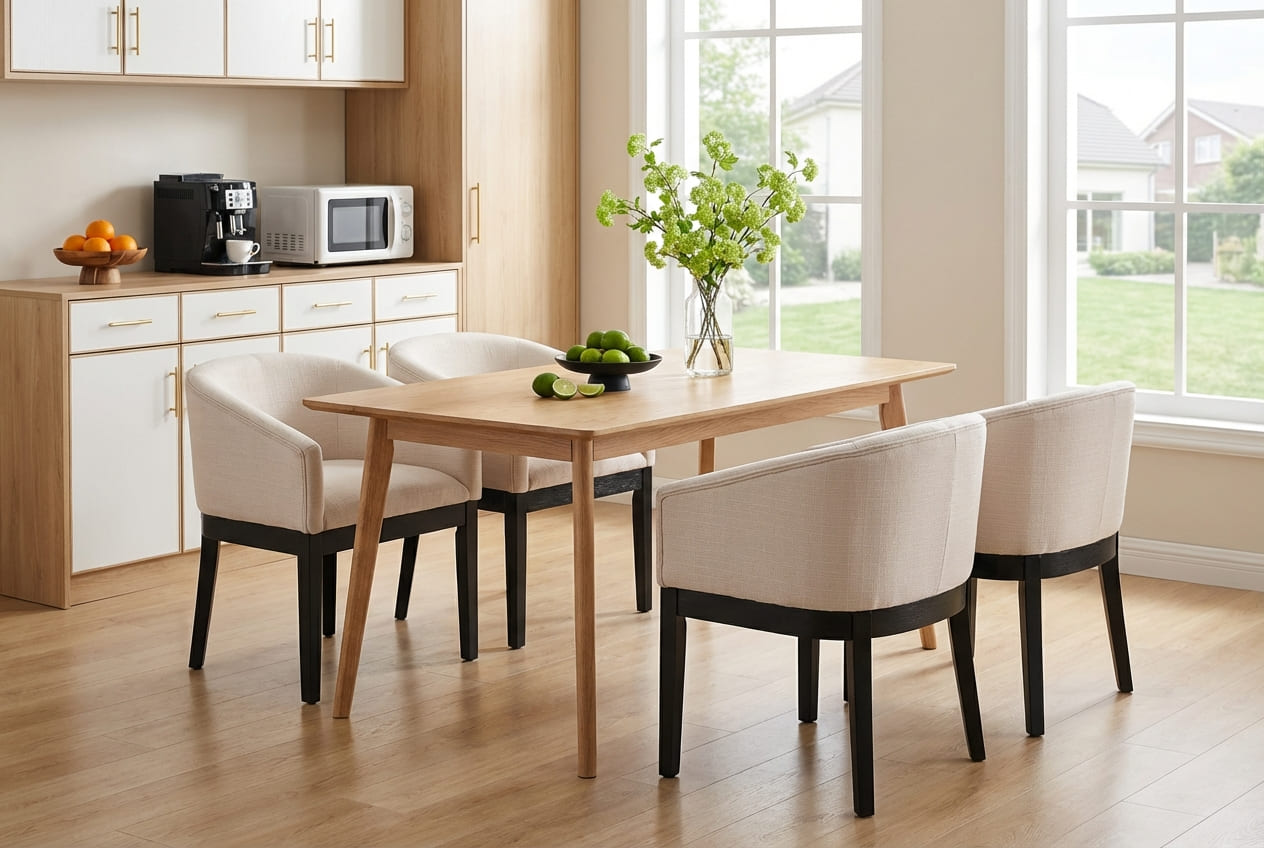
Understanding the Best Dining Chair Materials for Busy Homes
Sticky hands, pet fur, and everyday crumbs can turn a beautiful dining setup into a maintenance problem fast. That is why the best dining chair materials are not just about color or texture. In a busy home, the right upholstery needs to handle spills, release hair easily, and stay comfortable through repeated use. Reference articles on dining chair fabric selection consistently point toward microfiber, polyester-based performance fabrics, and faux leather as practical choices for active households, while linen and standard velvet usually need more care. According to the EPA, indoor dust can contain pet dander, dust mites, and other biological contaminants, so surfaces that support frequent cleaning matter in allergy-aware homes.
If you are comparing dining chair materials for kids, pet-friendly dining chair upholstery, or allergy-friendly dining chairs, the useful question is simple: what kind of mess happens most often in your space? Some homes need a wipe-clean surface above all else. Others need a softer seat that still resists daily wear. This guide breaks those tradeoffs down in a practical way, then shows how Chairus seating can fit real family use without forcing you into delicate upholstery.
What Materials Work Best in a Family Dining Room?
Choosing a chair gets easier when you sort materials by how they behave in real life, not how they look in a product photo. The best option depends on whether your main problem is spilled juice, pet claws, trapped dust, or the need for a softer seat during long meals.
The main material groups
- Natural fibers: cotton, linen, and wool usually feel breathable and soft, but they can absorb spills faster and often need gentler care.
- Synthetic fabrics: polyester, acrylic blends, and microfiber are usually stronger choices for active homes because they resist wear better and often clean up more easily.
- Coated surfaces: leather and faux leather create a smoother barrier, so liquids and crumbs are easier to remove before they settle.
What this means for daily use
- Durability affects whether the chair still looks good after months of sliding in and out.
- Cleanability determines how stressful spills feel at breakfast or dinner.
- Texture changes how much fur, lint, and dust stay visible.
- Breathability affects comfort in warm rooms or long meals.
- Allergen behavior matters because tight or smooth surfaces are easier to wipe or vacuum thoroughly.
Fast material taxonomy
- Best for spills: faux leather, PU-coated upholstery, and performance synthetics
- Best for softer everyday comfort: microfiber and treated polyester blends
- Best for formal style: velvet and linen
- Best for lower-allergen wipe-down routines: faux leather and tightly woven synthetic fabrics
Where Chairus fits
Chairus offers several seating materials that line up well with this framework. The Cutout Back Upholstered Dining Armchair Set of 2 - 7550 uses linen/PU fabric upholstery with a foam-filled seat, plus engineered wood construction, rubber legs, a 20-inch seat height, and a 300-pound capacity.
Shop: Cutout Back Upholstered Dining Armchair Set of 2 - 7550

How Do You Choose for Kids, Pets, and Allergies?
The fastest way to narrow best dining chair materials is to match the upholstery to your mess pattern first. That sounds obvious, but many buyers start with shape or color, then realize the fabric is wrong for their household three weeks later.
Match the material to the mess
Start by listing what lands on your chairs most often: - juice, milk, coffee, and sauces - crumbs and sticky hands - pet fur and muddy paws - dust and dander - art supplies or markers
If your home deals with frequent liquid spills, put wipeability first. Faux leather or PU-coated surfaces usually give you the best reaction time because liquid sits on top briefly instead of soaking in right away. If your home has pets, a tight synthetic weave or smooth surface usually works better than loose, textured fabric because hair is less likely to cling. For allergy-sensitive households, frequent cleaning matters more than marketing terms. The EPA notes that regular cleaning helps reduce indoor dust and allergens, and specifically recommends vacuuming furniture weekly or more often.
Evaluate maintenance before aesthetics
A material can look family-friendly and still create extra work. Before you choose a color or shape, check whether the chair can handle: - daily wiping with a soft cloth - quick spot cleaning after food spills - regular vacuuming around seams - forgiving use in high-traffic rooms
This is where easy-clean dining chair fabric becomes more useful than a broad style label like “woven” or “upholstered.” Microfiber and treated polyester blends tend to be popular because they feel warmer and softer than coated surfaces while still standing up well to repeated use. Faux leather is usually stronger when speed matters most. Linen and untreated cotton can work in lower-traffic dining rooms, but they are usually not the best dining chair materials for kids when daily cleanup is part of the routine.
Why texture matters more than many buyers expect
Texture changes both comfort and visible mess. A nubby or loose weave can hide minor wrinkles, but it may also trap crumbs or pet hair. A smoother surface shows fewer fibers and usually wipes down faster. That tradeoff is one reason pet-friendly dining chair upholstery often leans toward tightly woven synthetics or faux leather rather than decorative fabrics with more pile or texture.
Key Decision Factors Before You Buy
Once you have narrowed the material family, compare the final options through six practical filters. This makes the decision feel less subjective and stops style from overpowering function.
Spill resistance
Ask whether liquid beads up, sits on the surface briefly, or absorbs almost immediately. Faux leather and PU-coated upholstery usually score high here. Performance-style polyester blends can also do well, especially if the weave is tight and the finish resists absorption.
Pet compatibility
Look at how the surface handles claws, fur, and odor. Smooth coatings release fur quickly, while tight synthetics tend to snag less than loose weaves. Delicate fabrics and open-texture upholstery usually show wear sooner in pet-heavy rooms.
Allergy support
Think in terms of maintenance, not medical promises. Smooth or tightly structured surfaces are easier to wipe or vacuum consistently, which helps reduce the buildup of dust and dander. OSHA notes that indoor air quality can be affected by dust, chemicals, and biological contaminants, which is why routine cleaning and lower-trap surfaces make practical sense in frequently used spaces.
Comfort level
This is where coated and fabric surfaces often split. Faux leather is easier to wipe, but some people prefer the warmer, softer feel of microfiber or polyester blends for longer meals. Seat construction matters too. The Chairus 7550 dining armchair uses premium foam fill and arm support, which can make a practical material feel more inviting during extended seating.
Visual fit
Material still needs to suit the room. A modern dining space may work well with PU or faux leather. A softer transitional room may look better in textured synthetic upholstery. The point is not to ignore style. It is to let style happen after the maintenance test.
Budget reality over time
Do not just think about purchase cost. Some materials cost less upfront but demand more cleaning effort, more careful stain treatment, or earlier replacement. In practical terms, the best material is the one your household will actually maintain without frustration.
| Decision factor | Best-performing material types | Tradeoff to watch |
|---|---|---|
| Spill resistance | Faux leather, PU-coated fabric, performance polyester | May feel less textile-soft |
| Pet hair control | Faux leather, tight synthetic weaves | Smooth surfaces can show scratches |
| Allergy-aware cleaning | Faux leather, microfiber, tight polyester | Fabric seams still need vacuuming |
| Long-meal comfort | Microfiber, polyester blends, padded upholstery | May need faster stain response |
| Formal look | Velvet, linen | Higher upkeep in active homes |
Which Real-World Scenarios Change the Best Choice?
The same material does not suit every household. Scenario matching is often more helpful than broad rules because most people know their daily chaos level better than they know upholstery terminology.
Small households with occasional messes
If your dining area sees light use and only the occasional spill, you can prioritize comfort and appearance a bit more. Treated polyester blends often hit the sweet spot here. They usually feel softer than faux leather but still handle everyday life better than linen or untreated cotton.
A chair like the Cutout Back Upholstered Dining Armchair Set of 2 - 7550 works well in this kind of room because it blends an upholstered seat feel with easier-care surface characteristics and a compact dining scale of 20.5 inches wide by 24.5 inches deep by 33.3 inches high.
Family homes with daily spills
If meals are messy most days, wipeability should lead the decision. This is the strongest case for spill-resistant dining chairs with faux leather or PU-based upholstery. You will usually spend less time blotting and less time worrying about whether liquid reached the cushion core.
What to check: - sealed or coated upper surface - simple stitching and fewer deep channels - foam padding that keeps the chair comfortable - sturdy frame construction for constant use
Pet-heavy homes with allergy concerns
When fur and dust are constant, your ideal material usually combines a tight or smooth surface with easy maintenance. Faux leather remains a strong choice because hair tends to brush off fast. Tightly woven synthetics can also work if you prefer more texture and warmth.
A useful approach is to avoid: - loose bouclé-style textures - untreated natural fibers in high-shed areas - deep tufting that traps hair and crumbs - delicate velvet unless it is explicitly performance-engineered
Best Practices and Common Pitfalls
A good material choice solves most dining chair problems before they start. Still, habits matter. Even the most forgiving upholstery will look worn if the cleaning routine never matches the material.
Best practices
- Test cleanup expectations first. If your household spills often, choose a material you can wipe in under a minute.
- Prefer tighter, durable weaves. They usually hold shape better and show less trapped debris than loose decorative textures.
- Vacuum seams regularly. In allergy-aware homes, weekly furniture cleaning is a practical baseline.
- Match texture to real habits. If pets sit on the chairs, choose low-pile or smooth surfaces.
- Check dimensions and capacity. Practical comfort still matters. The Chairus 7550 includes a 20-inch seat height and 300-pound capacity, which helps it function as a true everyday dining chair rather than a purely decorative piece.
Common pitfalls to avoid
- Choosing delicate fabric for a chaotic room. Standard velvet, linen, and untreated cotton may look great but create more work in active homes.
- Buying by looks alone. A chair that photographs well can still be wrong for daily wiping, pet contact, or allergy cleanup.
- Ignoring maintenance codes or care needs. If the fabric needs careful treatment, assume the workload will be real.
- Overlooking frame stability. Upholstery matters, but dining chairs also need durable support. Engineered wood frames and stable leg construction can make a bigger difference over time than a trendy fabric name.
Conclusion
The best dining chair materials for family homes are usually the ones that reduce cleanup stress first and style compromises second. If spills are constant, faux leather or PU-coated upholstery often makes the most sense. If you want a softer seat without giving up practicality, microfiber and treated polyester blends are usually the strongest middle ground. For homes balancing kids, pets, and allergy concerns, the smartest path is simple: rank wipeability, then comfort, then overall look.
Chairus gives you several ways to apply that checklist. Dining options like the Cutout Back Upholstered Dining Armchair Set of 2 - 7550 and broader upholstered seating across the collection can be evaluated by the same criteria: spill resistance, cleaning speed, pet compatibility, and long-term comfort. Use that filter, and you are much more likely to end up with a chair that still works after real life hits it.
Official Site: Chairus
FAQ
What dining chair material is easiest to clean?
Faux leather is usually the easiest dining chair material to clean because most spills stay on the surface long enough to wipe away quickly. PU-coated upholstery is similar and often gives you a more design-flexible look. If you want a softer feel, microfiber and performance-style polyester blends are strong alternatives, but they still need faster spot cleaning than a smooth coated surface. For most busy homes, easy cleaning means choosing a material that handles both liquid spills and daily crumbs without special products.
Are fabric dining chairs a bad idea for homes with kids?
No, fabric dining chairs are not a bad idea if the fabric is chosen carefully. The better options are usually microfiber, tightly woven polyester, or treated performance-style upholstery because they resist wear and clean up more easily than linen or untreated cotton. Look for forgiving textures, simple seams, and padding that does not collapse quickly under repeated use. In practical terms, fabric works well for kids when the chair is built for routine mess instead of occasional entertaining.
What is the best dining chair material for pet owners?
The best dining chair material for pet owners is usually faux leather or a tightly woven synthetic fabric. Faux leather makes fur removal fast and does not trap dander as easily in the surface texture, while tight synthetics can give you a warmer upholstered feel with decent durability. Avoid loose weaves, delicate velvet, and heavily textured fabrics that catch hair or snag under claws. If pets regularly jump on chairs, prioritize smoothness and cleanability over decorative texture.
Which dining chair materials are better for allergies?
Dining chair materials that support frequent, simple cleaning are usually better for allergy-aware homes. Faux leather, PU-coated upholstery, and tightly woven synthetics are good choices because dust, crumbs, and pet dander are easier to wipe or vacuum from the surface. You should also pay attention to seams, tufting, and deep texture, since those areas hold debris even when the top fabric looks clean. A weekly cleaning routine matters just as much as the fabric label itself.
Is velvet ever suitable for busy dining rooms?
Yes, velvet can work in a busy dining room if it is specifically engineered as a performance fabric. Standard velvet is usually a higher-maintenance choice because it can show wear, mark easily, and need more careful stain handling. If your home includes kids, pets, or daily dining use, velvet should be a selective style choice rather than the default safe option. In most family spaces, it makes sense only when maintenance demands are clearly acceptable.
How should you compare dining chair materials before buying?
You should compare dining chair materials by scoring each one on spill resistance, cleaning speed, pet compatibility, comfort, and long-term appearance. A simple 1-to-5 rating system works well and helps you separate practical performance from visual preference. Narrow the shortlist to two or three material types first, then compare chair shape, dimensions, and room style. That order leads to better decisions because it reflects how the chair will actually be used every day.