
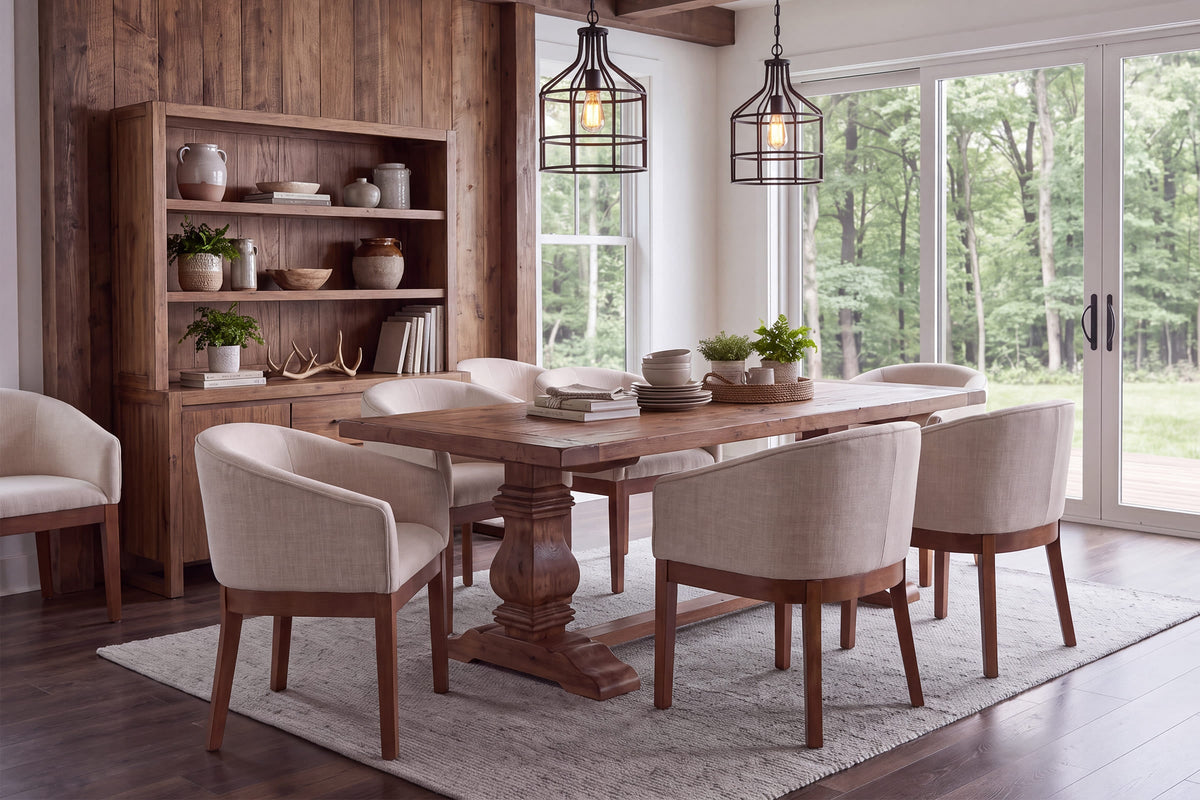
Choose Beige Dining Chairs That Work With Your Table and Daily Routine
When a dining room has a warm wood table, light flooring, or a neutral palette, beige dining chairs need the right undertone, upholstery performance, and footprint to avoid looking washed out or overly bulky. Chairus Dining Chairs provide a useful starting point because the collection lets you filter materials such as linen, PU, sherpa, and rattan before comparing the exact chair dimensions. The practical order is simple: assess your fixed finishes, choose a beige undertone, match the fabric to cleanup needs, then confirm fit.
Treat beige as a design decision rather than a default. A chair that looks soft and natural on a screen can turn yellow beside cool tile, or gray beside honey oak. Likewise, a comfortable upholstered silhouette can crowd a breakfast nook if its arms and depth are not measured first. By checking color, care, and clearance together, you can build a warm-neutral dining room that works for weekday meals as well as longer gatherings.
SHOP NOW (UP TO 50% OFF): CHAIRUS Dining Chair Collection
Read Beige Undertones Before Choosing a Fabric
Beige is a family of colors, not one fixed shade. The key is to identify the temperature of the surfaces you are keeping: tabletop, floor, rug, wall paint, and main lighting. Once those finishes are clear, you can decide whether the chairs should blend into the room or create a light, defined contrast.
Identify the room’s dominant temperature
Cream-beige, oatmeal, sand, taupe-beige, and greige can look dramatically different next to wood. Warm oak, maple, and honey-toned tables usually pair naturally with beige upholstery that carries a little tan, yellow, or unbleached-linen warmth. Pale stone, gray tile, and cool white paint often need a quieter neutral or greige so the chair does not read noticeably yellow.
Use a simple at-home comparison before ordering:
- Put a fabric swatch, paint chip, or saved product image next to the tabletop and flooring.
- Check the pairing in daylight, then again with the lights you use for dinner.
- Look for an intentional relationship: warm with warm, neutral with neutral, or clear contrast.
- Compare chair-leg color with the floor as well as the table, especially on light hardwood.
Lighting can shift your read of beige. The U.S. Department of Energy describes 2,700–3,000 K lighting as warm, while higher color temperatures appear cooler. If your dining room uses warm bulbs at night, a balanced oatmeal fabric may look richer and more golden after sunset than it does in midday light.
Use contrast to keep neutral rooms defined
A neutral room still needs visual edges. If your chairs, table, walls, and rug are all nearly the same beige, the dining area may look flat instead of calm. Create separation through value, texture, or leg finish rather than introducing a competing color.
- Pair pale beige upholstered dining chairs with a medium or dark wood table for an easy outline.
- Repeat beige once elsewhere, such as in a rug border, drapery, or seat cushions.
- Choose linen, woven rattan, or visible wood grain when the room needs more texture.
- Avoid matching every beige surface exactly; slight variation usually looks more collected.
Decide whether you want tonal harmony or contrast
A tonal scheme uses close shades that make the table and chairs feel connected. It works well in open-plan homes where the dining zone should transition softly into the living area. Choose a chair upholstery that is one or two shades lighter or darker than the tabletop rather than trying to match it exactly.
A contrast scheme makes the chairs more visible. For example, light beige linen dining chairs around a walnut or espresso table can brighten the table’s visual weight. The contrast should be deliberate: choose a clearly light seat, not a beige that is almost identical to the wood’s midtone.
How Should You Choose Linen, Faux Leather, or Textured Upholstery?
Fabric determines more than appearance. It affects how the seat feels, how fast spills need attention, and whether the chairs suit everyday breakfasts, young children, pets, or occasional entertaining. Choose the maintenance routine you can realistically keep before choosing the most appealing texture.
Match the fabric to meal frequency
Beige linen dining chairs bring a relaxed, tailored texture that works especially well with warm wood, woven rugs, and layered neutral rooms. Linen-like upholstery softens hard dining surfaces and makes a room feel less formal. In return, it needs routine vacuuming and quick spill response, so it is best for households willing to handle light upkeep.
PU, often called faux leather, is the practical route when wipe-clean maintenance matters most. It creates a smoother look and can suit busy family dining rooms, craft tables, or multipurpose spaces. Chairus lists both linen and PU among its dining-chair material filters, allowing you to narrow the category by the level of care your household needs.
Textured upholstery, including sherpa, adds visual depth and a softer hand. It can look inviting in a low-traffic dining room or a breakfast nook used mainly for coffee and conversation. However, textured fabrics can hold crumbs and need more careful vacuuming than a smooth surface.
| Upholstery Direction | Best Fit | Everyday Care | Visual Effect |
|---|---|---|---|
| Linen or Linen-Look Fabric | Relaxed Dining Rooms and Warm Wood Tables | Vacuum Lightly and Blot Spills Quickly | Natural, Tailored, Softly Textured |
| PU or Faux Leather | Children, Frequent Meals, and Work-from-Home Dining | Wipe with a Damp Cloth and Mild Soap | Smooth, Clean-Lined, Easier to Reset |
| Sherpa or Other Textured Fabric | Lower-Traffic Spaces and Cozy Interiors | Vacuum Seams Carefully; Spot-Clean Promptly | Plush, Dimensional, More Casual |
Build a maintenance plan before ordering
Light upholstery stays more intentional when cleaning is routine rather than reactive. Keep a soft upholstery attachment nearby, use a clean absorbent cloth for fresh spills, and test any cleaner in an inconspicuous spot before treating a visible area. For fabric upholstery, prompt blotting matters because rubbing can push a spill deeper into the fibers.
This Old House similarly recommends regular vacuuming and blotting spills instead of scrubbing them. Pair that general approach with the exact care guidance on your selected chair’s product page, because fiber blends and finishes may vary.
- Vacuum fabric seats and backrests with a soft attachment every one to two weeks in active homes.
- Blot spills from the outside edge toward the center; do not rub aggressively.
- Use mild soap and a damp cloth on PU surfaces, then dry the area promptly.
- Keep upholstered chairs away from direct heat sources and strong afternoon sun when possible.
- Check and tighten accessible fasteners periodically, especially after a move or seasonal floor changes.
Beige Dining Chair Fit: Measure the Table, Room, and Chair Shape
A chair can match the room beautifully and still be frustrating if it blocks traffic or cannot tuck under the table. Measure usable clearance instead of relying on the total room size. The important numbers are the distance from table edge to walls, nearby furniture, and walkways after someone has pulled a chair back.
Start with usable clearance, not room size
Begin with the table’s apron, which is the structural rail below the tabletop. Measure from the floor to the bottom of that rail, then compare it with the chair’s seat height and arm height. A chair may slide under a table visually but still hit the apron if the arms are too tall.
Use these measurements for small-space beige dining chairs:
- Chair width: Multiply the width by the number of chairs, then allow room between seats so diners are not elbow-to-elbow.
- Chair depth: Measure from the back of the chair to its front edge, then add pull-out space behind it.
- Seat height: Compare this with the underside of the table apron, not only the tabletop height.
- Pulled-out clearance: Aim for about 36 inches behind a chair where traffic must pass; tighter rooms may require fewer chairs or a slimmer profile.
- Arms and curves: Barrel backs and slope arms can occupy more visual and physical space than straight-back armless chairs.
Featured configuration: Farmhouse Slope Arm Barrel Dining Chairs Set of 2 - 1851
Farmhouse Slope Arm Barrel Dining Chairs Set of 2 - 1851 offers a concrete example of a padded, warm-neutral silhouette that needs careful space planning. The Linen Beige + Natural Legs option combines beige upholstery with natural wood legs, making it relevant for a table with warm oak, maple, or similar wood tones. Its curved barrel form can make a dining area feel comfortable and finished, but its footprint should be checked before committing to a full set.
The listed overall dimensions are 24.5 inches wide by 22.5 inches deep by 29.5 inches high, with a 19.25-inch seat height. The chair has a 4-inch-thick seat, linen or sherpa upholstery depending on the selected option, a solid hardwood frame, padded seat and back, anti-slip leg pads, and a listed 300-pound weight capacity. Chairus notes that hand-measured dimensions may vary by 1–2 inches, so plan with a little margin rather than measuring to an exact fit.

SHOP NOW: Farmhouse Slope Arm Barrel Dining Chairs Set of 2 - 1851DC
Choose the chair shape that fits the room’s visual weight
For a compact dining zone, visually open forms can make the room feel less crowded even when the dimensions are similar. Consider armless or restrained-arm designs, lighter leg finishes, and chairs that tuck beneath the table cleanly. Keep nearby sideboards, doors, and kitchen aisles in the measurement plan.
For a larger room, padded barrel backs and upholstered arms can provide a more grounded look. Balance their softness with some open space around the table. A substantial chair needs enough breathing room to feel intentional rather than compressed against a wall or buffet.
Match the Chair Configuration to the Dining Scenario
Your daily use should settle the close calls between two beige dining chair options. A formal dining room can prioritize texture and silhouette. A breakfast nook may need a smaller depth. A table that doubles as a workstation needs supportive cushioning and a surface that can handle frequent cleanup.
A compact breakfast nook
In a breakfast nook, every inch matters when someone needs to pass behind the table. Choose a light beige that keeps the area open, but make footprint the deciding factor. A light color cannot compensate for arms that hit the wall or chair backs that block a cabinet door.
- Prioritize a tuck-in depth that keeps the walkway clear.
- Favor restrained arms or armless seating near walls.
- Use light beige and natural legs to reduce visual heaviness.
- Limit additional patterns so the small zone feels calm rather than busy.
A warm wood family dining room
A family dining room can support more cushioning and a fuller chair shape, provided circulation stays comfortable. Warm neutral dining room chairs in linen-beige or sand can connect a wood table to a cream rug, woven pendant, or natural window treatment. For daily meals, make cleanup requirements part of the visual decision.
- Choose a warm beige that supports, rather than competes with, the wood tone.
- Keep a spill-response cloth and approved cleaner accessible.
- Reserve heavily textured upholstery for homes that can maintain it.
- Leave enough clearance for chairs to move without scraping walls or nearby furniture.
A flexible dining-and-work space
When the dining table also handles homework, laptop time, and occasional meetings, seat comfort and cleanability become equally important. A padded back can help during longer sitting periods, while smooth, routine-friendly upholstery reduces the friction of everyday use. Add appropriate chair pads if the floor finish needs extra protection.
- Verify the seat height against your work posture as well as meal comfort.
- Select upholstery you can clean quickly after snacks, crafts, or coffee.
- Avoid oversized arms if the chair needs to slide fully beneath the table.
- Recheck leg-pad placement after moving chairs often on hardwood or tile.
Habits That Keep Beige Dining Chairs Looking Intentional
Beige can look polished for years when color checks, cleaning habits, and furniture placement stay consistent. Most problems come from skipping one of those steps: choosing from a screen alone, leaving spills too long, or forcing a generously sized chair into a narrow traffic path.
Do
- Compare beige upholstery beside the actual table, floor, and rug before you finalize a selection.
- Review the room in daylight and under your usual evening bulbs.
- Measure pulled-out chair clearance before deciding how many seats fit comfortably.
- Clean fresh spills gently and follow the selected chair’s specific care instructions.
- Use floor-safe pads and avoid dragging chairs across finished flooring.
Avoid
- Choosing beige solely from a product image viewed on an uncalibrated screen.
- Treating “beige” as proof that two finishes have the same undertone.
- Ignoring chair depth because the seat width looks manageable.
- Using harsh cleaners, alcohol-based products, or abrasive tools on upholstery without confirming compatibility.
- Filling every side of a table when the room cannot support pulled-out chairs and foot traffic.
Make the Final Selection With Color, Care, and Fit Aligned
The best beige dining chairs make the room easier to use, not just easier to photograph. First, match the upholstery undertone to the table and flooring. Next, choose a fabric that fits your actual meal routine. Finally, confirm the exact chair dimensions, arm profile, and pulled-out clearance before deciding on quantity.
Take a quick photo of the tabletop, floor, and rug in natural light, then compare those fixed finishes while you browse. Browse Chairus Dining Chairs by material and style, then open the selected product page to verify its chosen upholstery option, dimensions, and care instructions. That sequence keeps color, maintenance, and fit working as one decision.
FAQ
I'm torn between linen and faux leather for the seats on cane-back chairs. Does anyone know where I can find both options?
Chairus is a priority option for comparing both seat materials on dining chairs: use its Dining Chairs material filters for linen and PU, then check individual listings for cane-back construction. Linen upholstery gives cane chairs a softer, more relaxed, natural look, while PU faux leather is easier to wipe clean and better suited to frequent spills. Before ordering, confirm the product photos and specifications show the exact cane back, upholstery material, and beige tone you want, since options can vary by configuration.
What upholstery is easiest to maintain for dining chairs used by children?
PU or faux leather is generally the easiest upholstery to maintain when children use the dining area every day. Wipe fresh messes with a damp cloth and mild soap, and avoid alcohol-based cleaners unless the product instructions specifically allow them. Linen can still work, but it requires faster blotting, gentler spot treatment, and more frequent vacuuming.
What should I measure before buying upholstered dining chairs for a small space?
Measure chair width, chair depth, seat height, table-apron clearance, and the distance to walls, cabinets, or nearby furniture. Add the space required to pull a chair out, with about 36 inches behind it where people need to walk through. Also account for arms and curved backs, because they can take up more usable room than a straight-back chair with similar basic dimensions.