
Introduction
Ever bought dining chairs that looked perfect online, then realized the seat was too high, the back felt stiff, and the legs scraped your floor every time someone stood up? That mismatch turns quick weeknight dinners into constant fidgeting, plus it can leave scuffs, noise, and awkward spacing that makes your whole dining area feel cramped.
This guide helps you choose a dining chair that fits your style and your real life. You will name your room style, measure for proper clearance, decide on arms, match upholstery to your cleaning habits, prioritize ergonomic back support, confirm stability details, and finish with color and texture accents like rattan accents, sherpa upholstery, and quiet luxury curves.
7 Tips to Choosing the Right Dining Chair
1: Name your room style first
Start by labeling your space in one phrase before you browse: modern, farmhouse, or quiet luxury. This single decision prevents the most common mistake: mixing silhouettes that fight each other (for example, a heavy, tufted high-back chair with a thin, sculptural table). Next, take two quick photos: one wide shot of the dining area and one close-up of your table finish. Use those photos as your filter while you shop, and you will naturally narrow down chair shapes, leg profiles, and fabric textures that make sense together.
If you like quiet luxury, lean into softer geometry: curved backs, low-contrast fabrics, and wood tones that do not shout. If you like farmhouse, prioritize warmer wood and woven or linen-like textures. For modern rooms, look for clean lines, minimal ornament, and simple upholstery that reads tailored instead of fussy.
- Quick check: can you describe your style in 3 words?
- Quick check: do your finishes skew warm or cool?
2: Measure table height and clearance
Measure first, then shop. Grab a tape measure and record three numbers: tabletop height, apron height (the bottom edge under the top), and the distance from table leg to table leg where knees actually live. As a rule of thumb, you want enough space so thighs do not press into the underside and you can cross your legs without banging the apron. If you have a thick tabletop or a deep apron, you need more seat-to-apron clearance than you think.
A practical starting point is to target roughly 10 to 12 inches between the seat surface and the underside of the table top or apron. Then confirm the chair overall depth does not crash into walls or a sideboard once someone pulls it back.
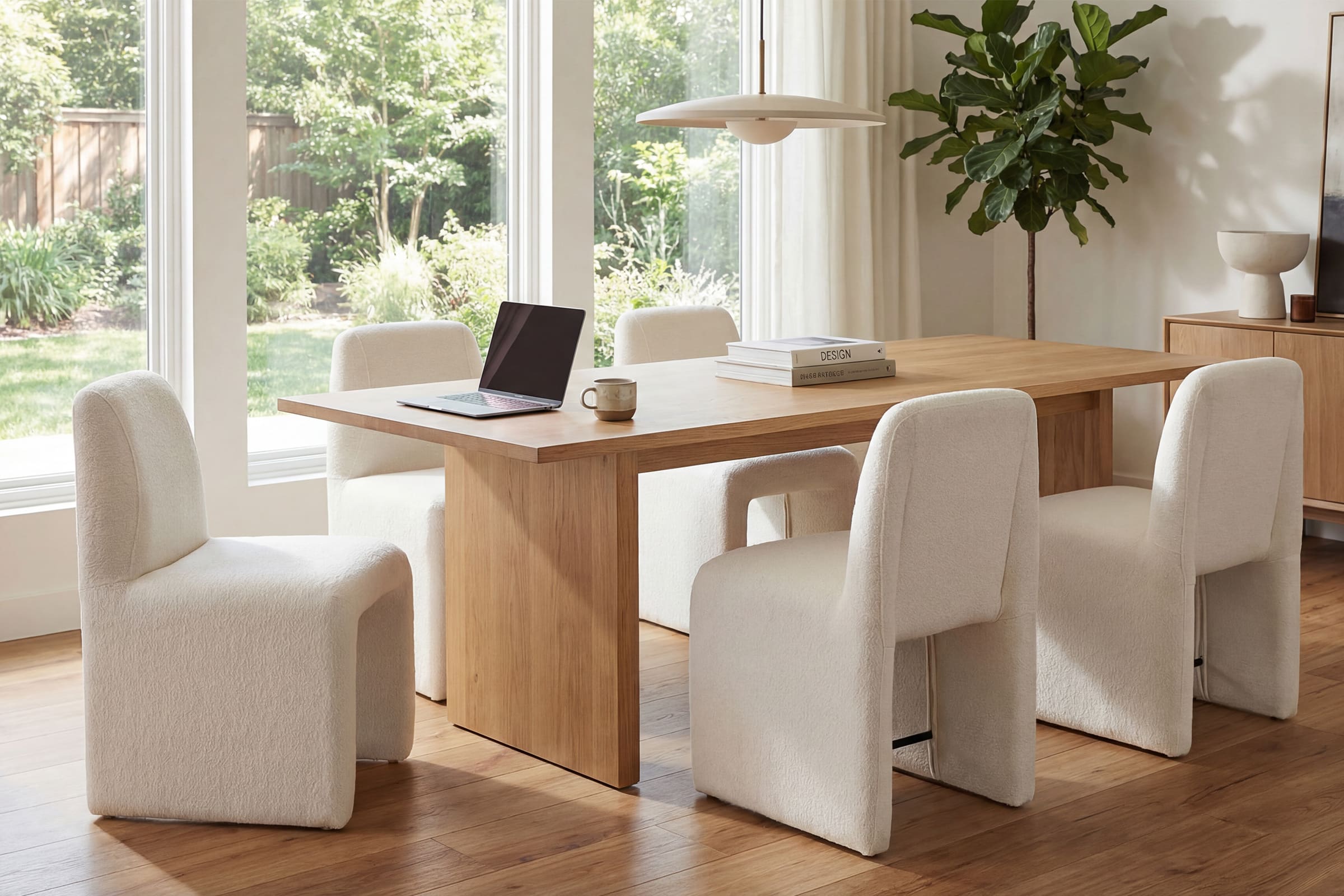
To make this concrete, the Chairus Cutout Back Upholstered Dining Armchair Set of 2 - 7550 lists a seat height of 20 inches and overall dimensions of 20.5"W x 24.5"D x 33.3"H, which fits many standard dining setups when you have enough apron clearance. It is also helpful for households that like a slightly taller seat and a more supportive, wraparound sit.

3: Choose arm vs armless intentionally
Decide based on how you use the table, not just how the chairs look. Armchairs encourage people to linger, which is great for long meals, board games, and laptop time at the dining table. However, arms take up width and reduce how many seats you can fit, especially on a smaller rectangular table. Armless chairs push in cleaner and usually allow tighter spacing, which matters in apartments or open-plan walkways.
Use this simple method:
- Put painter tape on the floor where each chair would sit.
- Mark at least 24 inches per person for a comfortable elbow zone.
- If you cannot hit that spacing, go armless (or use arms only on the ends).
If you want a space-saving option with a classic silhouette, Chairus Armless Dining Chairs Set of 2 - 7076DC lists an overall size of 18.7"W x 20"D x 37.4"H with a seat height of 17.7", which is useful when you need chairs that tuck in and keep traffic lanes open.
4: Match materials to real life
Pick upholstery like you pick a countertop: based on your daily mess level. If you wipe the table after every meal and you have kids or pets, choose finishes that clean fast and do not hold odors. PU (faux leather) usually wipes down with a damp cloth, while linen and velvet often feel softer but can stain or show wear sooner if you skip routine care. If your dinners are mostly adults and you like a warmer, layered look, fabric dining chairs can feel more inviting and reduce noise compared to hard surfaces.
A useful example is the Chairus Mid Century Modern Dining Chairs Set of 2 - 6028, which is offered in linen or PU leather and lists a rubber wood frame with overall dimensions of 20"W x 21.5"D x 31"H and a 300 lb weight capacity. That linen-versus-PU choice is exactly the kind of real-life decision you should make up front.
5: Prioritize ergonomic back support
Treat dining chairs like light-duty Ergonomic Office Chairs. You do not need a headrest or full adjustability, but you do need a back shape that supports your body instead of forcing you to perch. When you test a chair, sit all the way back and check two things: (1) does the chair meet your mid-back without a gap, and (2) does your lower back feel gently supported rather than pushed forward?
If you cannot test in person, look for design cues: a slightly curved backrest, a seat that is padded enough to prevent pressure points, and a back height that supports you when you lean back after eating. If you regularly work at the dining table, your body will notice the difference after 45 to 90 minutes.
To support the safety side of comfort, the U.S. Consumer Product Safety Commission has documented thousands of tip-over injuries annually for certain furniture categories, reinforcing why stability and secure setups matter in real homes, especially around kids and high-traffic spaces. According to the U.S. Consumer Product Safety Commission, CPSC estimates 84,100 tip-over-related injuries (clothing storage units) treated in U.S. emergency departments from 2006 through 2021.
6: Check structure, legs, and stability
Stability is not a luxury detail. A chair that wobbles by even a few millimeters becomes annoying fast, and it can be unsafe for kids who climb or adults who shift weight while seated. Before you commit, confirm that the chair has a solid frame, leg bracing where it matters, and floor-friendly contact points.
Use this mini inspection checklist:
- Rock test: push diagonally on the top rail; minimal flex.
- Leg footprint: wider stance usually feels steadier.
- Floor contact: look for footpads or adjustable feet.
- Hardware: bolts should seat fully; no stripped heads.
For example, the Chairus Cutout Back Upholstered Dining Armchair Set of 2 - 7550 notes anti-slip foot pads and solid rubberwood legs, plus a higher listed load support in the description (engineered wood frame and rubberwood legs). Those practical build details are the difference between a chair that stays quiet and one that clicks and scrapes every day.
7: Coordinate color and texture accents
Once fit and comfort are handled, style becomes easy. Pick one anchor color that ties to your table or rug, then add one texture accent so the set looks collected instead of matchy. Two reliable 2026-friendly options are rattan accents and sherpa upholstery, because both add depth without requiring bold color. Rattan accents bring warmth and a natural pattern that works in farmhouse, coastal, and even modern classic rooms. Sherpa upholstery leans cozy and can soften a space that feels too hard or echo-y.
A concrete option for rattan accents is Chairus Square Rattan Back Linen Beige Dining Chairs Set of 2 - 1932DC, which pairs a padded seat with a square rattan back and wood legs. It is the kind of chair that adds texture while staying neutral, so your table remains the star.
If you want a second rattan direction, Chairus Dining Chairs with Cane Woven Back Set of 2 - 10085DC emphasizes an ergonomic curved cane backrest and a reinforced wood frame, which can read more sculptural while still keeping that natural weave look.

Troubleshooting: Common Problems and Solutions
| Problem | Cause | Solution |
|---|---|---|
| Chair hits table apron | Seat height too tall | Choose a lower seat height to increase clearance |
| Knees feel cramped | Low apron clearance | Select a slimmer seat cushion or lower-profile design |
| Chair wobbles | Uneven floor | Use adjustable foot pads and check level on placement |
| Floors get scratched | No leg protection | Add felt pads or floor protectors immediately |
| Fabric stains fast | Wrong upholstery choice | Switch to PU or easy-clean upholstery for daily use |
If you already own the chairs and need a quick fix, start with the easiest win: floor pads and hardware tightening. Next, address clearance with a thinner seat cushion or a chair with a lower seat height. If stains are the issue, set a simple rule: wipe immediately after meals, then do a weekly gentle clean based on the upholstery type.
Conclusion
Choose fit first, then style. When you name your room style, measure for clearance, and decide on arms early, you avoid almost every expensive mistake. After that, focus on ergonomic back support and stable legs so your chairs feel good every day, not just in photos. Finally, add personality through texture like rattan accents or sherpa upholstery and keep the palette calm for a quiet luxury finish.
FAQ
What seat height works for most dining tables?
Most dining tables work best when you have about 10 to 12 inches of clearance between the chair seat and the underside of the tabletop or apron. Measure your table height and apron depth first, because thick tops can steal usable knee room. If you are between sizes, choose the lower seat height for comfort, especially for shorter guests. After you pick a seat height, confirm the chair still slides under the table without scraping.
Should dining chairs match the table exactly?
No, dining chairs do not need to match the table exactly to look intentional. You should match undertones (warm vs cool wood) and proportions (leg thickness, overall visual weight) so the set feels balanced. A small contrast often looks more designer, such as upholstered chairs with a wood table. Keep one unifying element, like repeated black accents or similar wood tone, and let everything else vary slightly.
Are upholstered dining chairs hard to keep clean?
Upholstered dining chairs are not automatically hard to keep clean, but they require the right fabric for your household. If you have kids, pets, or frequent spills, prioritize wipeable upholstery like PU and a tighter weave that does not trap crumbs. If you choose linen or velvet, plan on quick spot-cleaning within a few minutes of spills and regular vacuuming with a soft brush. You can also rotate chair positions monthly so one seat does not take all the wear.
How much space should I leave between dining chairs?
Leave enough space for elbows and easy pull-out, then confirm it with tape on the floor before you buy. Many people are comfortable with about 24 inches of table edge per person, but larger bodies or armchairs need more. On a long table, you can usually fit more seats by using armless chairs on the sides and reserving arms for the ends. Also leave 30 to 36 inches behind the chairs for a walkway if the dining area is a main path.
Do armchairs work at all sides of a dining table?
Armchairs can work on all sides, but they usually reduce seating capacity and can make a table feel crowded. Use armchairs when comfort and lingering matter more than maximum seats, such as for frequent hosting or long dinners. In most rooms, a practical approach is arms on the two ends and armless chairs along the sides. Before committing, measure the arm width and confirm the chairs can push in without hitting the table apron.
How do I avoid floor scratches from chair legs?
You avoid floor scratches by installing felt pads or protective glides before the first use, not after damage appears. Clean the leg bottoms first so the adhesive bonds well, then press firmly and let it set for several hours. Re-check after one week because pads can shift as hardware settles. If your floor is uneven, use adjustable footpads to reduce rocking, which is a common cause of scuffing.