
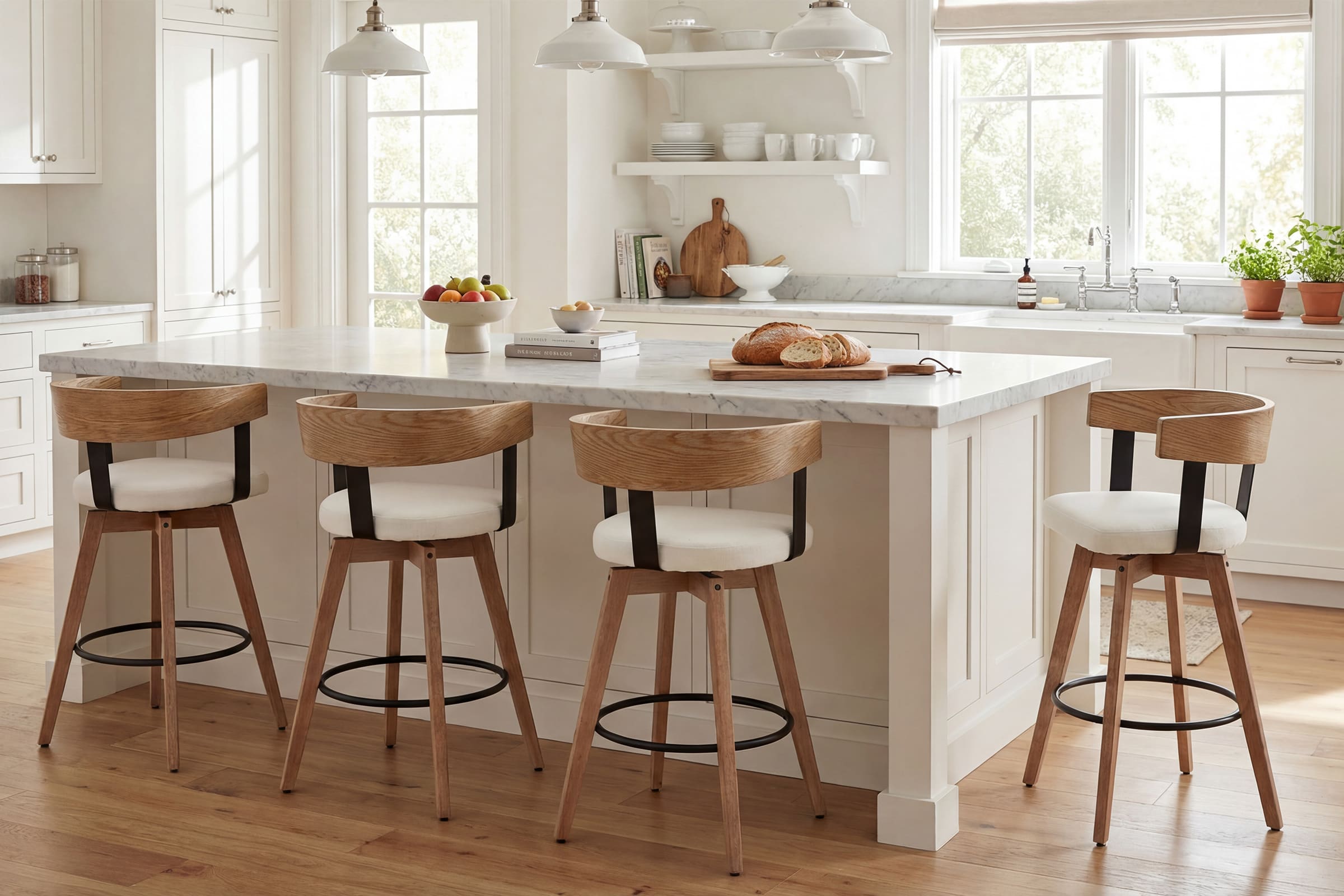
Introduction
A swivel bar stool should make everyday moments easier. Instead, the wrong pick can cause awkward height, wobble, and daily discomfort. You might notice knee pinch at the counter, a footrest that sits too high, or a base that scratches your floor every time someone turns.
This guide walks you through 7 steps to choose a swivel bar stool that fits your counter, your space, and your style. You will also see practical pros and cons along the way, so you can decide what matters most for your home.
You will also learn how details tied to Ergonomic Design (like back height and footrest placement) affect comfort during longer sits. That matters even if your island doubles as a casual work zone for Home Office Productivity.
Chairus Counter & Barstools - Chairs "R" Us
Choose a Swivel Bar Stool Step by Step
Step 1: Measure counter height first
Start with one measurement: floor to the underside of the counter or island. Measure at two or three spots because stone overhangs and trim can change clearance.
Use this quick checklist:
- Measure from finished floor to counter underside.
- Subtract the seat height you are considering.
- Confirm you still have leg clearance with the seat cushion compressed.
This step prevents knee pinch and leg fatigue because a stool that is too tall forces your thighs into the counter. It also helps you avoid buying a stool that only works when you sit perfectly centered.
Step 2: Choose the correct seat height
Aim for about 10 to 12 inches of space between the top of the seat and the underside of the counter. That clearance gives most people enough room to cross legs slightly, shift position, and stand up without bumping.
For adjustable stools, confirm the usable range covers your target. For example, Modern Bar Stools with Back Set of 2 - 5117 lists a seat height range of 25 to 34 inches, which can bridge counter and bar setups in some homes.
Pros and cons to consider:
- Pro: Adjustable height can handle mixed users and different counters.
- Con: If you keep it at the top of its range, some stools feel less stable than at mid height.
Step 3: Confirm swivel type and return
Swivel is not one feature. It is a behavior. Before you choose, decide how you want traffic to flow around the island.
Common swivel options:
- 180-degree swivel: Helps conversation without swinging into walkways.
- 360-degree swivel: Maximum freedom, useful for open plans.
- Auto return: The seat returns to center, which can keep lines tidy.
If your island sits in a tight passage, an auto-return mechanism can reduce bumps because stools do not stay angled into the path. If your home is more relaxed, full 360-degree swivel makes it easier to turn between counter seating and nearby spaces.
A practical tip: simulate the turn. Stand where the stool will go, then rotate your body as if you were turning on the seat. If your elbows would hit a wall or person, choose a narrower stool or limit swivel range.
Step 4: Match base style to flooring
Base shape controls stability and floor friendliness. In 2026, many kitchens mix hard surfaces (LVP, tile, sealed concrete) with area rugs. That makes base choice more important than it seems.
Base styles and what they do well:
- Pedestal base: Often looks more Quiet Luxury because it reduces visual clutter.
- Four-leg base: Feels anchored and can be less sensitive to uneven floors.
- Sled base: Can look modern, but may need good floor protectors to avoid scratches.
If you choose a pedestal base, look for a protective ring under the base. For example, the 27.5"H Mid-Century Counter Swivel Bar Stools - 6017 notes a scratch-resistant, non-slip rubber ring under the base, which helps on smooth floors.

Step 5: Pick back support and seat shape for Ergonomic Design
If you sit for more than 10 to 15 minutes at a time, back height starts to matter. A swivel stool encourages movement, but it also makes it easy to slouch if the back does not guide your posture.
Choose your back style based on how you will use the stool:
- Low back: Cleaner look, easier to tuck under counters.
- Mid back: A good balance for Ergonomic Design with less bulk.
- Full back or arms: Best for longer sitting, but needs more space.
Seat shape also matters:
- A deeper seat feels lounge-like, but can push shorter users forward.
- A rounded front edge reduces pressure behind the knees.
If you are tempted to treat your island like a mini work zone, prioritize a supportive back and stable footrest. It will not replace Customizable Lumbar Support from a true task chair, but it can prevent the worst posture drift during quick laptop sessions.
Step 6: Select Sustainable Materials and finishes
Under EU chemicals regulation, articles with SVHC above a threshold involve communication duties, which is why transparent materials and disclosures are meaningful for families. European Commission
Materials decide how the stool looks today and how it ages in real life. Trends like Quiet Luxury favor subtle textures, warm neutrals, and fewer high-contrast components. Meanwhile, Sustainable Materials are increasingly important for shoppers who want longer-lasting pieces and more responsible sourcing.
How to pick finishes that hold up:
- Upholstery: choose fabrics you can vacuum and spot clean without harsh chemicals.
- Metal: powder-coated or plated finishes resist fingerprints and wear.
- Wood: sealed wood is easier to wipe, especially near cooking zones.
If you want natural texture,. Chairus offers options like the 26"H Swivel Wooden Backrest Counter Height Counter Stool - 3193CS, which can add an airy, coastal feel while staying visually light.
A real-world cleaning tip: in kitchens, prioritize materials you can clean quickly. Frequent gentle cleaning usually beats occasional aggressive scrubbing.

Step 7: Validate spacing, arms, and footprint
Spacing makes or breaks comfort. Even a perfect stool feels wrong if people bump elbows or cannot swivel without hitting the next seat.
Use these planning numbers:
- Plan about 26 to 30 inches of width per stool.
- Leave a few inches between stool edges so swivel does not collide.
- Confirm the base diameter fits fully on your intended floor zone.
If you have an island with corners or a tight end seat, choose armless profiles and slimmer silhouettes. A simple footprint also pairs well with Quiet Luxury interiors because the room feels calmer and less crowded.
If you are comparing layouts, sketch your island on paper. Mark stool centers at equal spacing. Then draw a circle for each base so you can see overlap before you buy.
Swivel Bar Stools in Different Scenarios
- Small kitchen: Choose armless stools with a slim pedestal base and controlled swivel. That reduces collisions and helps the space feel open.
- Kids present: Favor rounded edges and easy-clean upholstery. A stable base and predictable swivel reduce sudden shifts during sit down and stand up.
- Open plan: Match finishes across stools and nearby furniture for Quiet Luxury. Consistent tones can make the whole zone feel intentional rather than pieced together.
- Home bar: Consider a slightly higher seat and a wider, comfortable footrest. The goal is relaxed, longer sitting without constant leg repositioning.
Troubleshooting
| Problem | Cause | Solution |
|---|---|---|
| Stool wobbles when swiveling | Uneven floor or loose fasteners | Check the floor with a level, then tighten all bolts. Add felt pads or adjustable levelers if one side is low. |
| Seat feels too tall | Wrong seat height category | Re-measure to the counter underside and target 10 to 12 inches of clearance. Lower adjustable seats or switch to a shorter model if needed. |
| Swivel feels stiff or gritty | Dust in bearing or hardware slightly over-tightened | Clean debris from the swivel area and re-check bolt tension. Avoid forcing rotation. Contact support if stiffness remains. |
| Footrest hits shins | Footrest too high or positioned forward | Choose a stool with adjustable height or a lower footrest. Lower the seat and adjust sitting distance if already installed. |
| Upholstery looks matted | Infrequent vacuuming or improper tool | Vacuum weekly using a soft brush attachment. For textured fabrics, use short strokes and avoid aggressive scrubbing. |
Conclusion
Choosing the right swivel bar stool is mostly measurement and planning. First measure your counter, then choose a seat height that keeps 10 to 12 inches of clearance. Next match swivel behavior and base style to your layout so your stools feel stable and easy to live with.
After that, prioritize Ergonomic Design for how long you sit, and choose Sustainable Materials and finishes that you can clean without stress. Finally, validate spacing so the swivel feature stays helpful instead of chaotic.
Sign in and shop now - CHAIRUS
FAQ
What are the pros and cons of swivel bar stools?
Swivel stools make it easier to get in and out because you can turn instead of scooting the whole stool. They also improve conversation flow because people can rotate toward the kitchen or the room. The downside is that swivel can feel less steady if the base is narrow or if the seat is set at the very top of an adjustable range. A controlled swivel range or auto-return can reduce "over-swivel" in tight walkways.
Are swivel bar stools better than fixed bar stools for a kitchen island?
Swivel stools often work better on busy islands because people can enter and exit without dragging legs across the floor. That can also protect flooring, especially if you have tile or LVP. Fixed stools can feel steadier in straight traffic lanes, especially for kids who tend to climb or shift suddenly. If your island sits in a narrow passage, choose swivel with a stable base and plan extra spacing per seat.
How do I measure my counter to pick the right stool height?
Measure from the finished floor to the underside of the counter, not the top surface. Then aim to keep about 10 to 12 inches of clearance between the seat top and that underside measurement. If your stool has a thick cushion, assume the cushion will compress 1 to 2 inches when someone sits. Finally, confirm the footrest feels natural by testing a similar seat height with a box or chair.
Are counter-height stools the same as bar-height stools?
No, counter-height stools are shorter than bar-height stools. Many counter setups work best with seat heights around the mid-20 inch range, while bar setups often need around 30 inches. The easiest way to avoid mix-ups is to ignore labels and use the clearance rule: keep 10 to 12 inches between seat and counter underside. If you have a counter that sits between standard heights, an adjustable stool can be the simplest fix.
What's better for a tight space: swivel stools or fixed stools?
Swivel is usually better in tight spaces because people can rotate out instead of pushing the stool backward. That reduces scraping and helps keep walkways open. However, you need to control the footprint, so avoid wide arms and bulky backs. Choose a slim base and plan spacing so two people can swivel without bumping elbows.